Powered by Linky Tools
Click here to enter your link and view this Linky Tools list…

Our last stop of the trip was in Wells. Mostly a place to stay overnight on the journey between Glastonbury and Heathrow, the lovely little town of Wells delivered with an amazing Cathedral, a very old hotel and a weirdly out-of-place cotton-candy type fair with rides.
It was quite the juxtaposition between the old and new. Our 15th century coaching inn was so old that the uneven floor resulted in a gap under my hotel room door which ranged from 2 centimetres at one end to at least 6 centimetres at the other end! Outside the window, the blasting pop music from the fair was quite up-to-date and I enjoyed dancing around a bit (very gently) as I repacked for the trip home the next day.
Wells was a Roman settlement and became an important centre when the minster church was founded in 704 BCE. It has had city status since 1205 and is often referred to as the England’s smallest city.
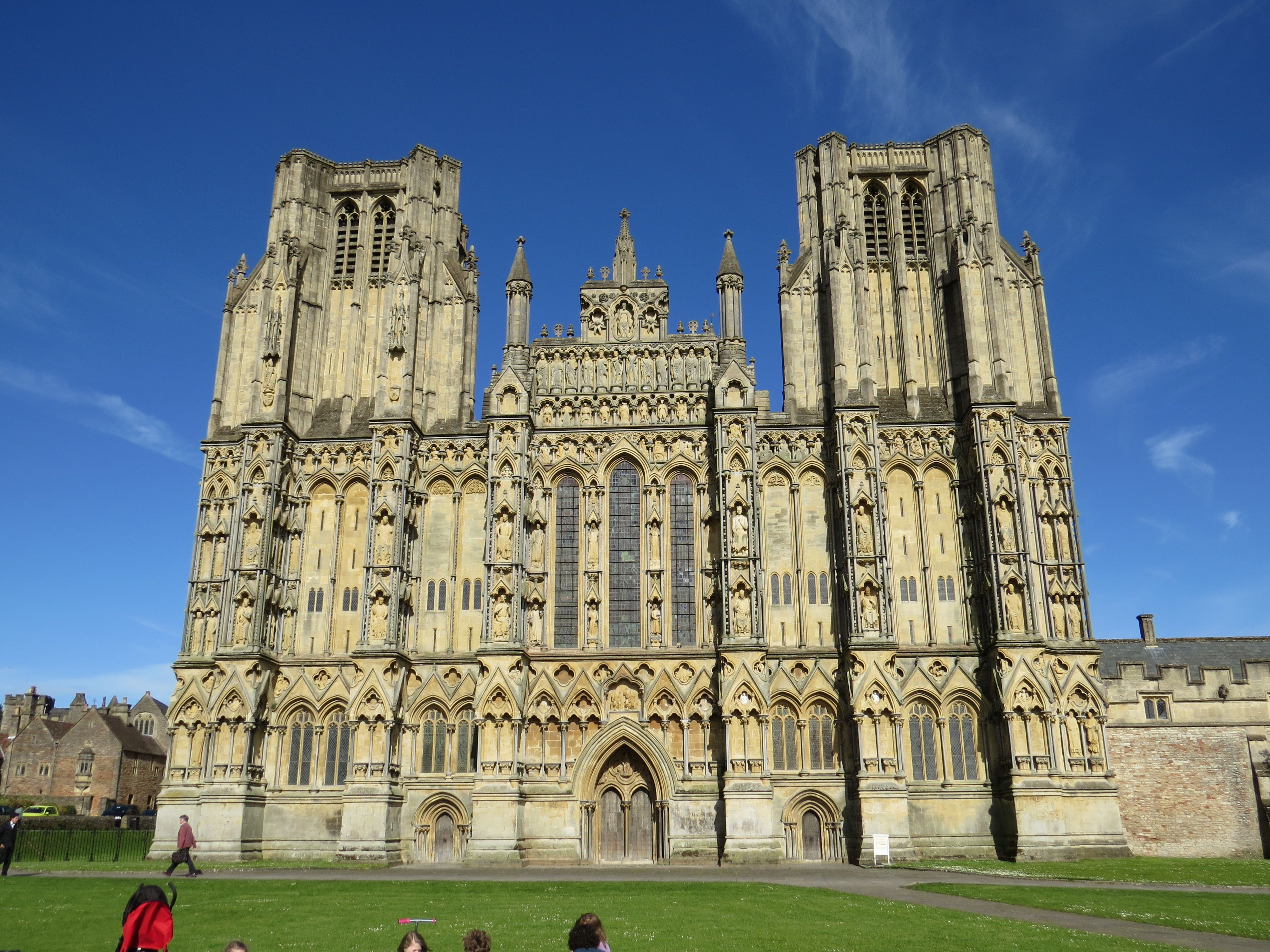
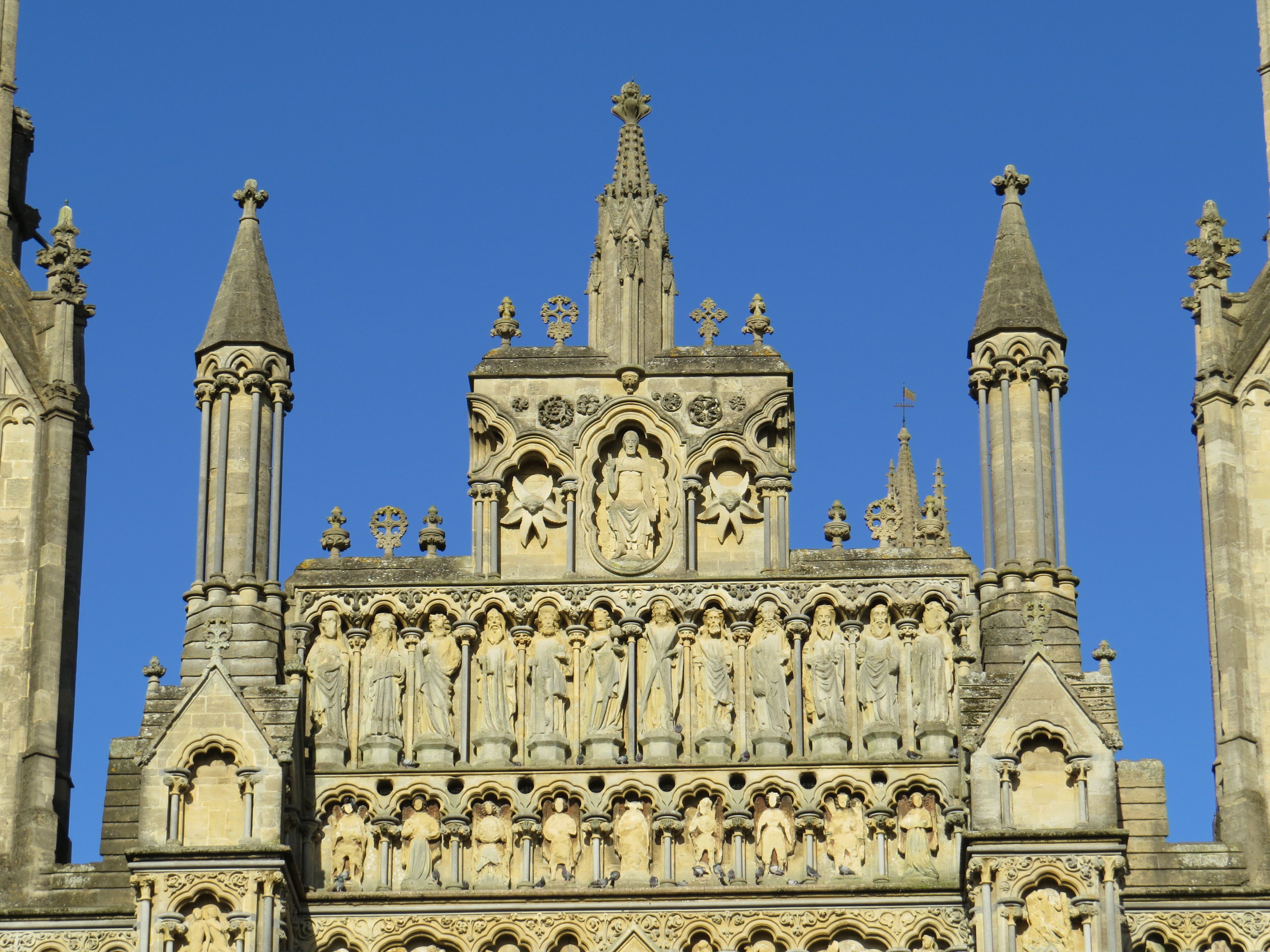
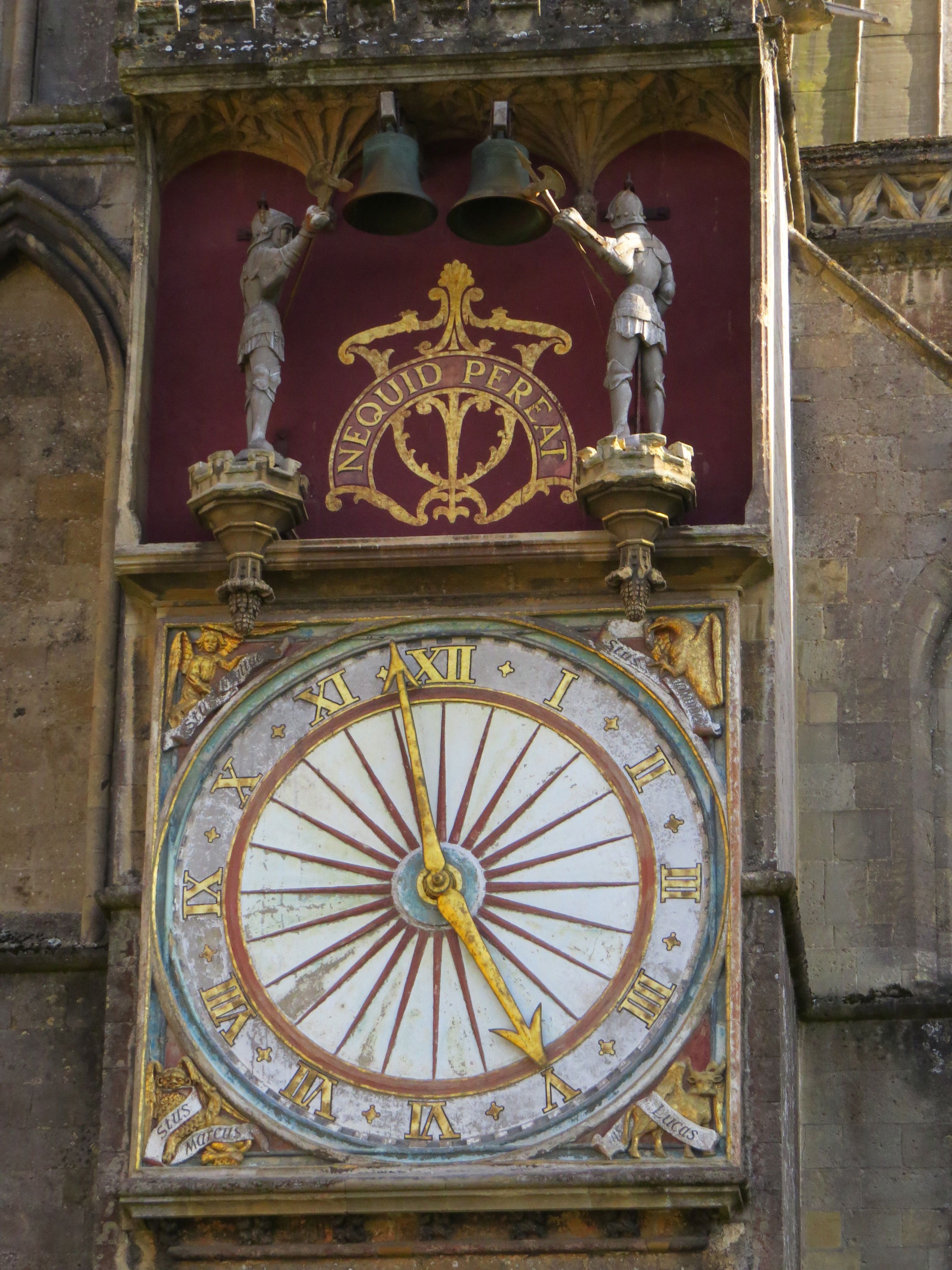
The current Cathedral dates back to the 10th century and the west front is said to be the finest collection of statuary in Europe, retaining almost 300 of its original medieval statues. Wells Cathedral clock is famous for its 24-hour astronomical dial and set of jousting knights that perform every quarter hour.
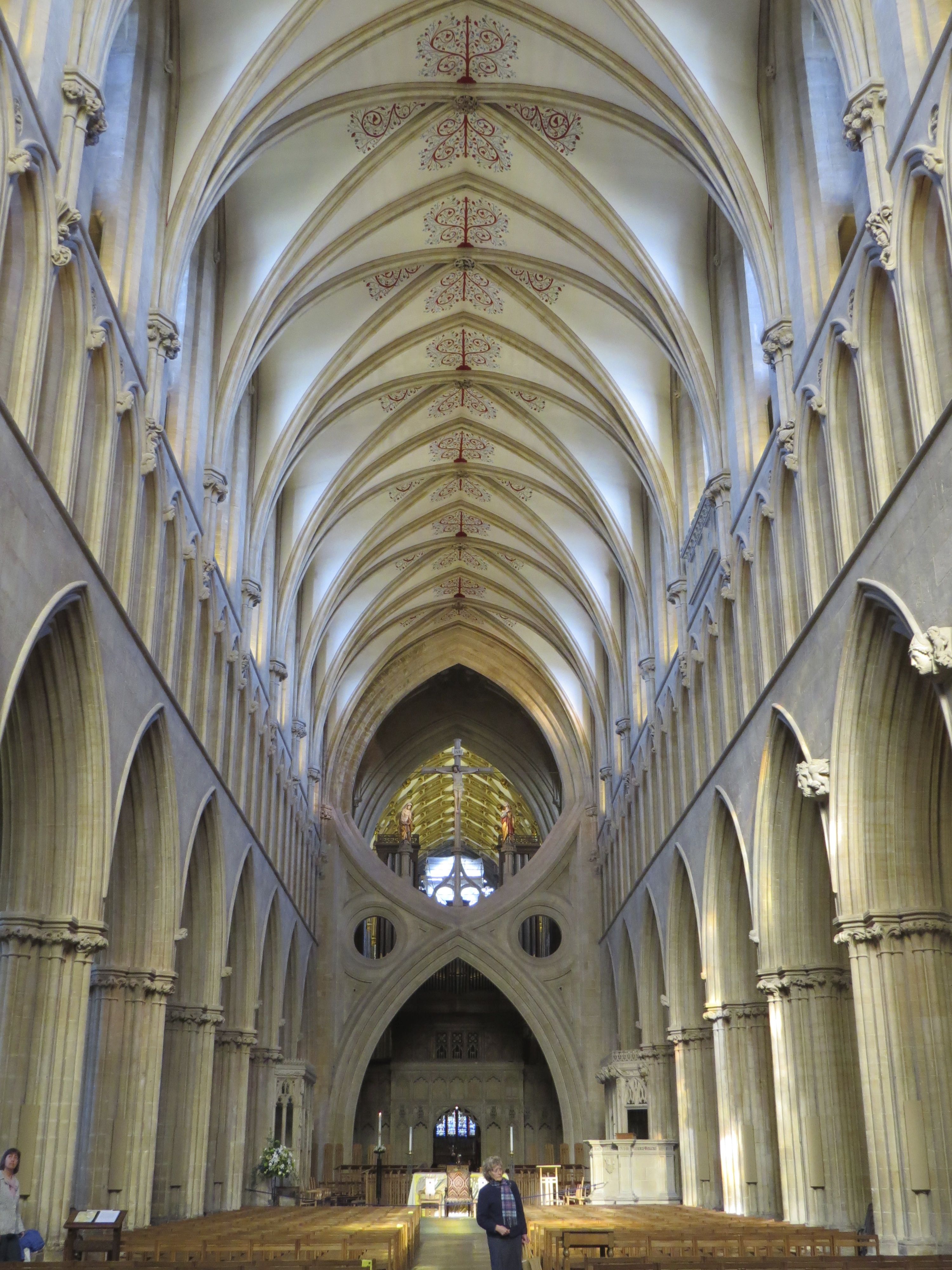
The Cathedral had a lovely ceiling which looked freshly painted. We arrived in time for Evensong, and enjoyed sitting in the choir area listening to the Men and Boys Choir sing the evening liturgy. Wells Cathedral School was founded in 909 BCE and has a musical emphasis.

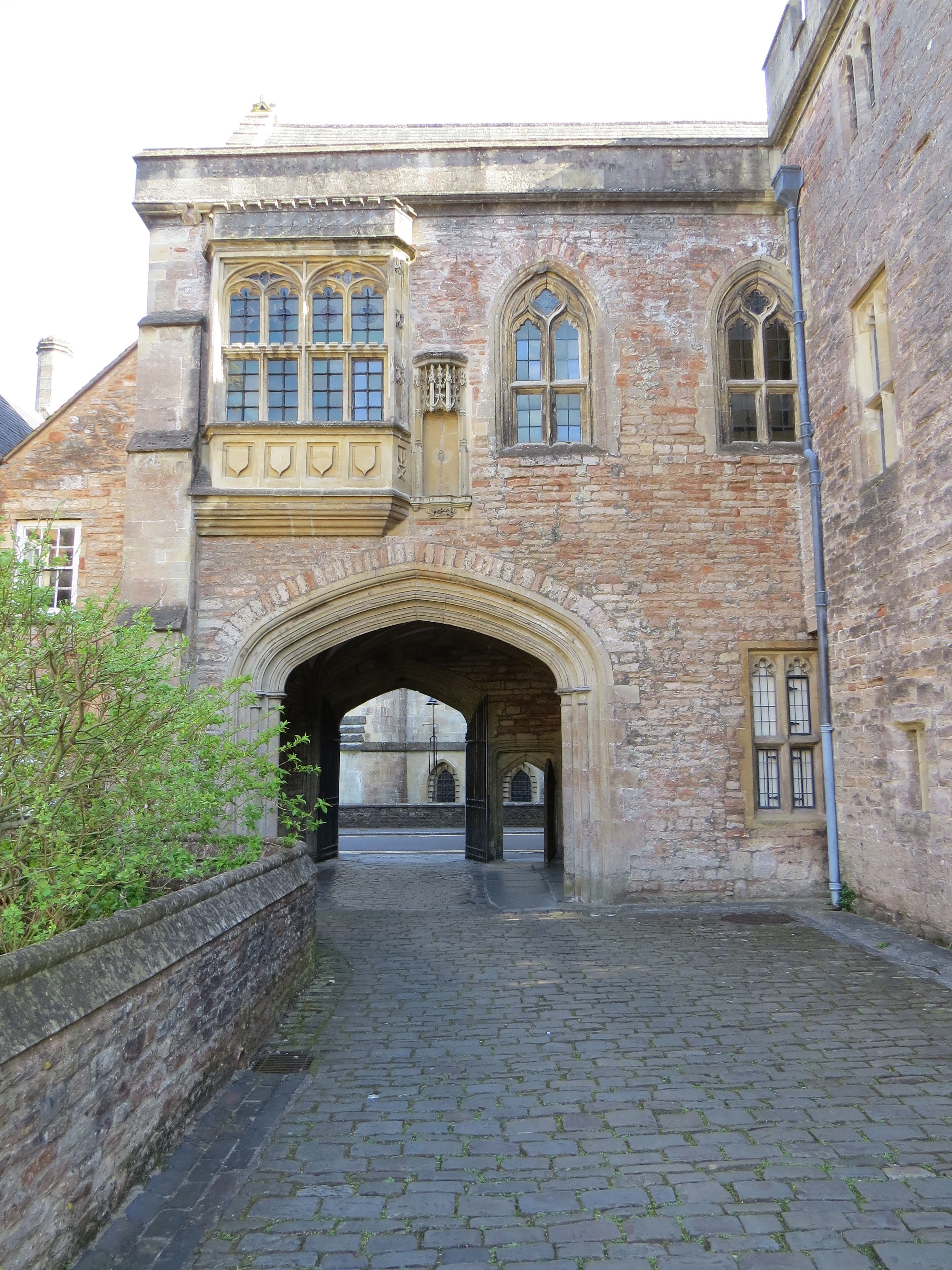
Outside the Cathedral is a street called Vicars’ Close, the oldest residential street in Europe, dating back to the mid 14th century. The Close is tapered by 10 feet (3.0 m) to make it look longer when viewed from the bottom. When viewed from the top, however, it looks shorter. I was just happy we viewed it on a sunny day!


It would have been great to be trapped there, forced to take singing lessons.
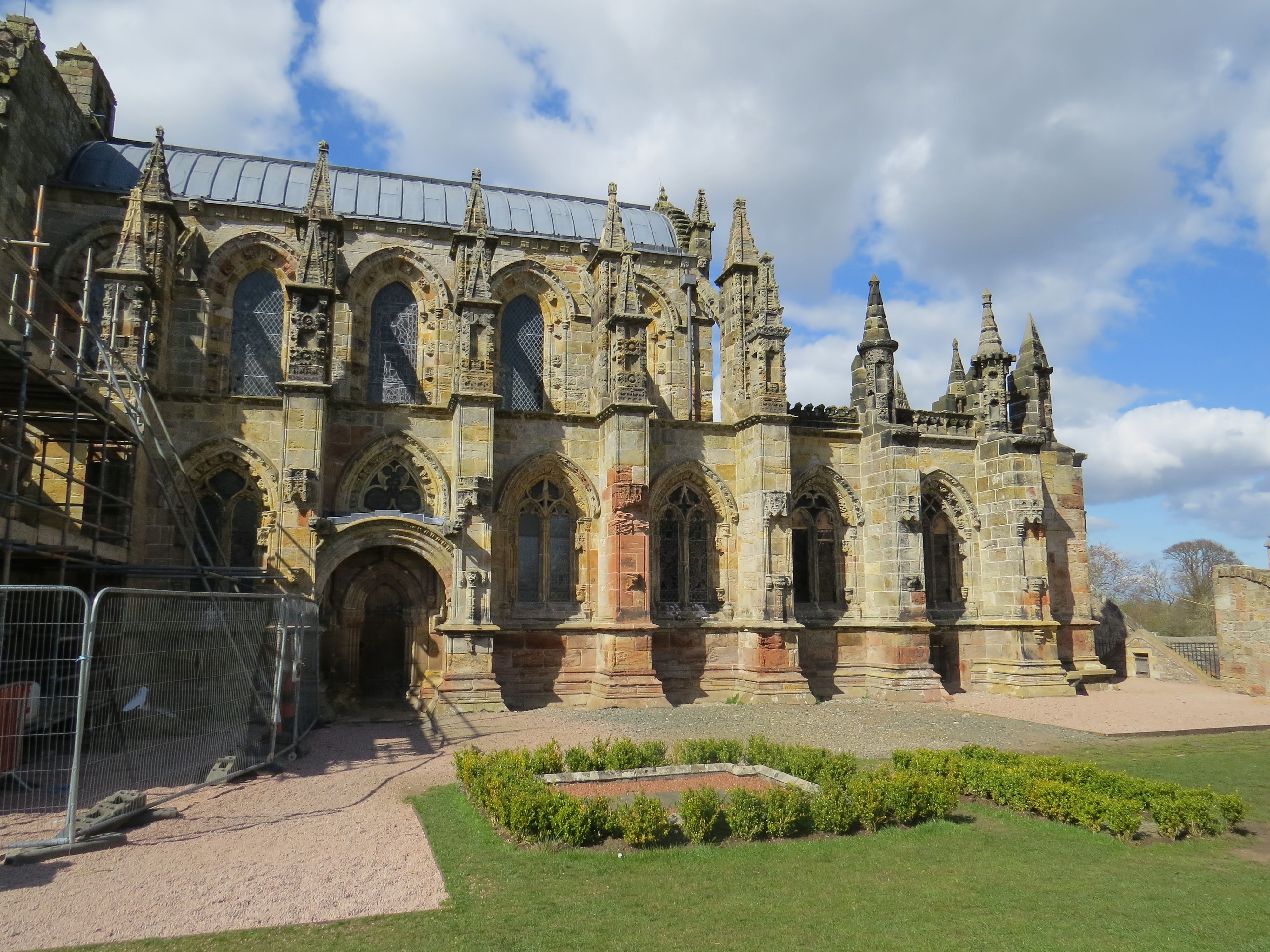
Those of you who read the Da Vinci Code or saw the movie will know Rosslyn Chapel. But whether you enjoyed the Da Vinci Code or not, one result was a flood of paying visitors to Rosslyn Chapel who have now funded some pretty amazing restoration work. In the year following the release of the book, visitors increased by 56%. Reminds me of my last post on Glastonbury Abbey where the graves of King Arthur and Queen Guineviere were discovered just when the Abbey needed a big influx of tourism dollars.
All that being said, it also results in the outside of Rosslyn Chapel being mostly covered with scaffolding. So, I’ve swiped the first picture from the front of the brochure just so you can get an idea of what the place looks like. Because Dan Brown or not, it’s a great place to see.

The Chapel was built in the 15th Century by the Sinclair or St. Clair Family. After the Scottish Reformation (1560) Roman Catholic worship in the chapel was brought to an end, although the St. Clair family continued to be Roman Catholics until the early 18th century. The chapel was closed to public worship until 1861 when it was opened again and follows the rites of the Scottish Episcopal Church. There are crypts under the Chapel where the St. Clair family were buried. These crypts, and the fact that the St. Clair family were “exposed as templars”, are the source of much of speculation around Rosslyn Chapel.


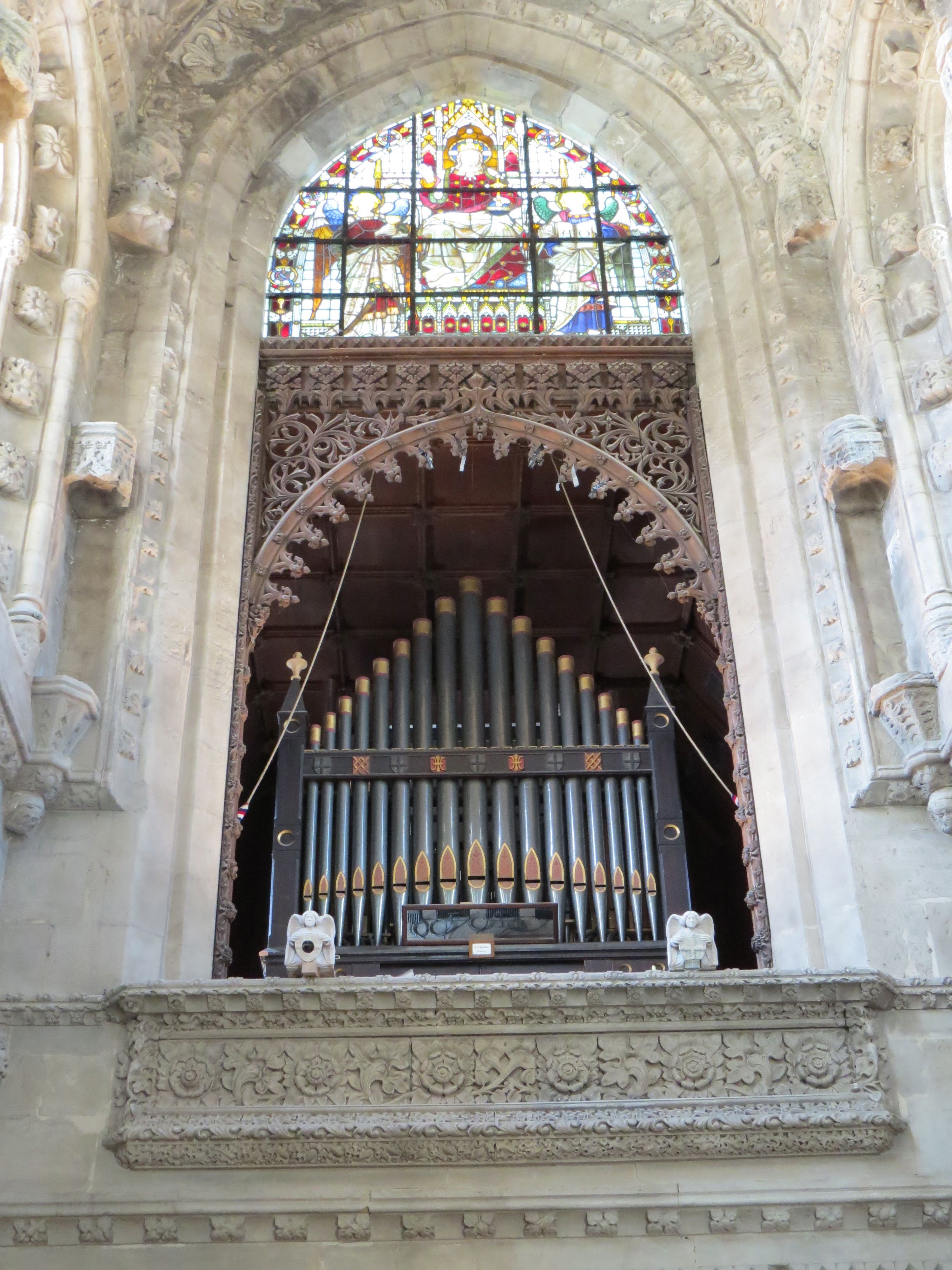
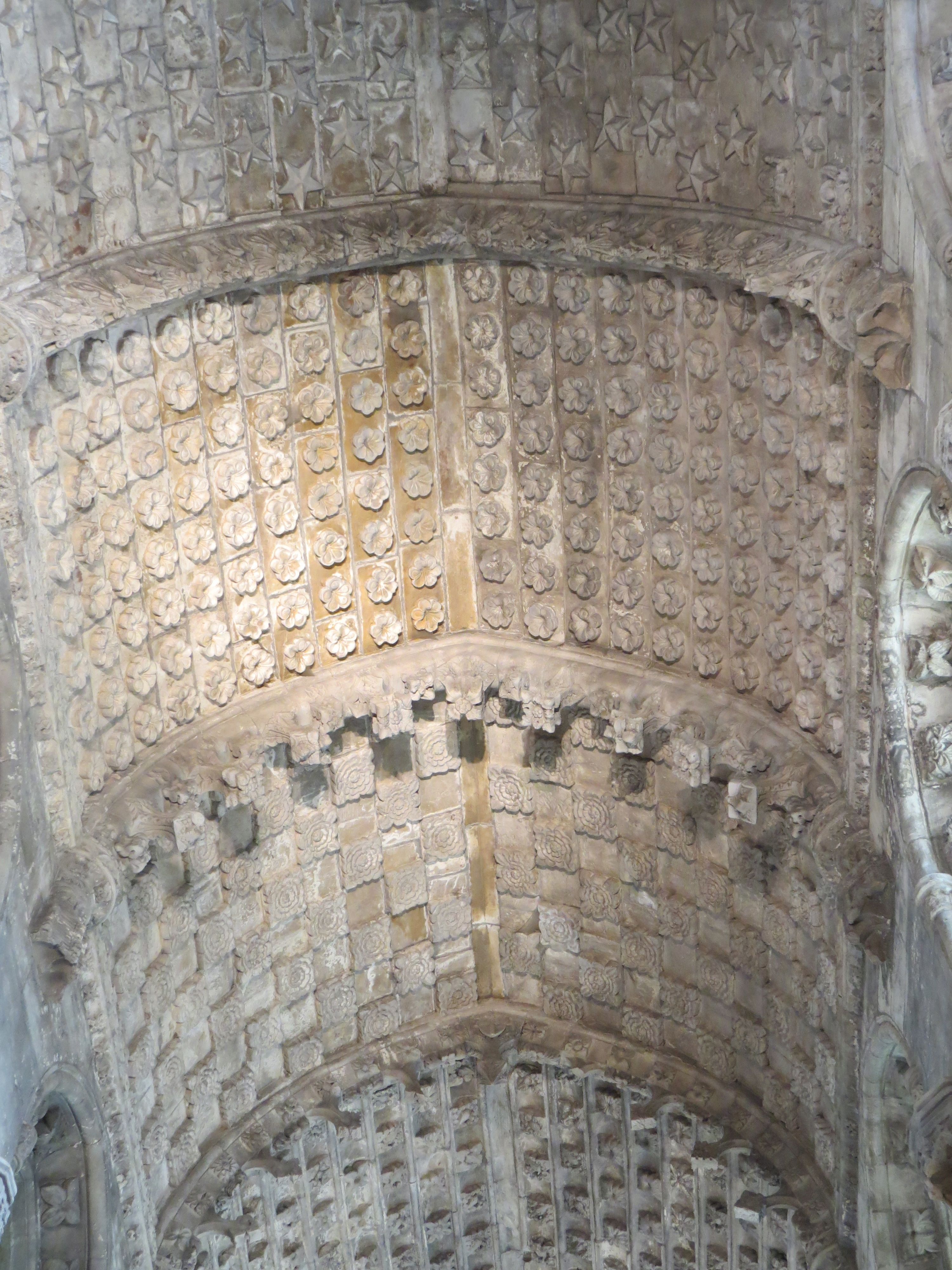
Rosslyn is well-known for it’s elaborate carvings. I thought the ceiling especially was amazing. Different carved sections of stars, lilies, daises, roses, a dove with an olive branch. Even a crescent moon. The flowers represent a connection with nature but lilies and roses are also connected with the Virgin Mary.
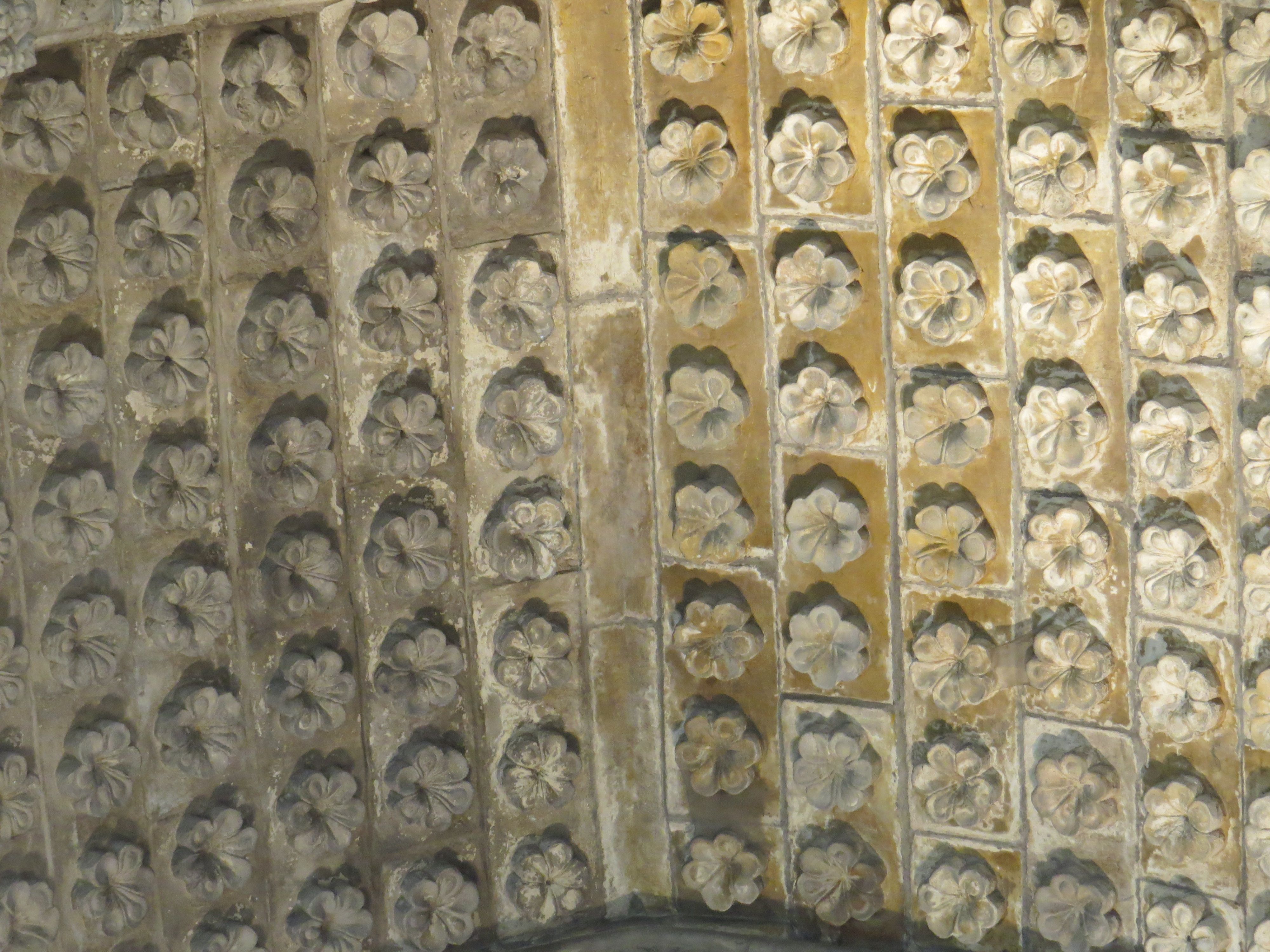
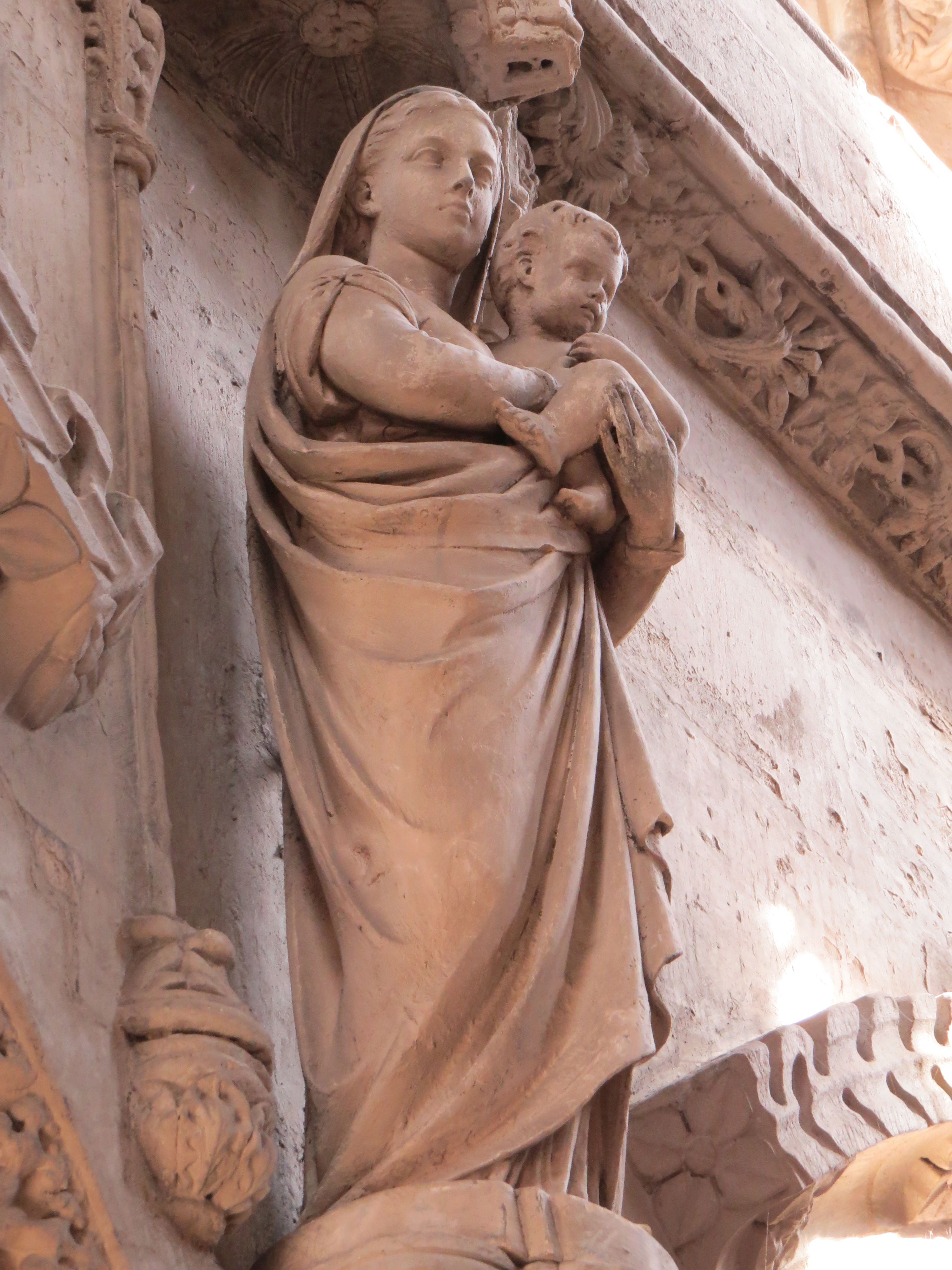
There are over 110 carved green men throughout the Chapel with various amounts of foliage from lush and fertile to one single branch. While also a connection with nature, the symbol of the green man pre-dates Christianity and is associated with fertility.
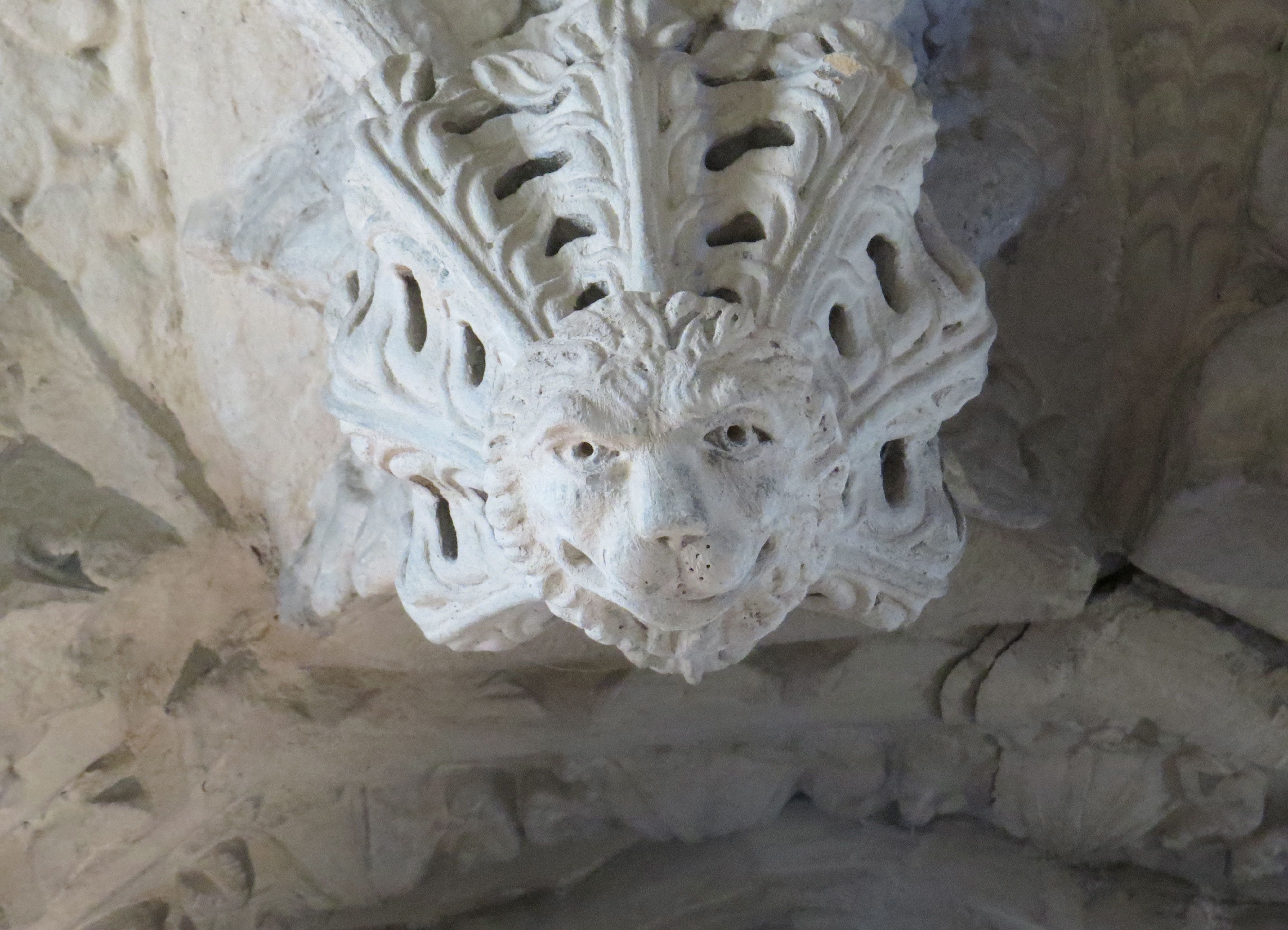

This angel it thought to be holding a heart meant to represent that of Robert the Bruce. Sir Henry St Clair (1275-1336) and his brother William fought with the Robert the Bruce at the Battle of Bannockburn in 1314, and when Bruce died in 1329, Henry’s sons, William and John were two of those chosen to escort his heart to Jerusalem. Although the brothers were killed while on the crusade, their bodies along with Robert the Bruce’s heart were brought back to Scotland.

The Chapel has fourteen pillars. The three at the front are called the the Master Pillar, the Journeyman Pillar, and most famously, the Apprentice Pillar. The story of the Apprentice Pillar is that the Master carver left his Apprentice to complete the pillar. As you can see, the Apprentice got a little, uh, creative and beautifully decorated the pillar with winding trees/vines, eight dragons around the base and lots of intricate carvings.
The Pillar can be seen as the Christian Tree of Life but given the association of Scotland with the Norse (esp the Orkney Islands), it is more likely the Norse Tree of Life, Yggdrasil, which holds up the heavens from the earth and the dragons of time gnaw at the roots of the Tree. Near the Apprentice Pillar is a Latin inscription that reads, “Wine is strong, a king is stronger, women are stronger still, but truth conquers all.”
When the Master carver saw what the Apprentice had done, he grabbed a mallet and relieved the Apprentice of his head. There is a carving of a head in the Chapel which is said to be the Apprentice’s. Justice was served in this case, however, as the Master carver also lost his head for the crime and his carved head is right across from the Apprentice’s carved head and angled so that it stares at the Apprentice Pillar. Let that be a lesson in keeping cooler heads!!!

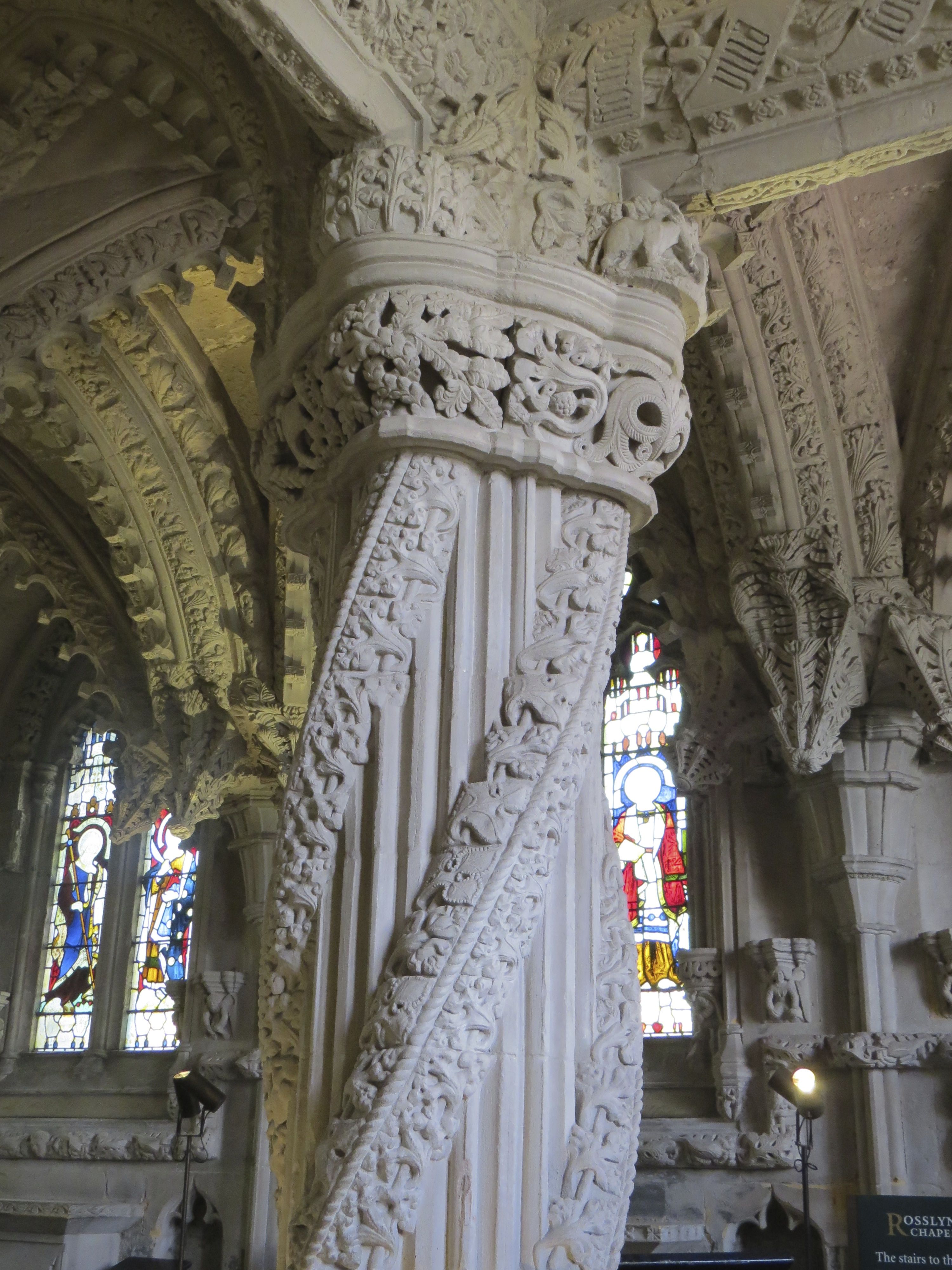
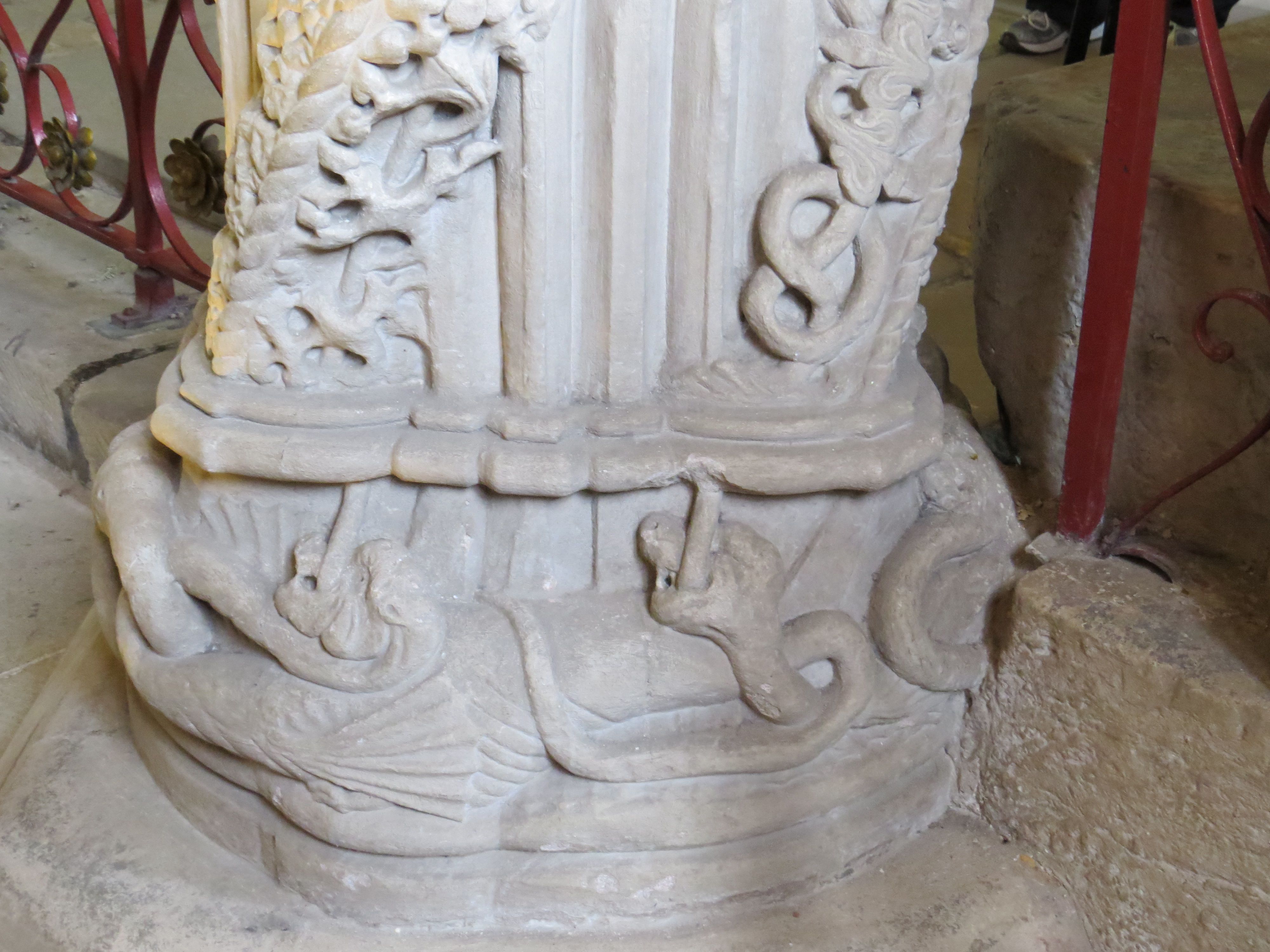
They say Rosslyn Chapel is built on the intersection of some powerful ley lines. The key stone at the meeting of the two aisles in the Chapel is said to be especially powerful. So, everyone takes turns standing on that spot. I have to admit, I did feel a lot of energy in that spot and I do believe in ley lines. But, maybe it was just the combined energy of thousands of visitors who have stood on the same spot doing the same thing. Whatever the case, it is a lovely Chapel with fascinating stories in the carvings and a wonderful peaceful energy.

Glastonbury is a wonderfully interesting place. A big mixing bowl of spirituality, from the birthplace of Christianity in England, the mystic isle of Avalon and King Arthur’s Court, to neopagans and new agers of all stripes to just general tourists exploring the shops, the Tor, the Chalice Well and the Abbey. Lucky for us, the first stop after our cold stop in Avebury was a lovely coffee shop where we were much fortified by giant breakfast and large cups of hot coffee before we headed out to explore.
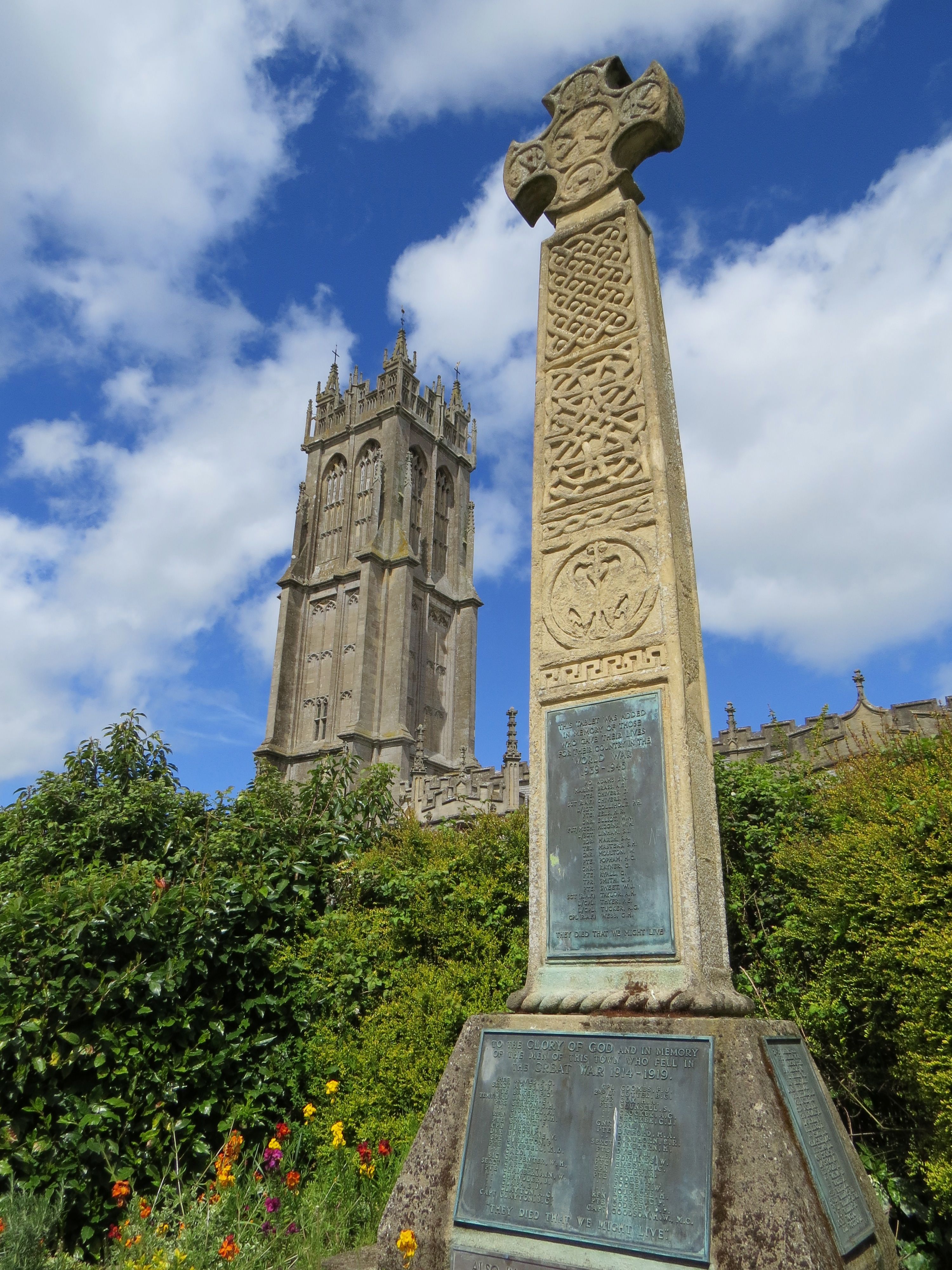

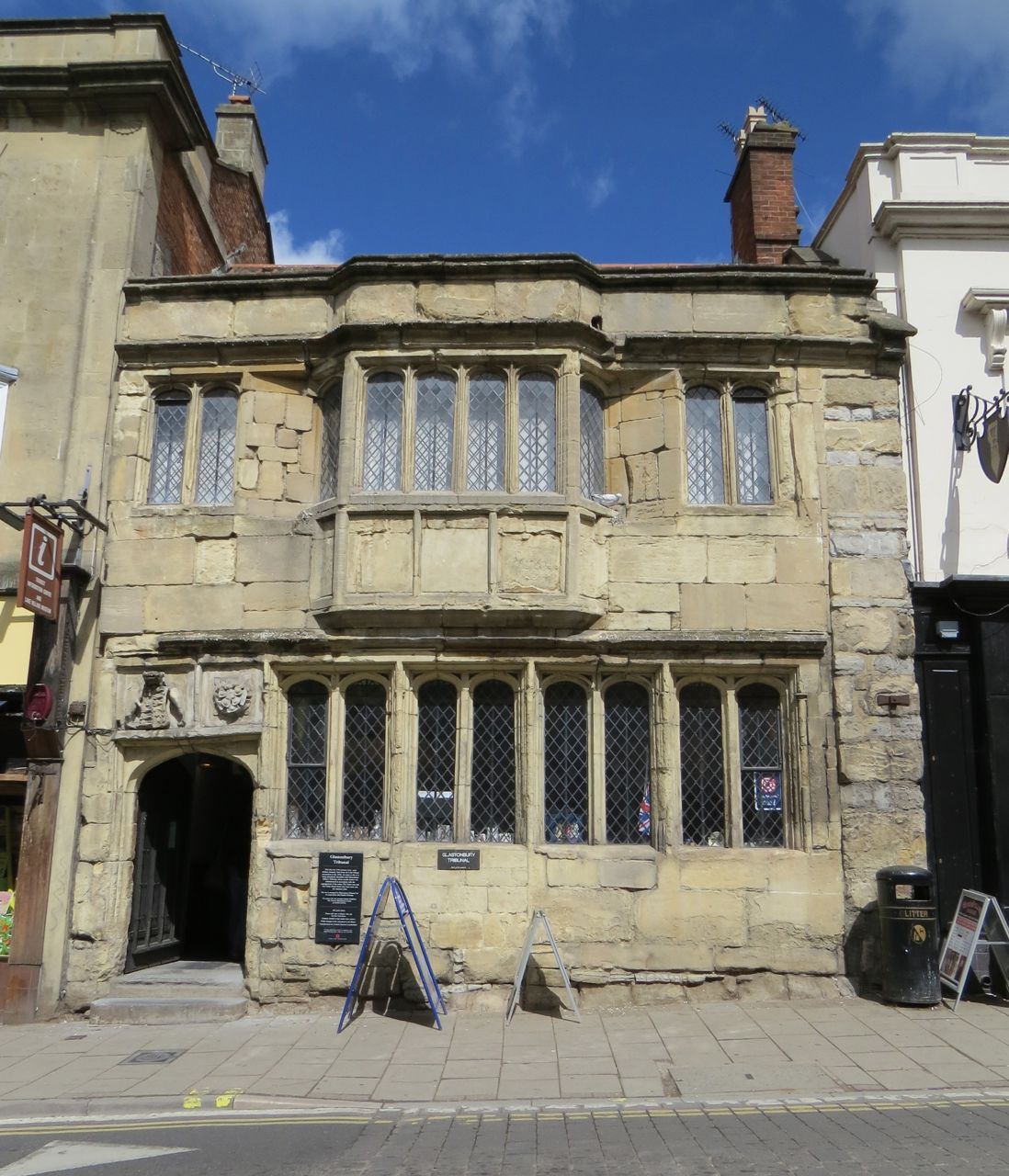
Evidence shows that Glastonbury has been in existence as a town since the neolithic times. Many of the older buildings, like the Tribunal House below from the 15th century, are associated with the Abbey.
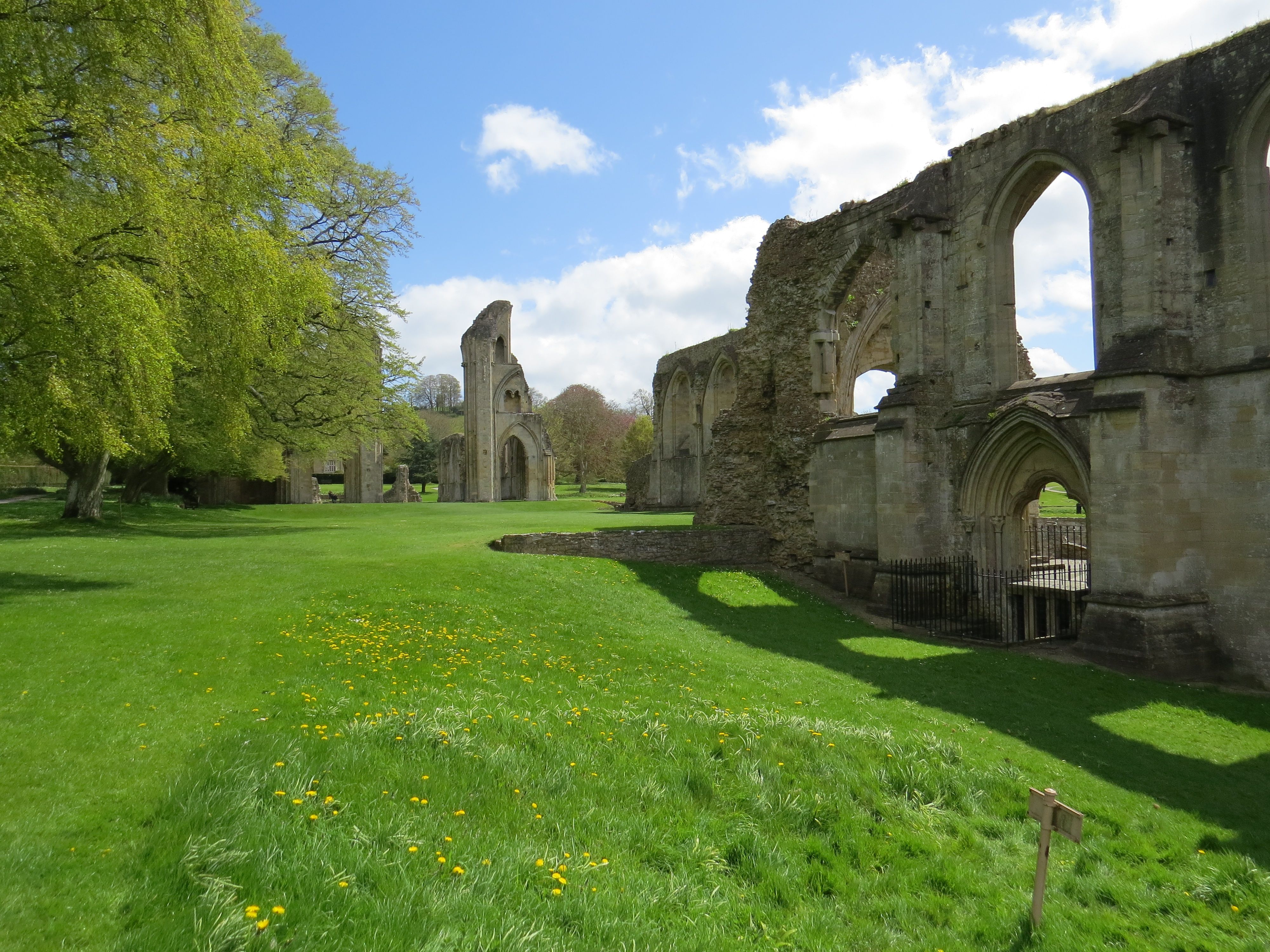
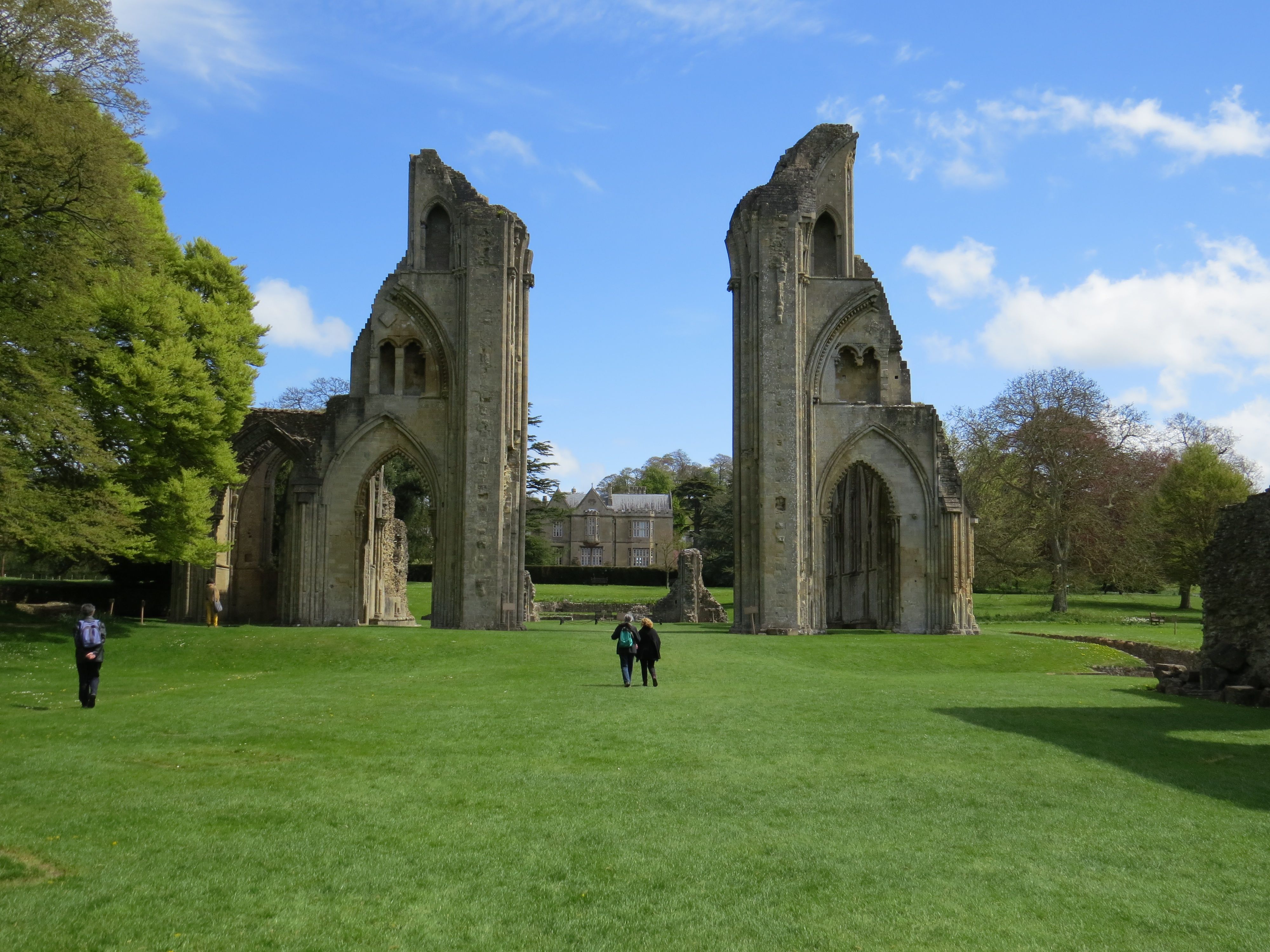
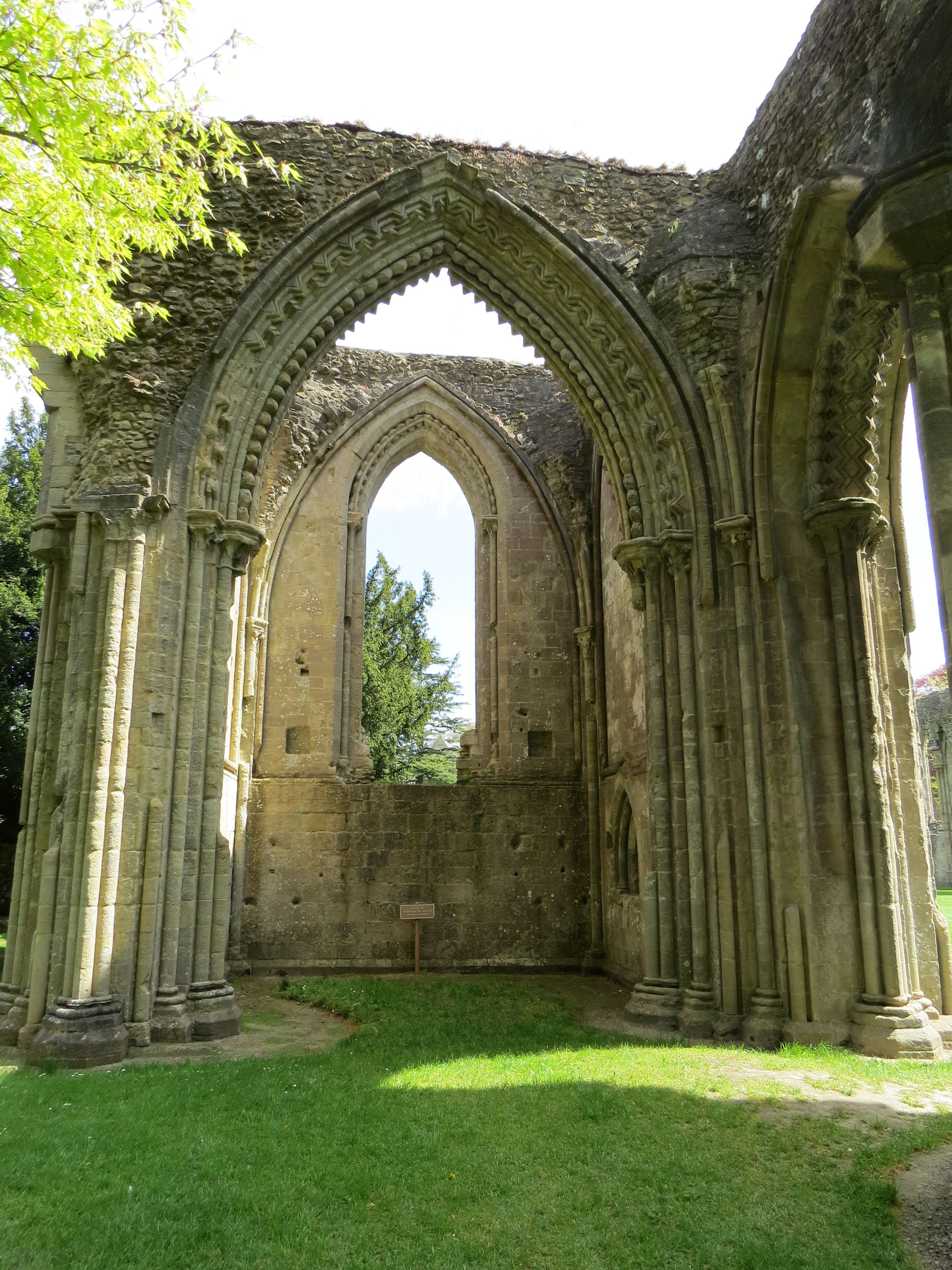
Glastonbury Abbey was founded in the 7th century and enlarged in the 10th, before a major fire in 1184 destroyed the buildings. It was rebuilt and by the 14th century was one of the richest and most powerful monasteries in England. Henry VIII ordered the confiscation of the Abbey’s wealth and treasures and the last Abbot was hanged, drawn and quartered as a traitor on Glastonbury Tor in 1539. Even with just the ruins still standing, you can see how large the Abbey was!

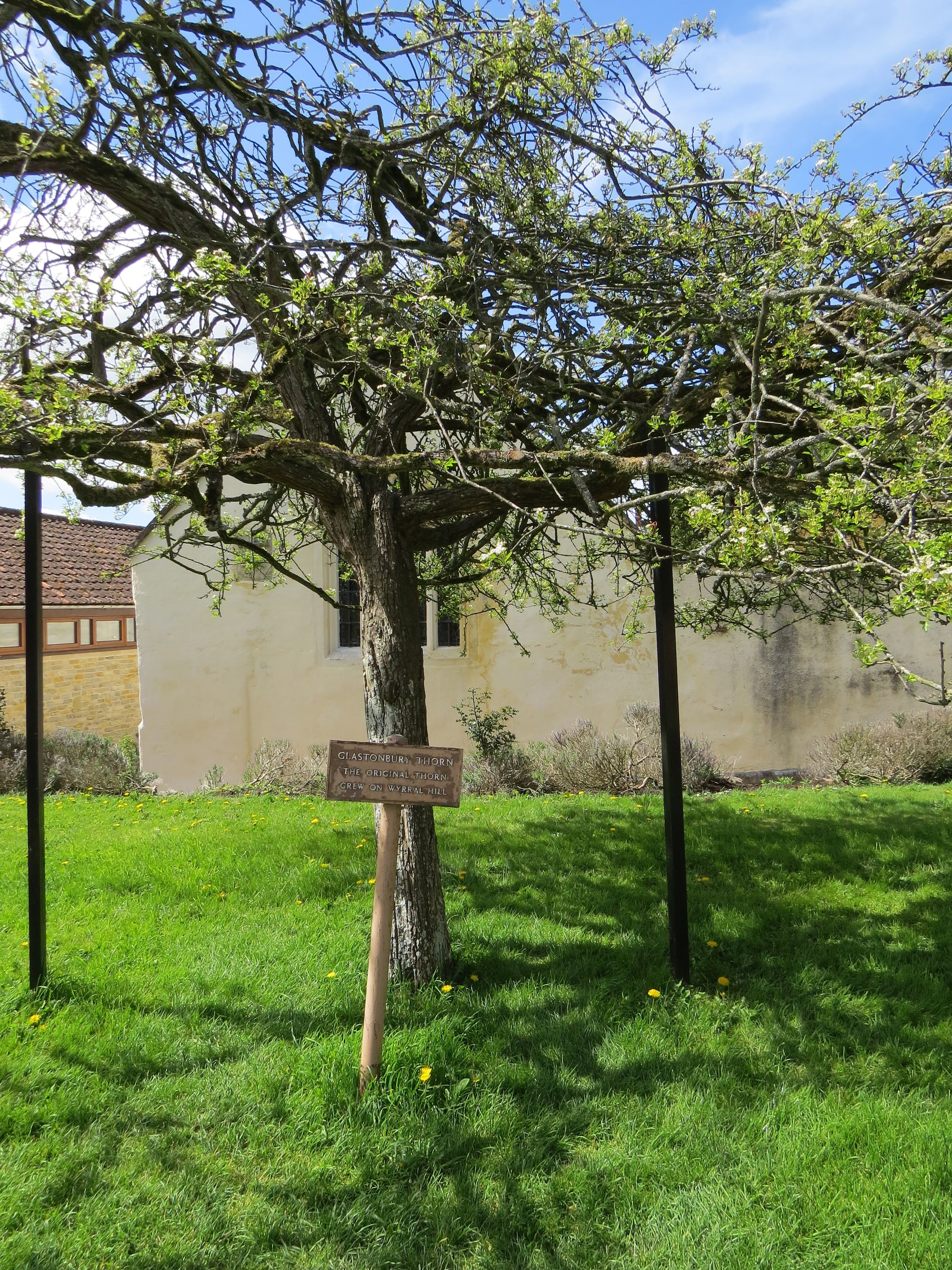
Joseph of Arimathea is said to have arrived in Glastonbury and stuck his staff into the ground, when it flowered miraculously into the Glastonbury Thorn. While that original Thorn Tree has long since died, there is a replacement and another smaller one nearby, ready for succession!
From at least the 12th century the Glastonbury area was frequently associated with the legend of King Arthur, a connection promoted by medieval monks who asserted that Glastonbury was Avalon and that King Arthur and Queen Guinevere’s bodies were found buried in 1191 in a grave on the Abbey grounds. Or, some reports say a grave in the hollow trunk of an Oak Tree. Which was kind of convenient since after the Abbey had burned down in 1184, the flow of pilgrims had slowed and the Abbey needed an infusion of money. But, hey, call me cynical.
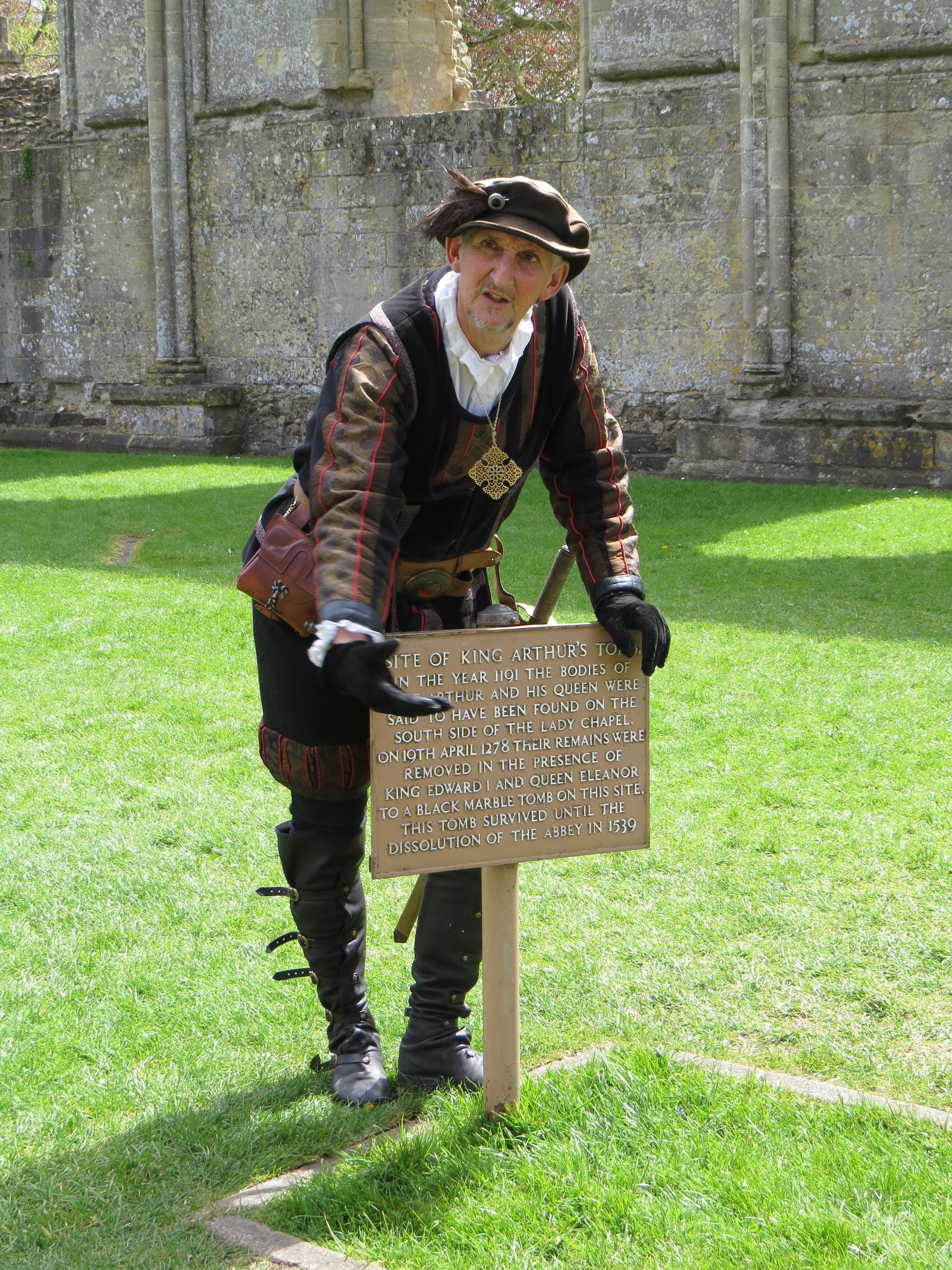
In any case, the grounds of the Abbey were lovely and it must have been an incredibly beautiful place in it’s glory.


And, just so you don’t think I skipped the new age parts of the pilgrimage, here’s a picture of of the, uh, waste receptacles.

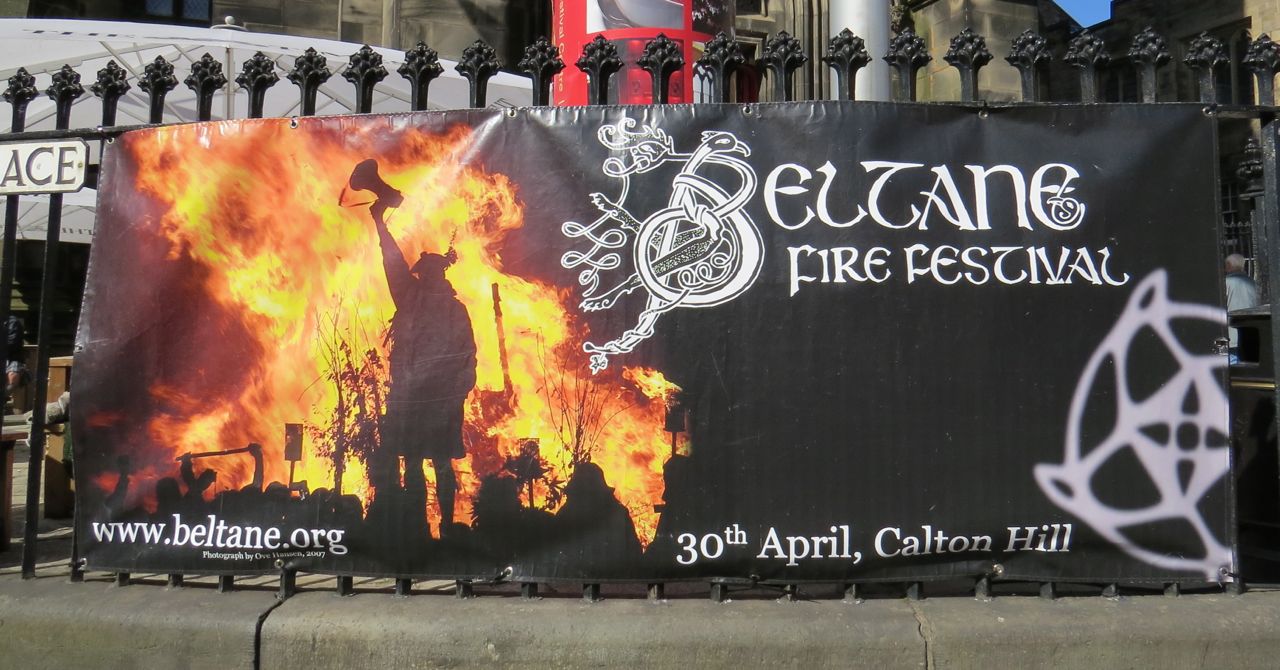
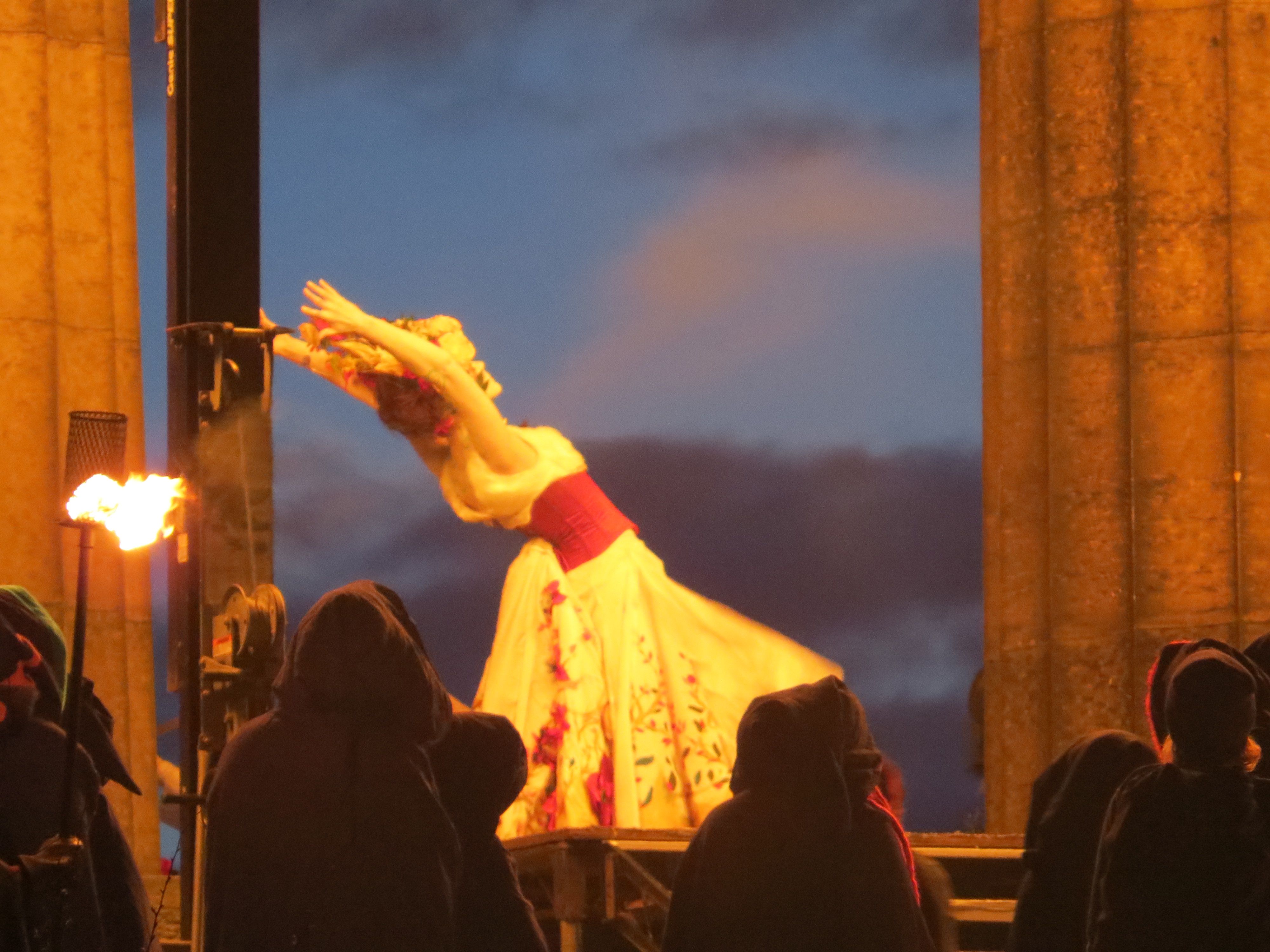
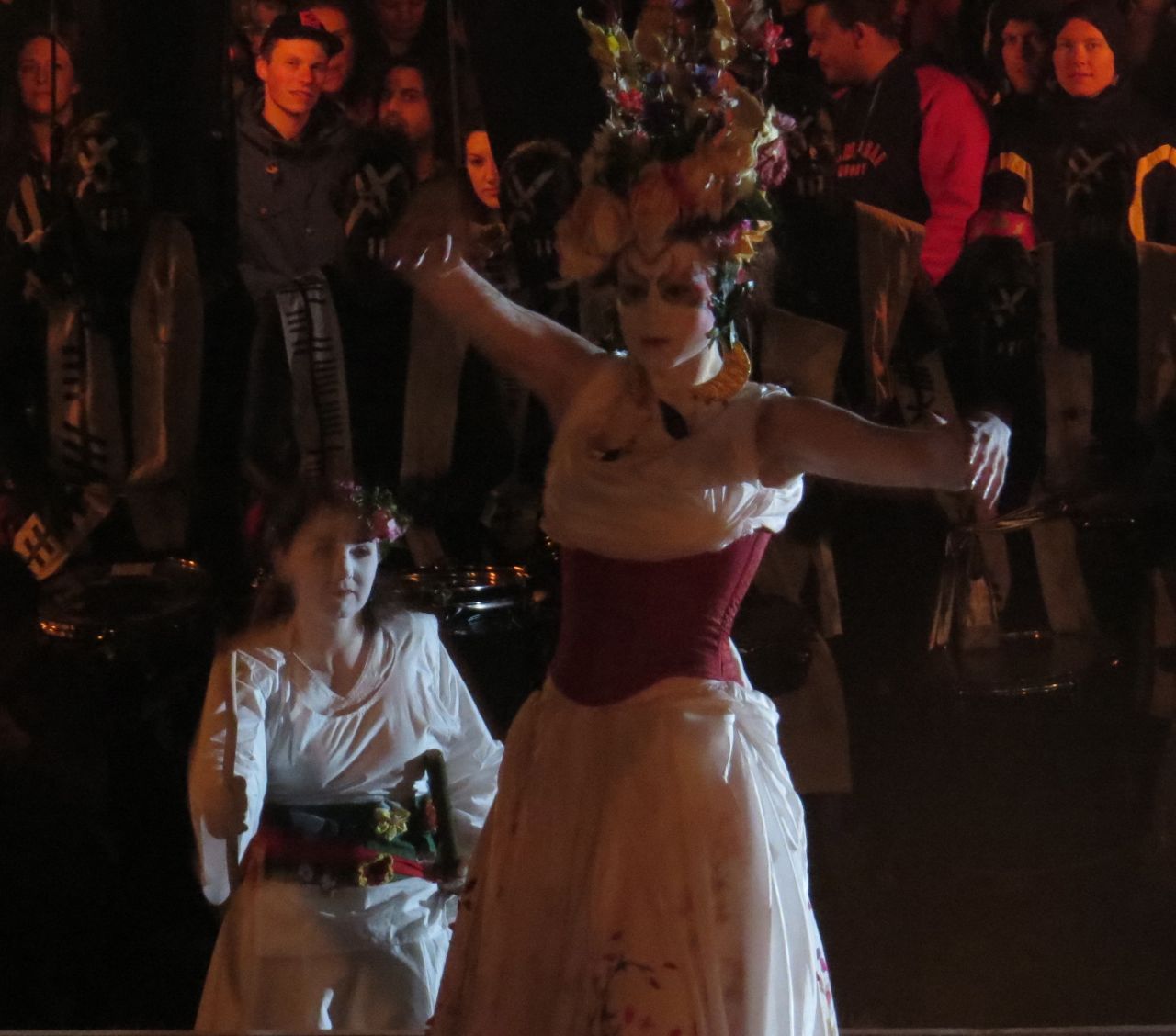
Well, what can I say. It was Edinburgh on Beltane Night (April 30th) and it was the Fire Festival! Hard to take pics cause it was night and a lot of people and a lot of fire spinning. I know we didn’t see everything that happened (did I mention all the people?) and I know I didn’t understand all of what was going on (blue people, red people, drumming) so here is just a glimpse.
Oh, and it involved fire performance, uninhibited behaviour and semi-nudity. Woop woop!

Wearing our appropriate clothing and footwear, and leaving our flying lanterns a the hotel, we headed up Calton Hill and joined the sea of people.

Getting to the top, there were some amazing fire figures.
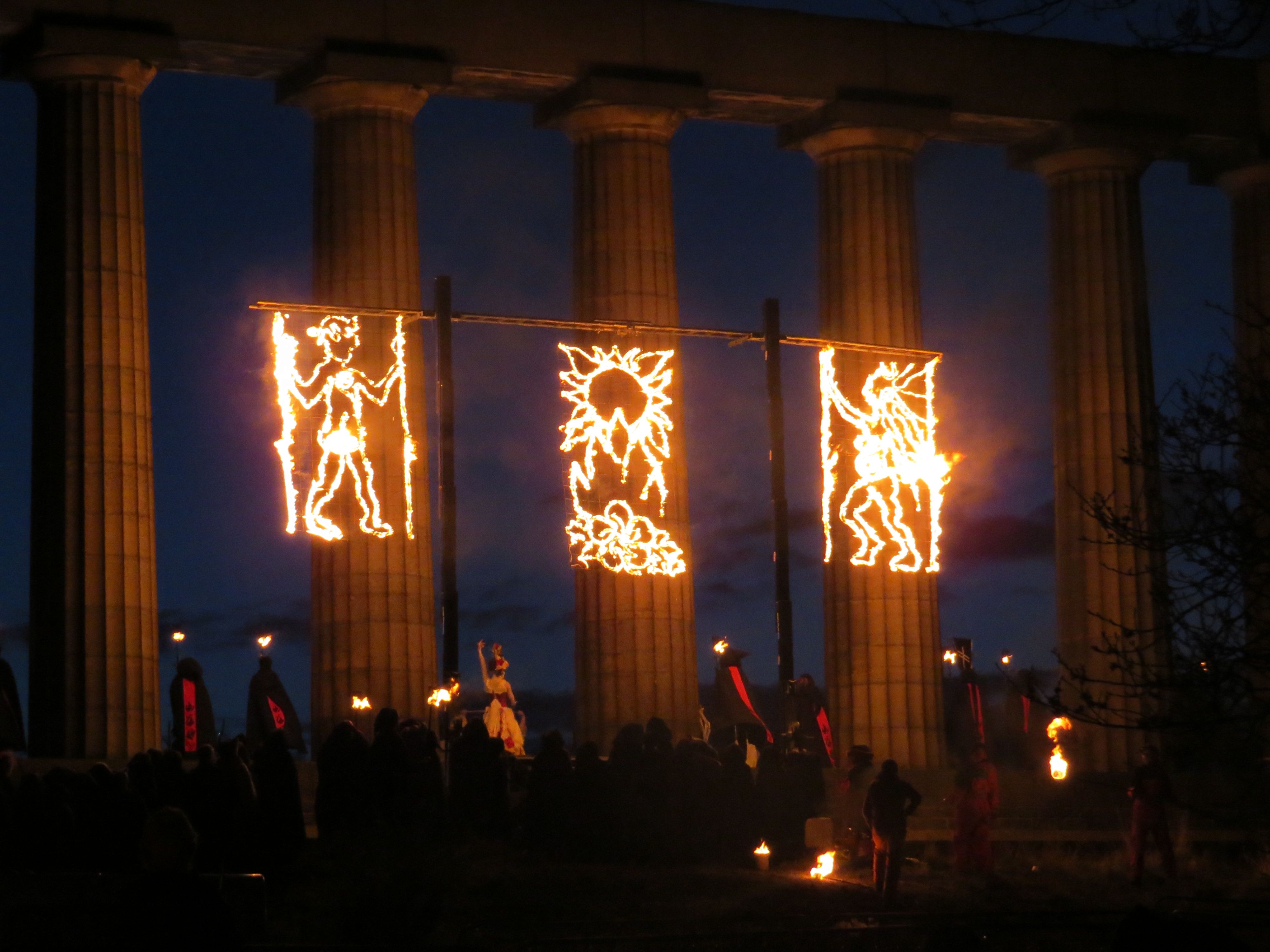


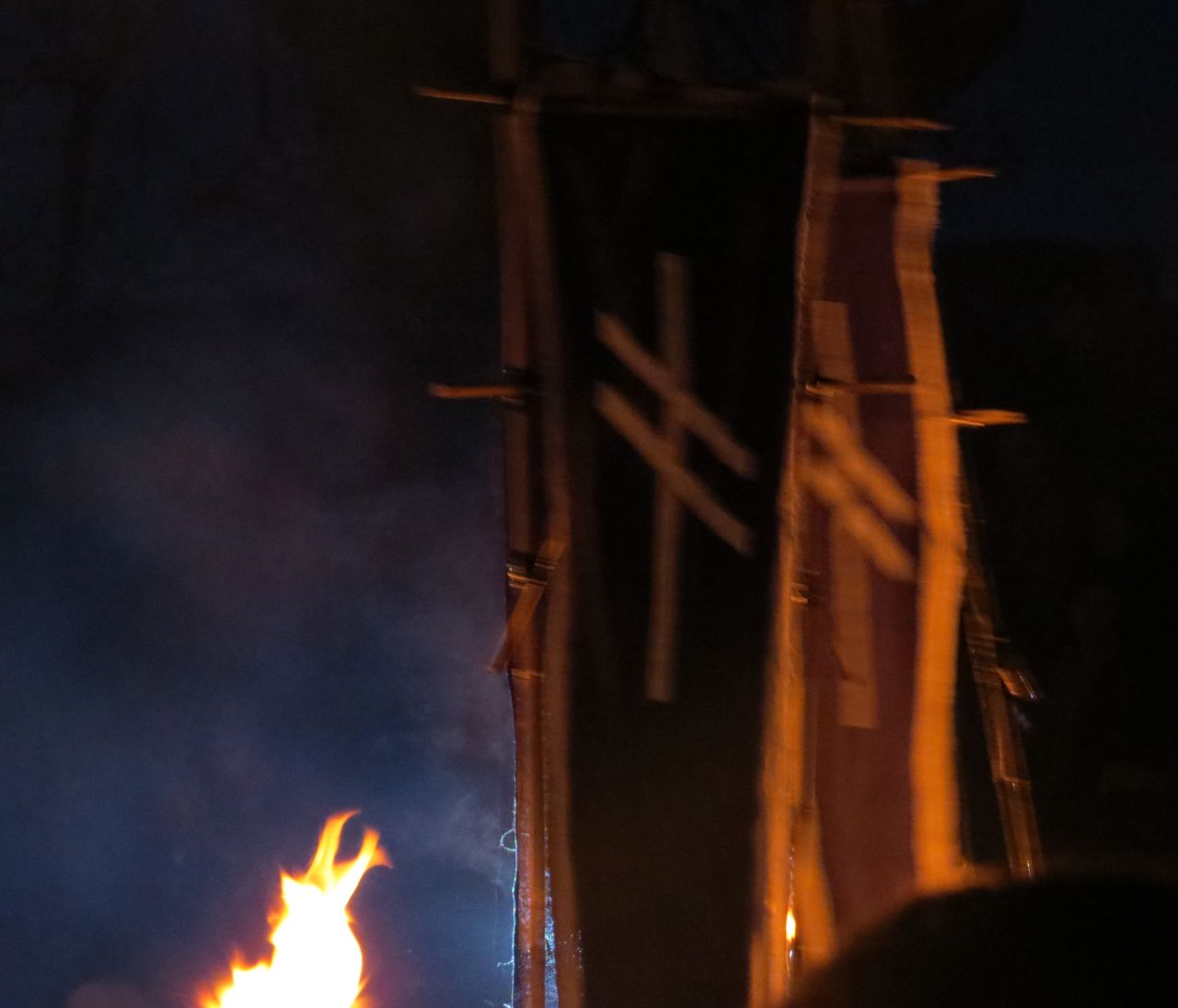
There was a May Queen (in white and red) with her attendants, lots of painted red drummers and fire spinners, some blue people (the Picts?), a troupe of death people in black and white and a green man with attendants carrying banners inscribed with the Celtic ogham for ivy. At the big finale, the May Queen kills the shaggy Green Man, he is stripped of his, uh, foliage, and she brings him back to life. Newly sprung, he dances an amazing energetic dance and they kiss. Then, they lit the biggest bonfire I’ve ever seen.
And there were a lot of things on fire.


The best place to see some really amazing photos is on the Beltane Fire Festival Flickr site (seriously, check it out). Other than that, I highly recommend going and experiencing it for yourself! In the meantime, here is one minute of the festival, just to whet your appetite!
The first thing I’d like to point out is that it was sunny and lovely during my visit to Edinburgh. In fact, I almost had to buy sunscreen!! I love this city!

From its prehistoric roots as a hillfort, following periods of Celtic and Germanic influence, Edinburgh became part of the Kingdom of Scotland during the 10th century. It continued to develop as a market town and is still the capitol of Scotland and Edinburgh the second most popular tourist destination in the UK after London.
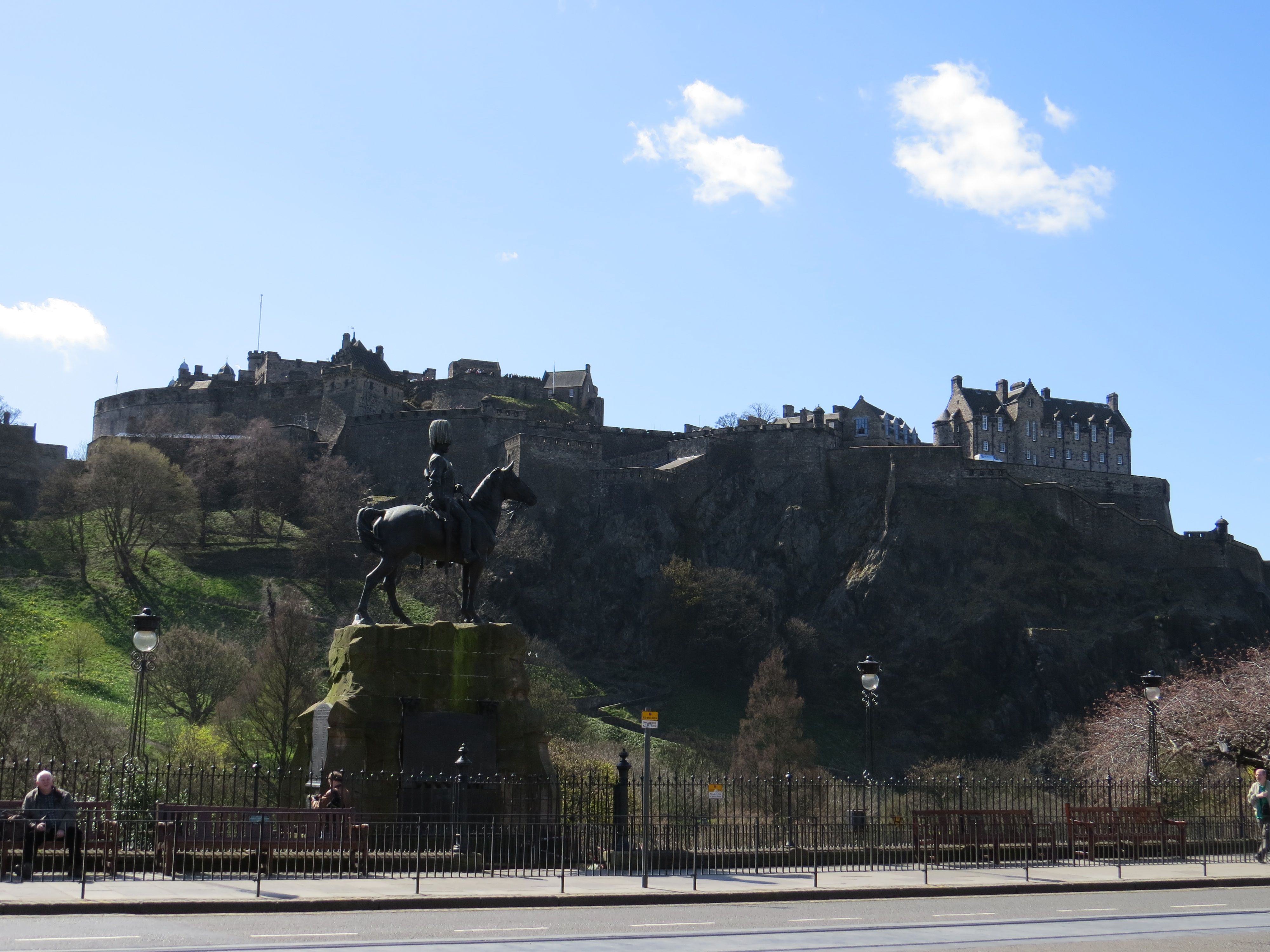


The Old Town consists of a long main road called the Royal Mile, with Edinburgh Castle at one end and Holyrood Palace (where the Queen stays when in town) at the other. The doors to Holyrood were closed but spectacular!
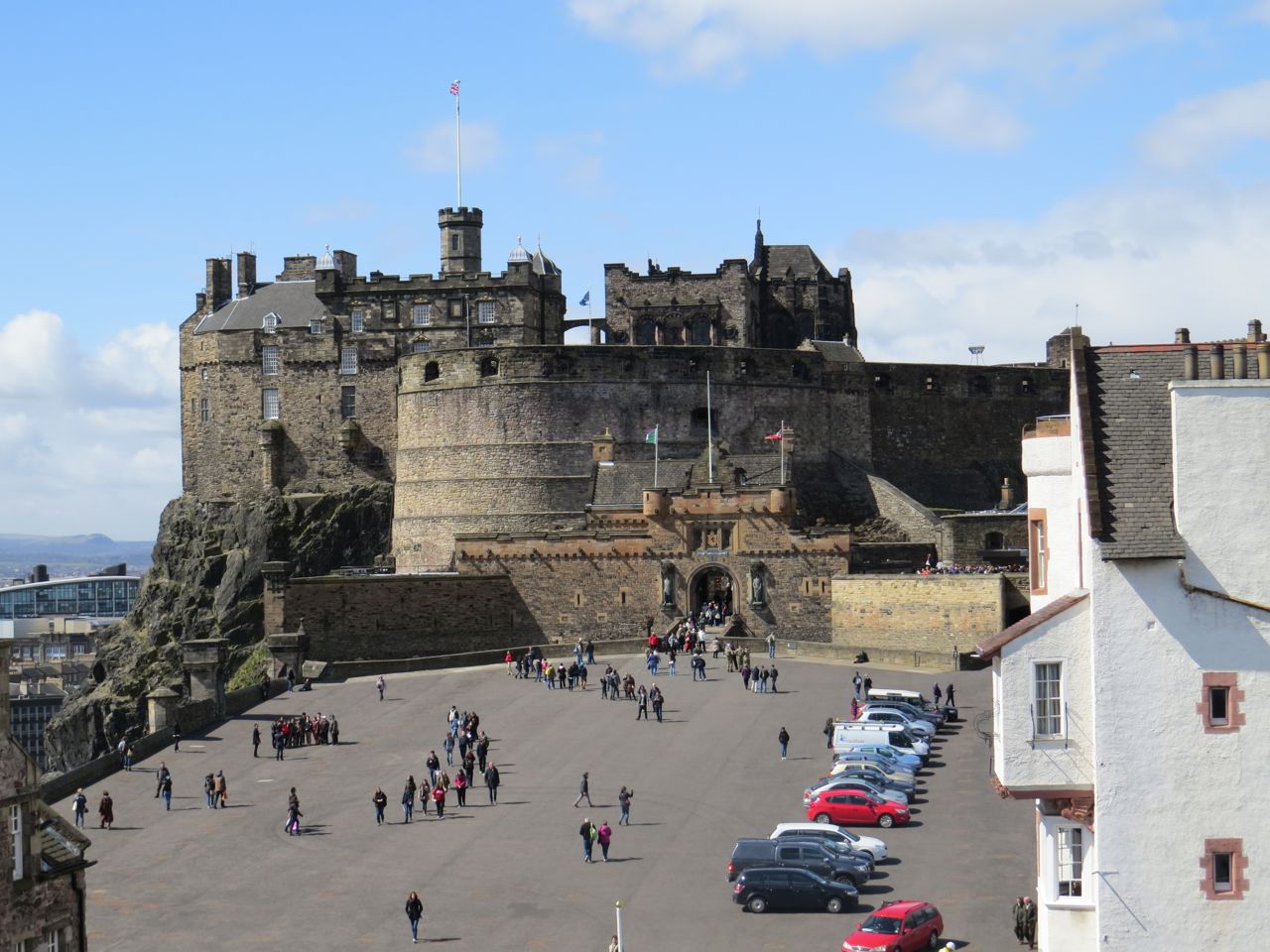
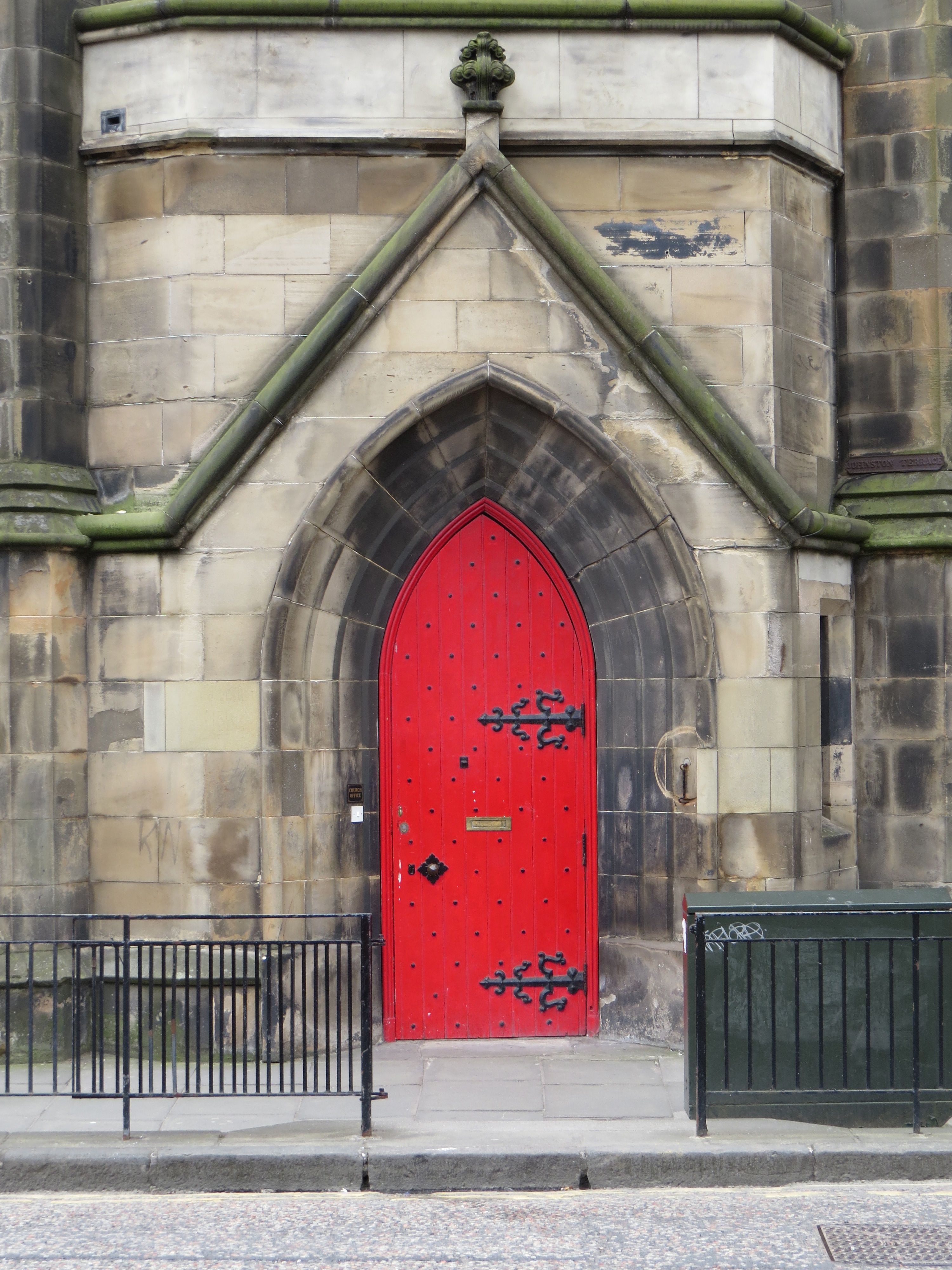
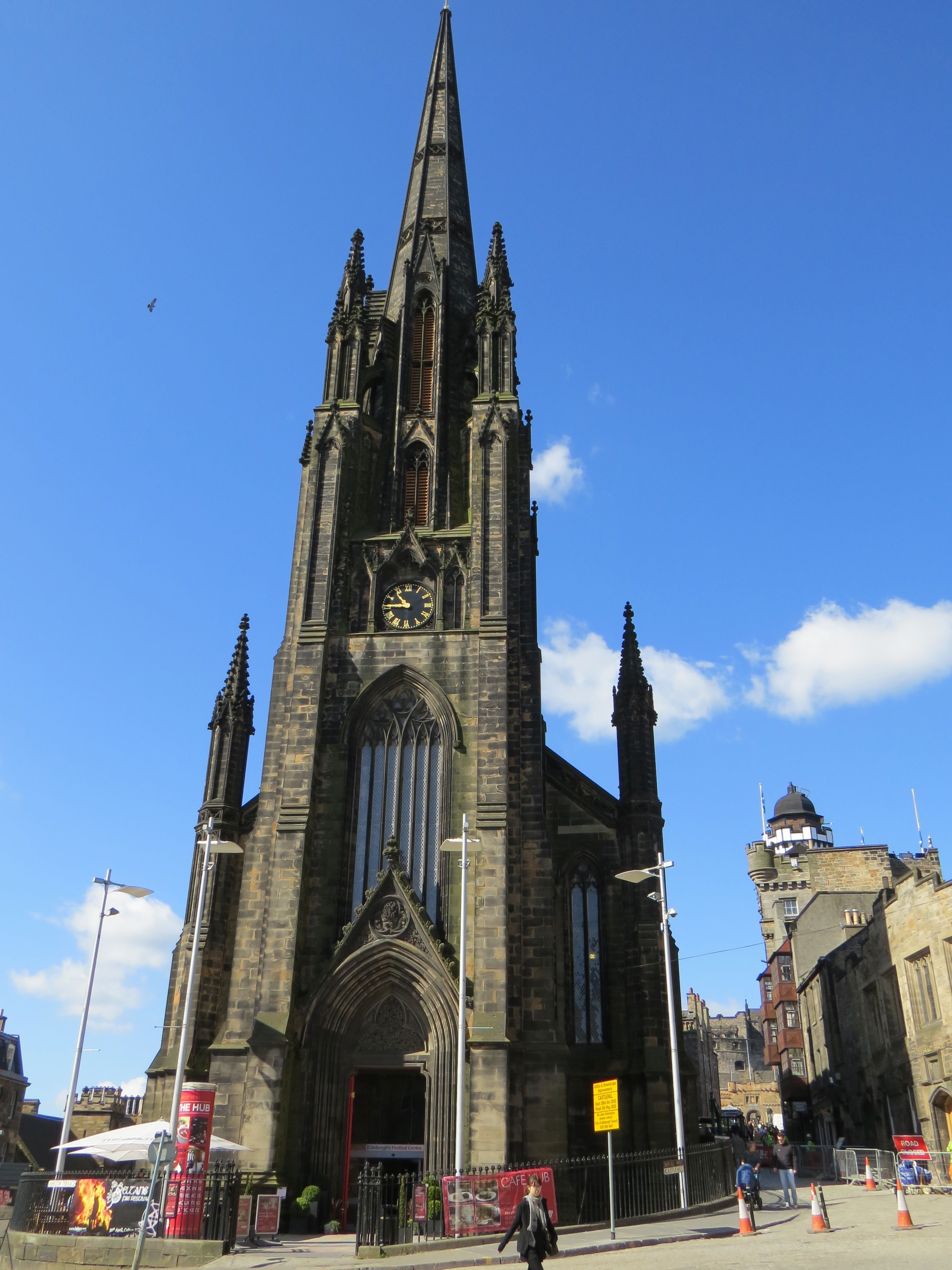
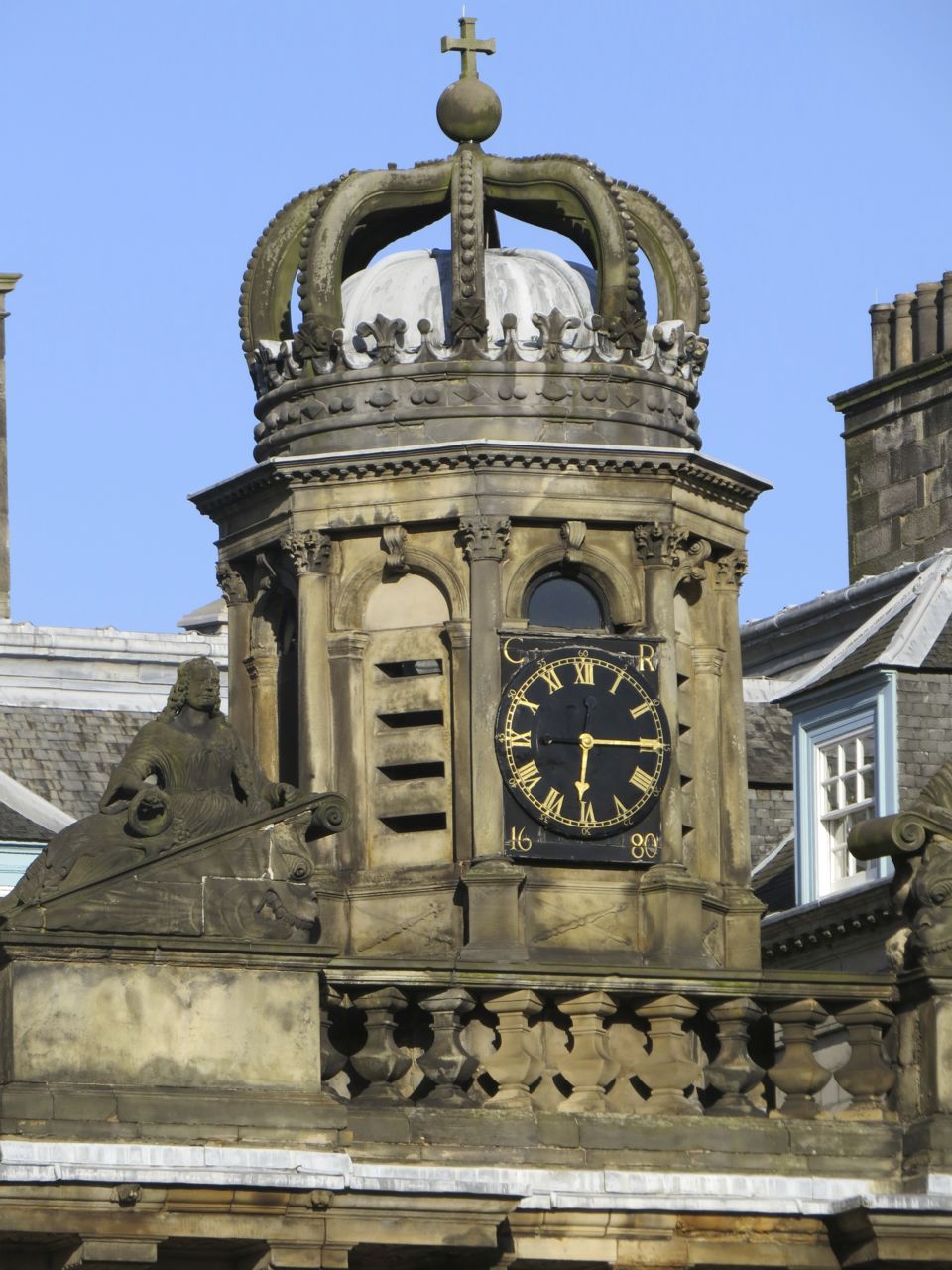
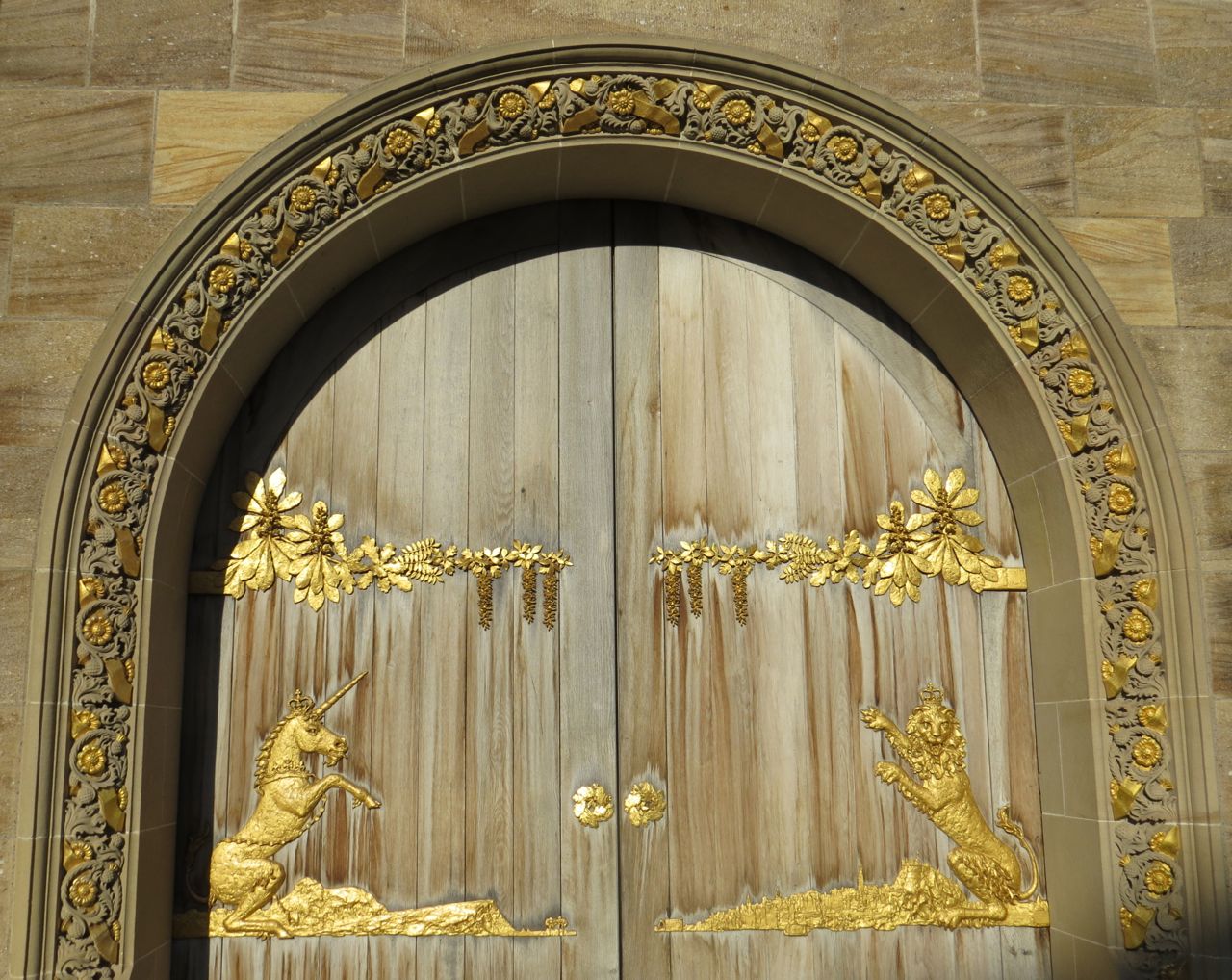
The Old Town is divided from the New Town (18th century) by the Princes Street Gardens. We wandered though the gardens and sat for awhile enjoying the sunshine and watching the flowers, animals and people.
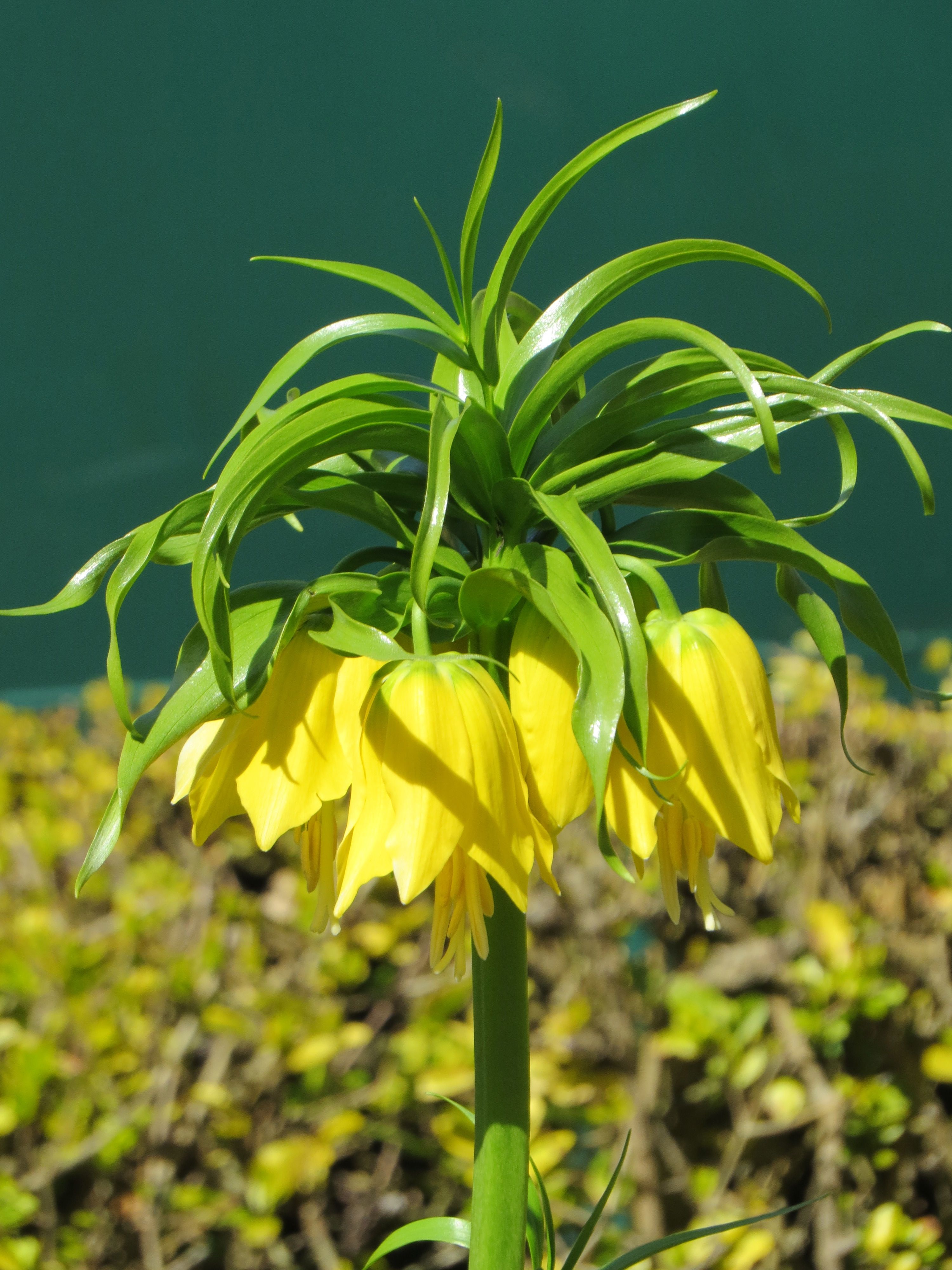
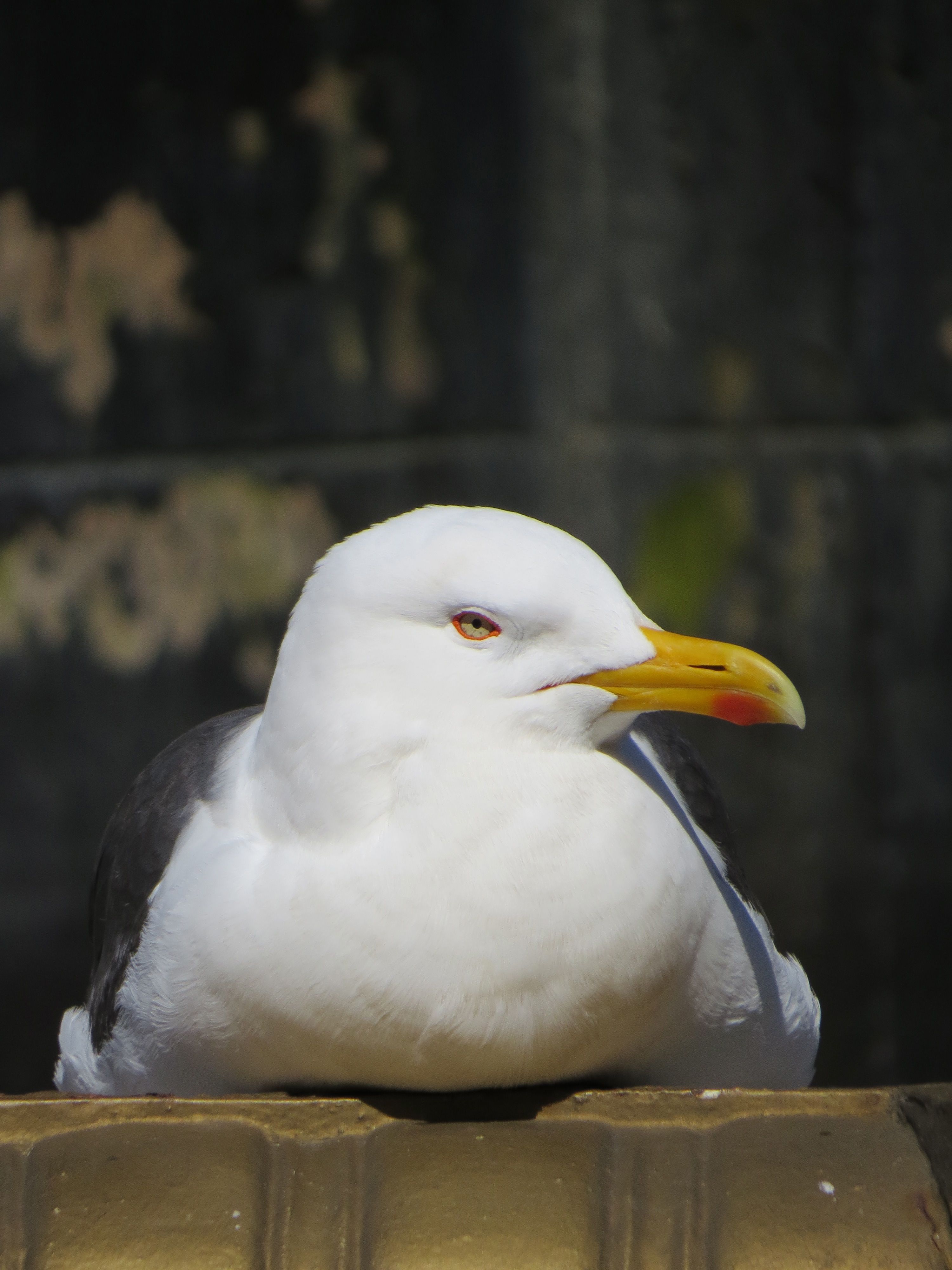
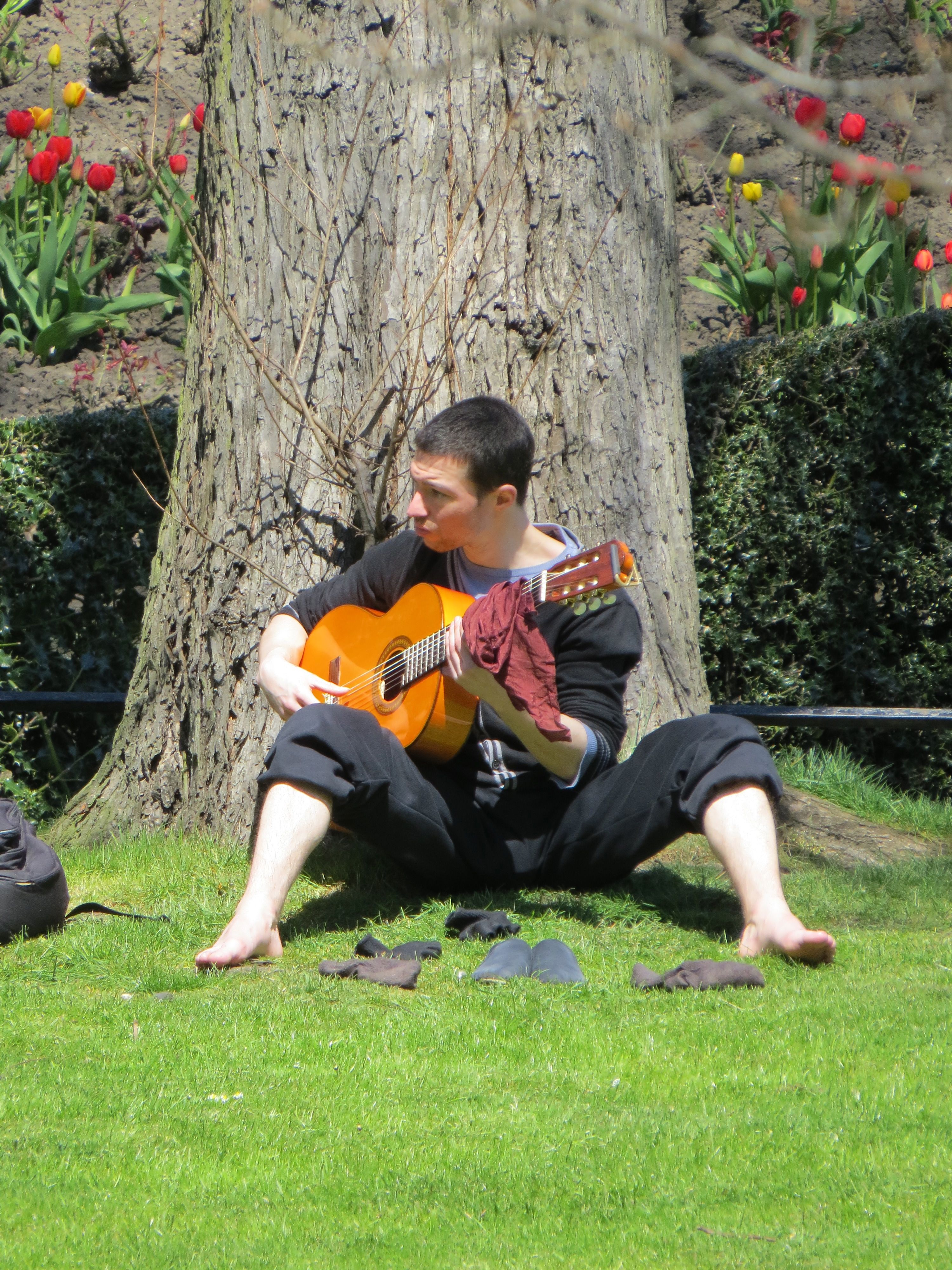
I even made it down to the beach.


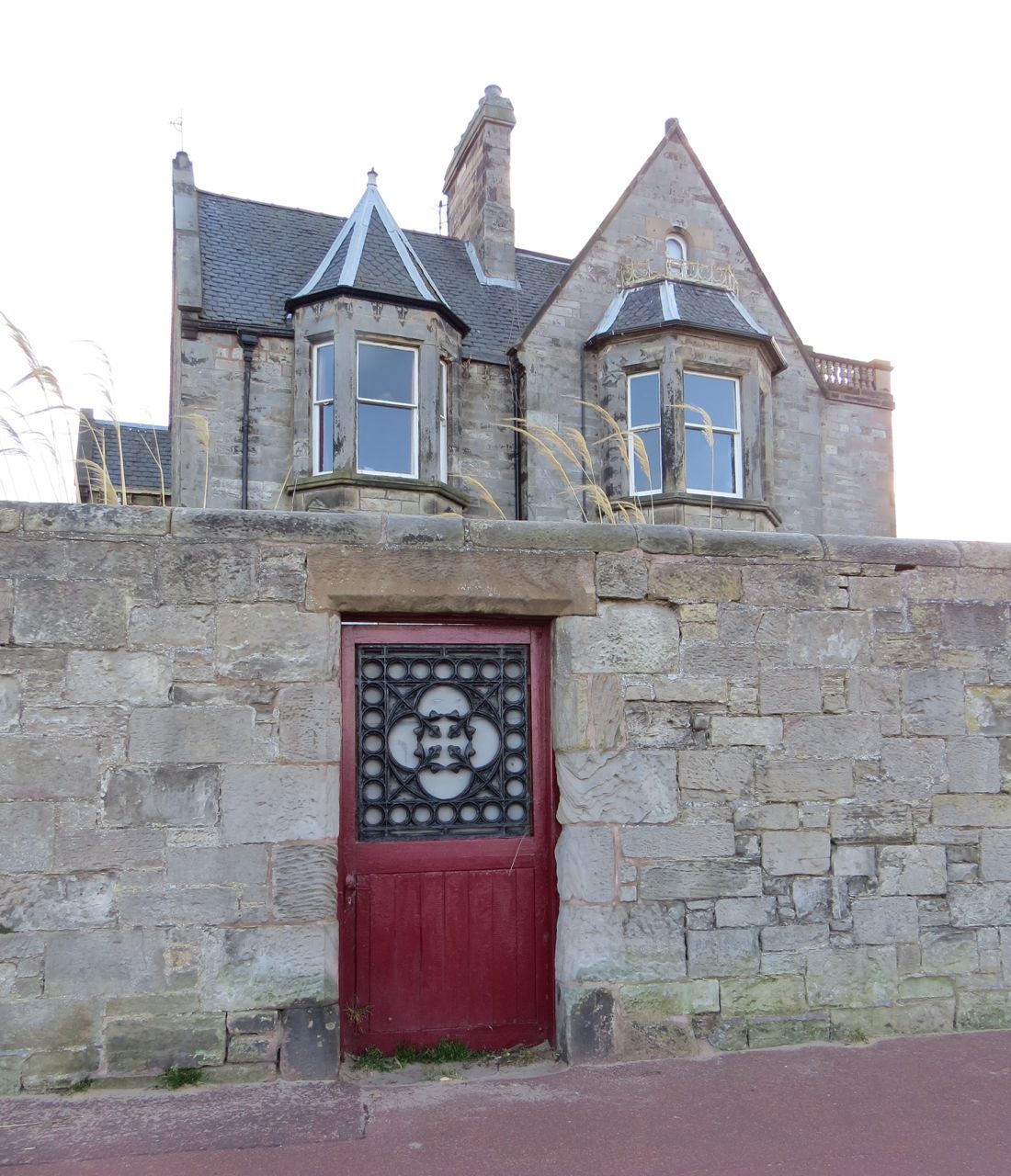
Of course, the real purpose of the trip was to attend the Beltaine Fire Festival which requires its own post …
I tried to take a bus trip to Glastonbury, I really did! But, the bus didn’t pick me up, then the alternate bus broke down. So, my amazing friends Cat and Seth came with me to Glastonbury, stopping at Avebury on the way.
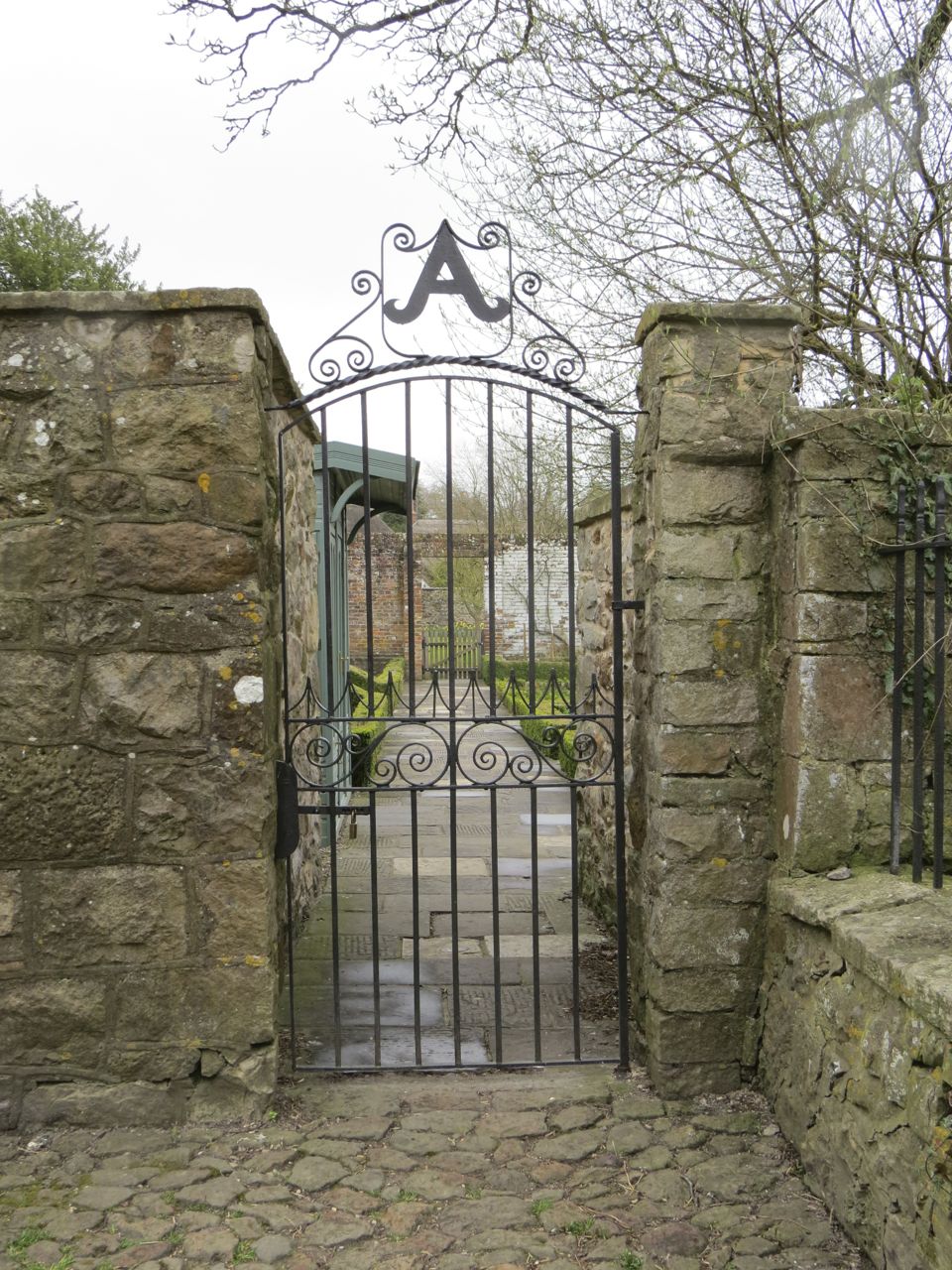

Being a holiday weekend in England, Cat’s one request as driver was that we get up very early to drive out of London before traffic got too congested. And so we did. Really early. So early, in fact, that the car park at Avebury was not even open when we got there. The down side? No coffee shop. The up side? No one else at Avebury so we had the stones all to ourselves.

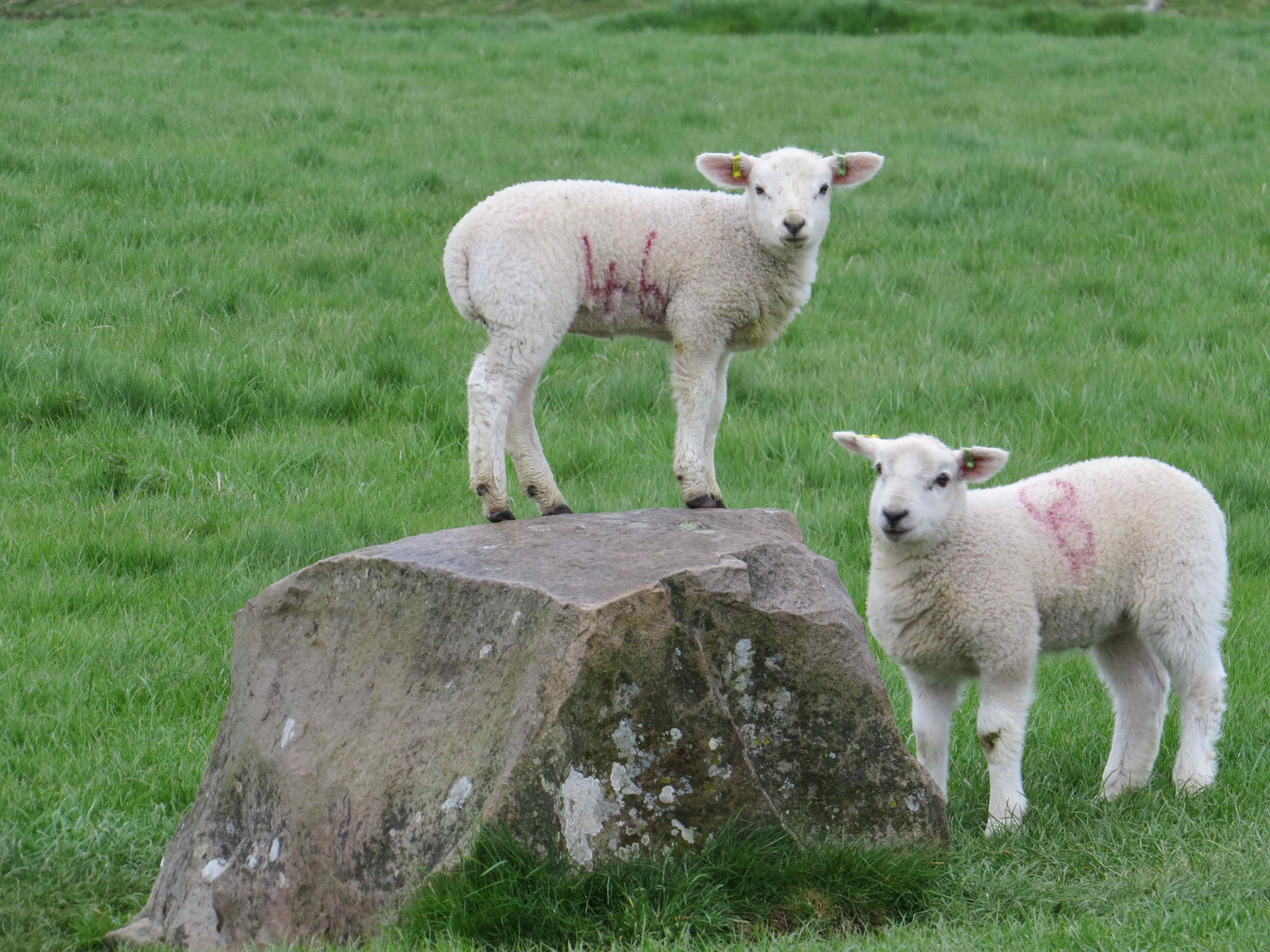
Well, except for the sheep and the lambs. But, really, the lambs are so cute, who could complain!

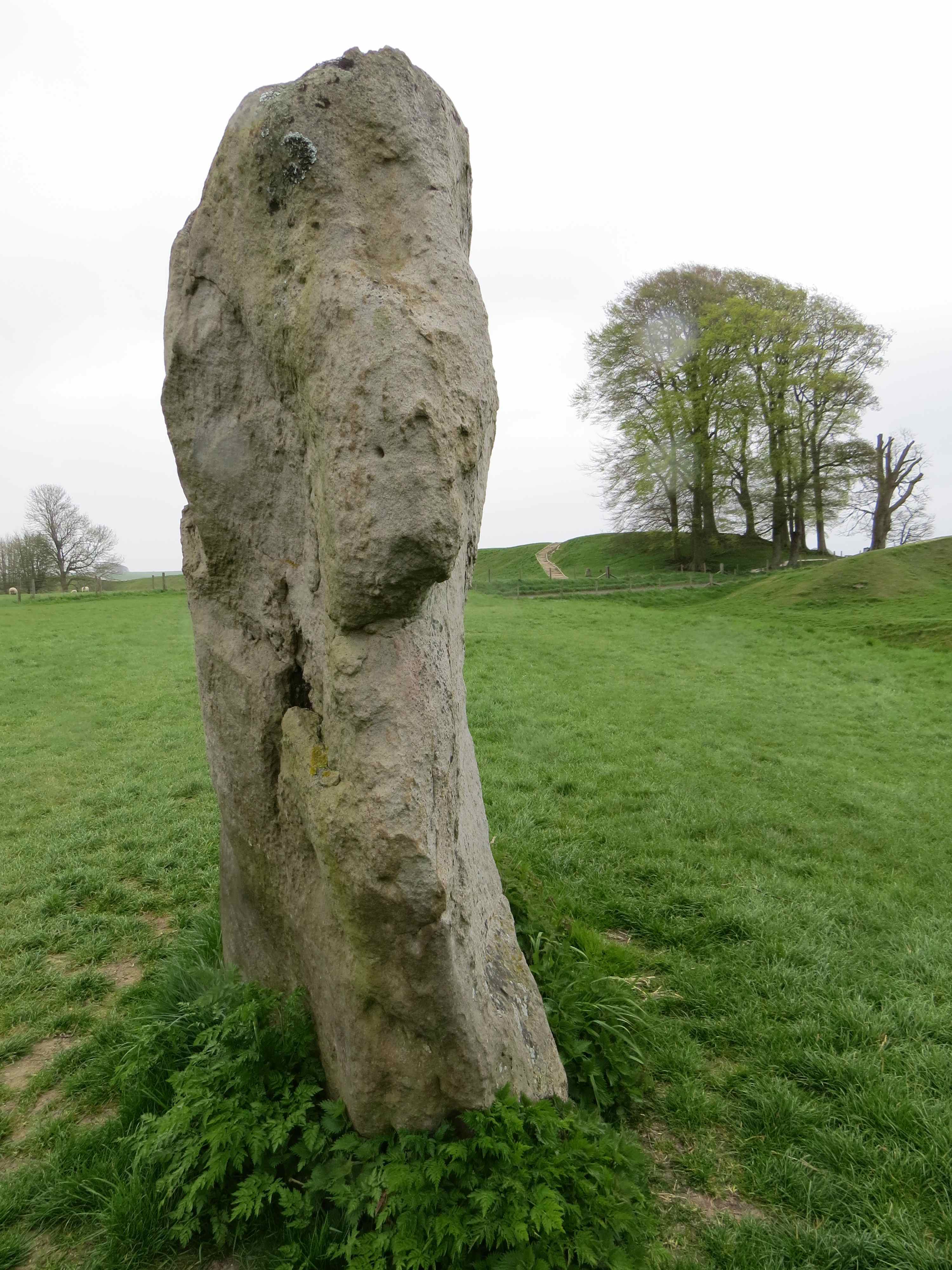
Avebury is a neolithic henge monument containing three stone circles. It was built around 2,600 BCE (thus, neolithic) and consists of three stone circles with a bank and a ditch (a henge).
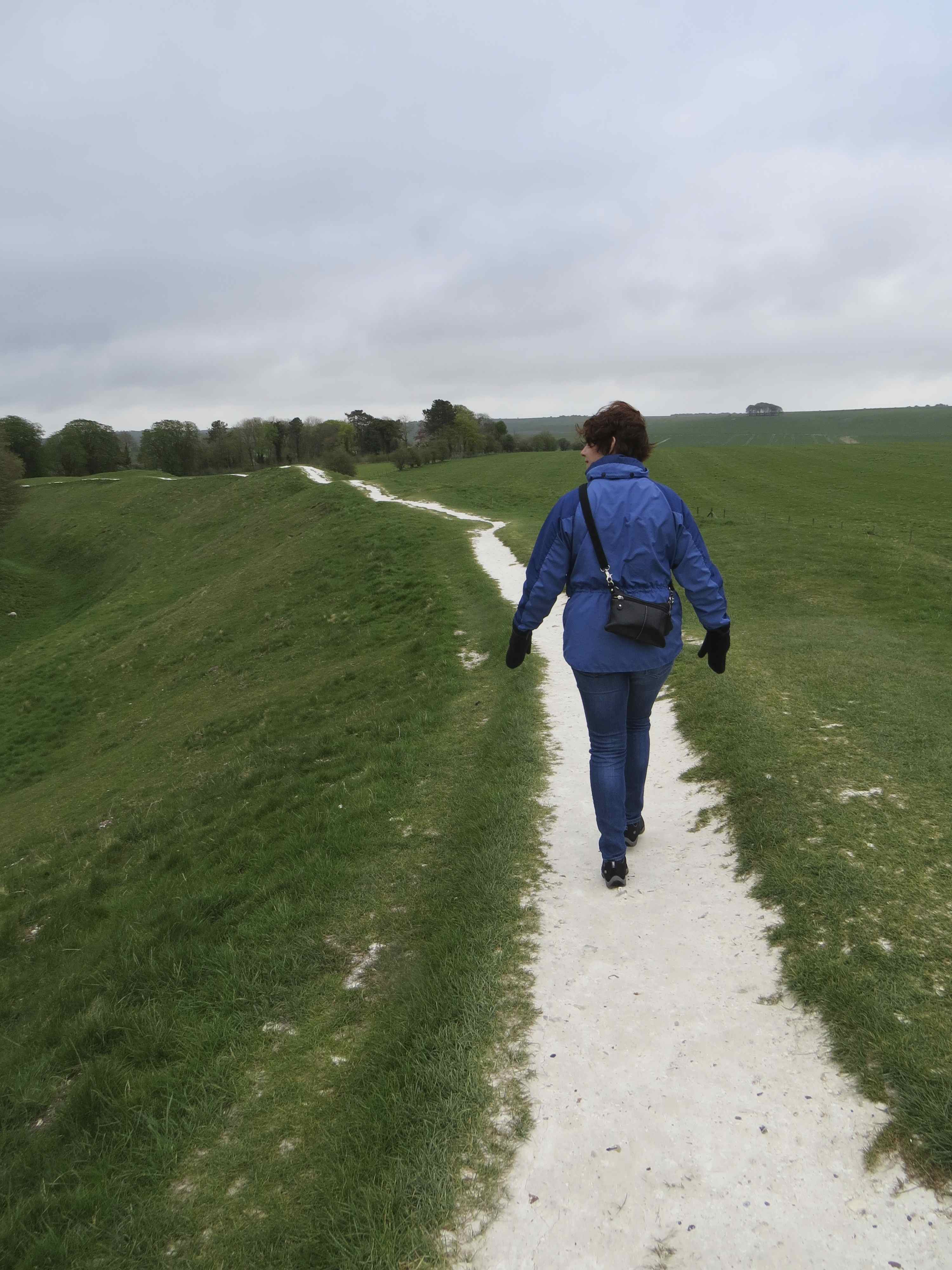

Avebury contains the largest stone circle in Europe with a diameter of 331.6 metres (the henge is 420 meters across). Britain’s largest stone circle, there were originally 98 standing stones, some weighing more than 40 tons and varying in height from 3.6 to 4.2 meters. The monument was used for at least a thousand years after it was built.
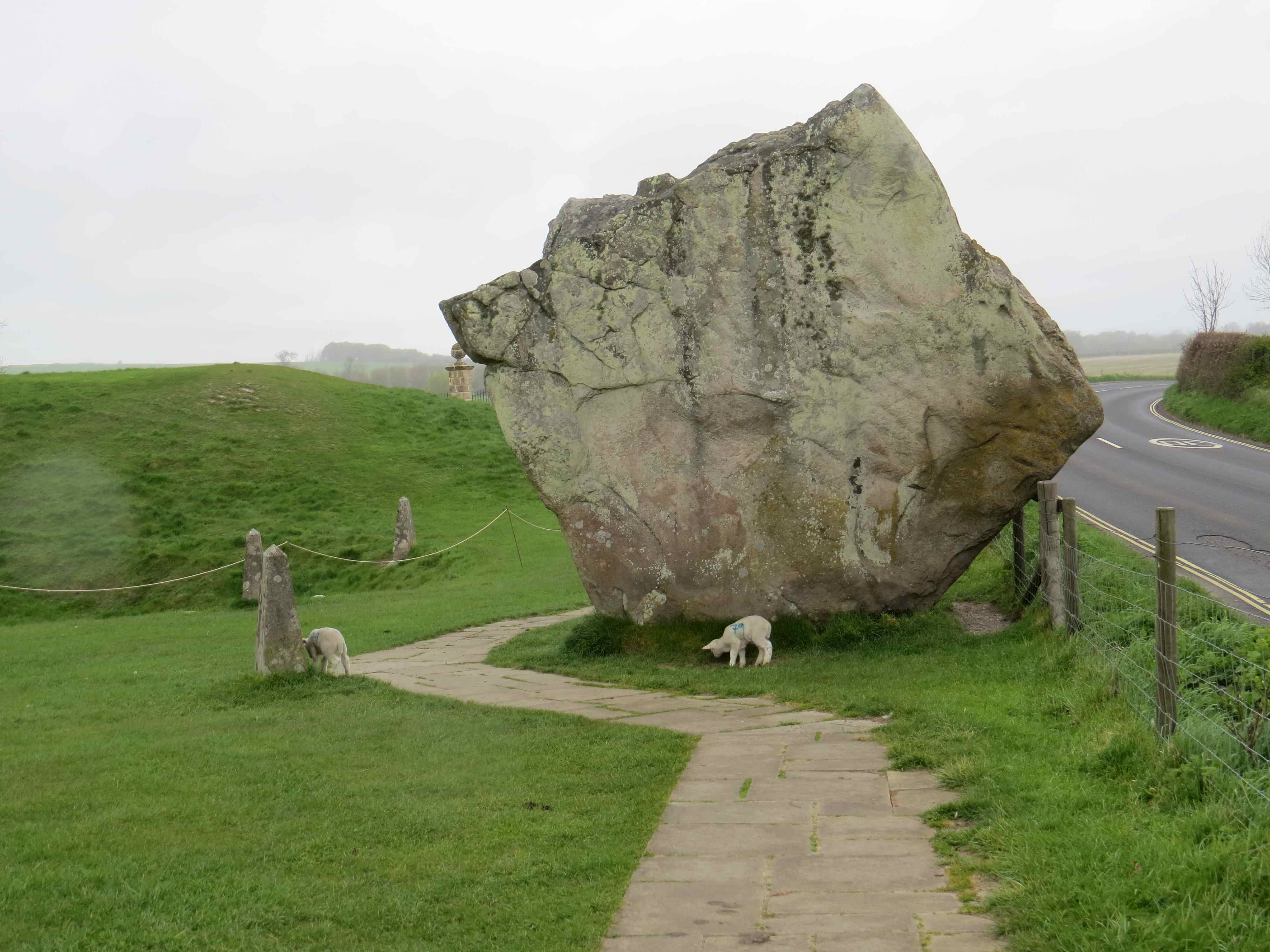
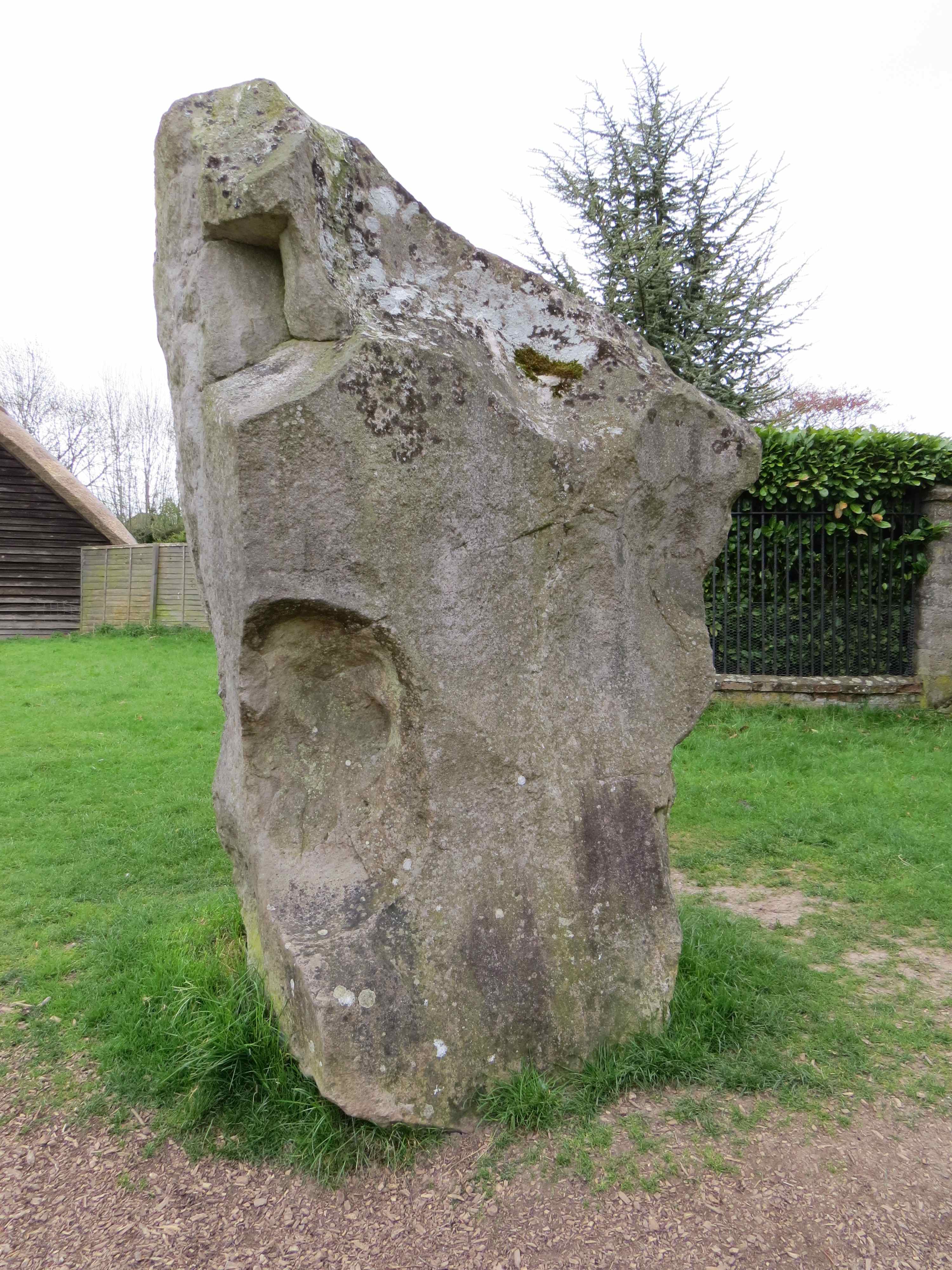
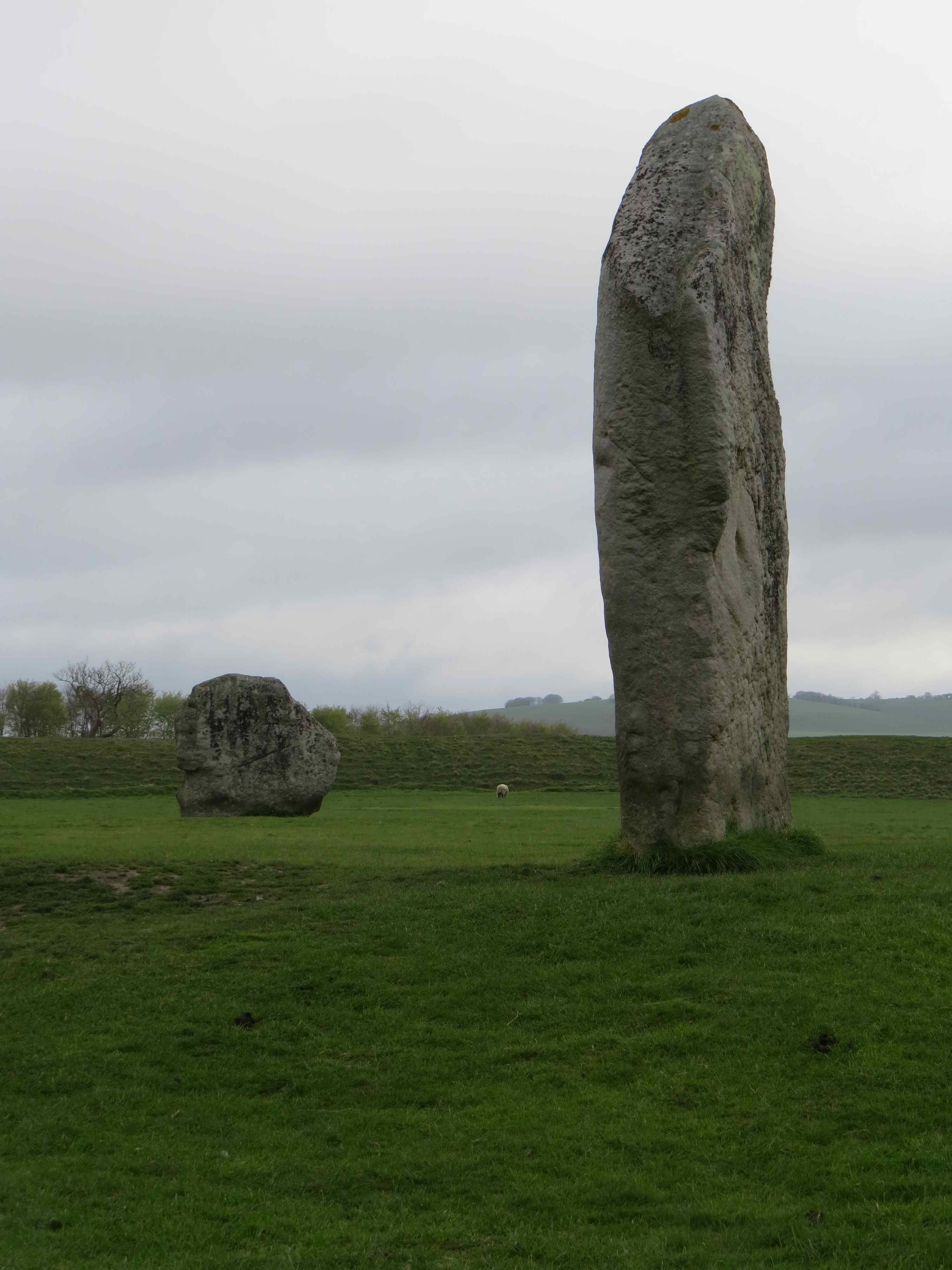
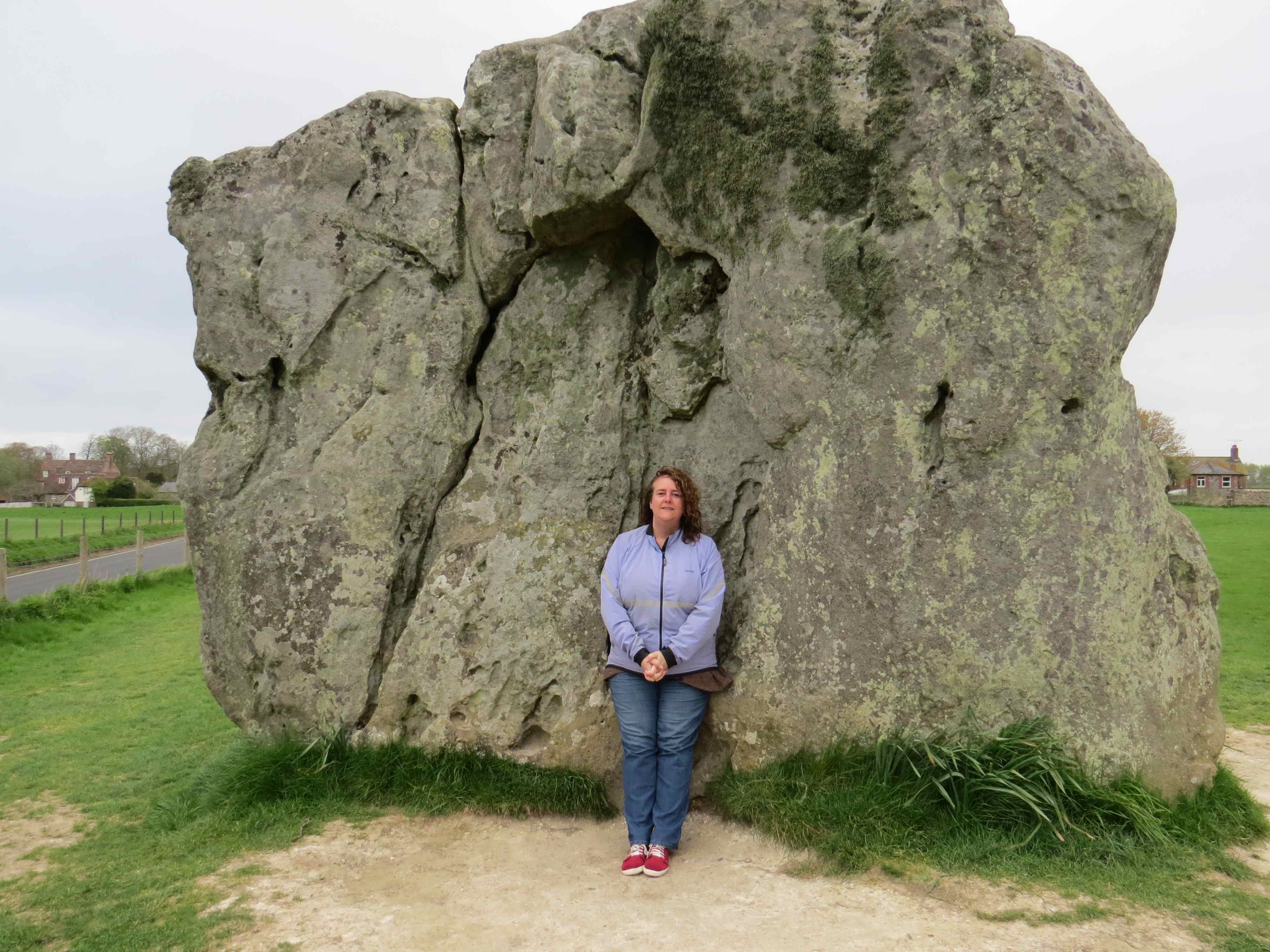
There is a long avenue of standing stones that lead to the south entrance. Two very large stones mark this gateway. And, one has a convenient seating spot in it!
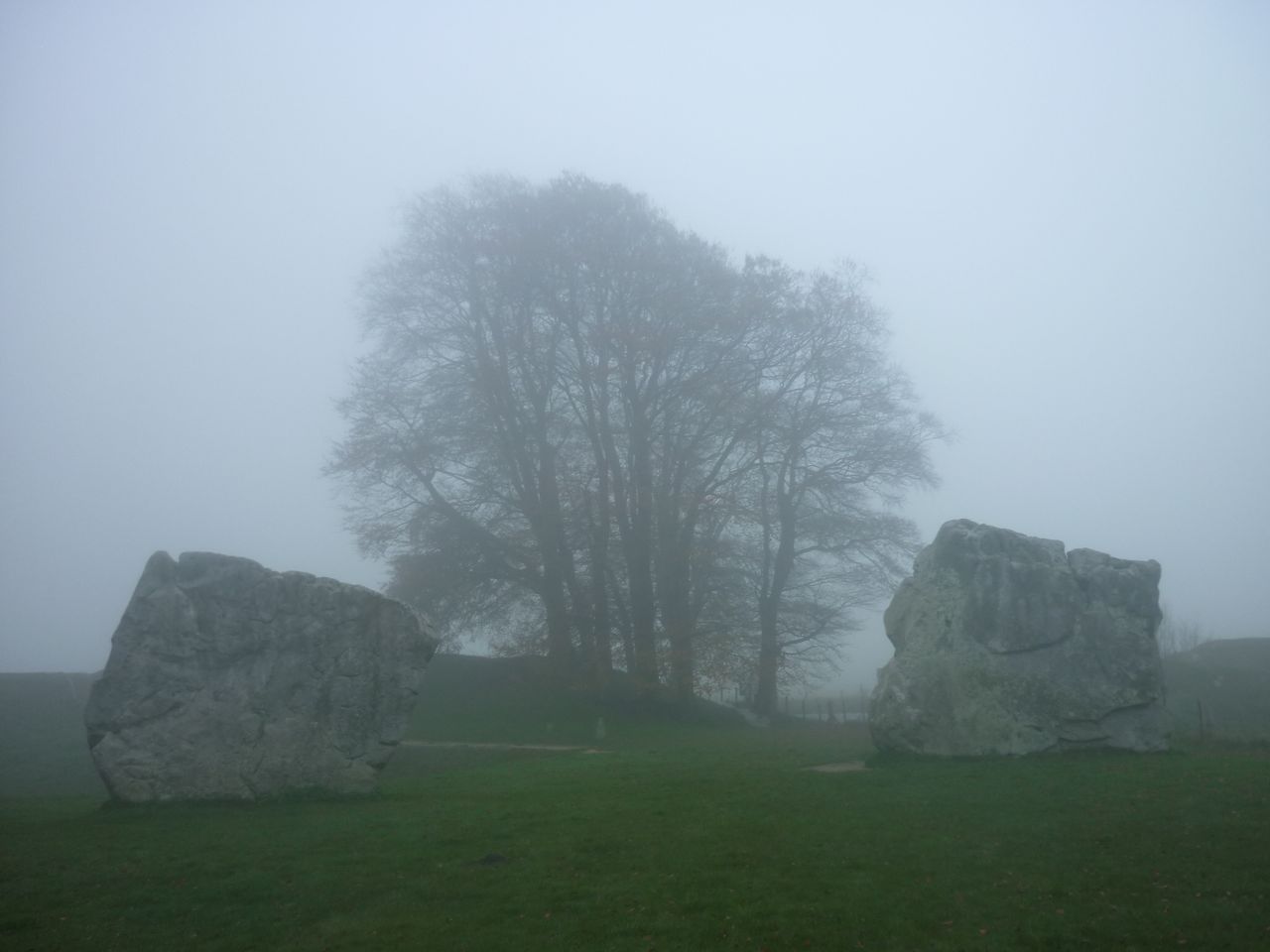
This was my second visit to Avebury but the weather was equally gray, windy and cold both times! My first trip was also very foggy which made for some really amazing shots, like this one …
If you ever get a chance to go and see Stonehenge, I highly recommend spending a bit more time and heading just down the road to Avebury. As opposed to Stonehenge, you can walk right up to, and within the stones. The energy of the place is amazing. The stones have such a presence, each has a personality. It’s like they watch you, knowing that they’ve been there long before you and will be there long after you’ve gone.
After touring the Minster, we headed out to explore the town of York.
The city was founded by the Romans in 71 AD and we walked the Roman Walls (really dating from the 12th – 14th century) for a great view of the city and the Minster.
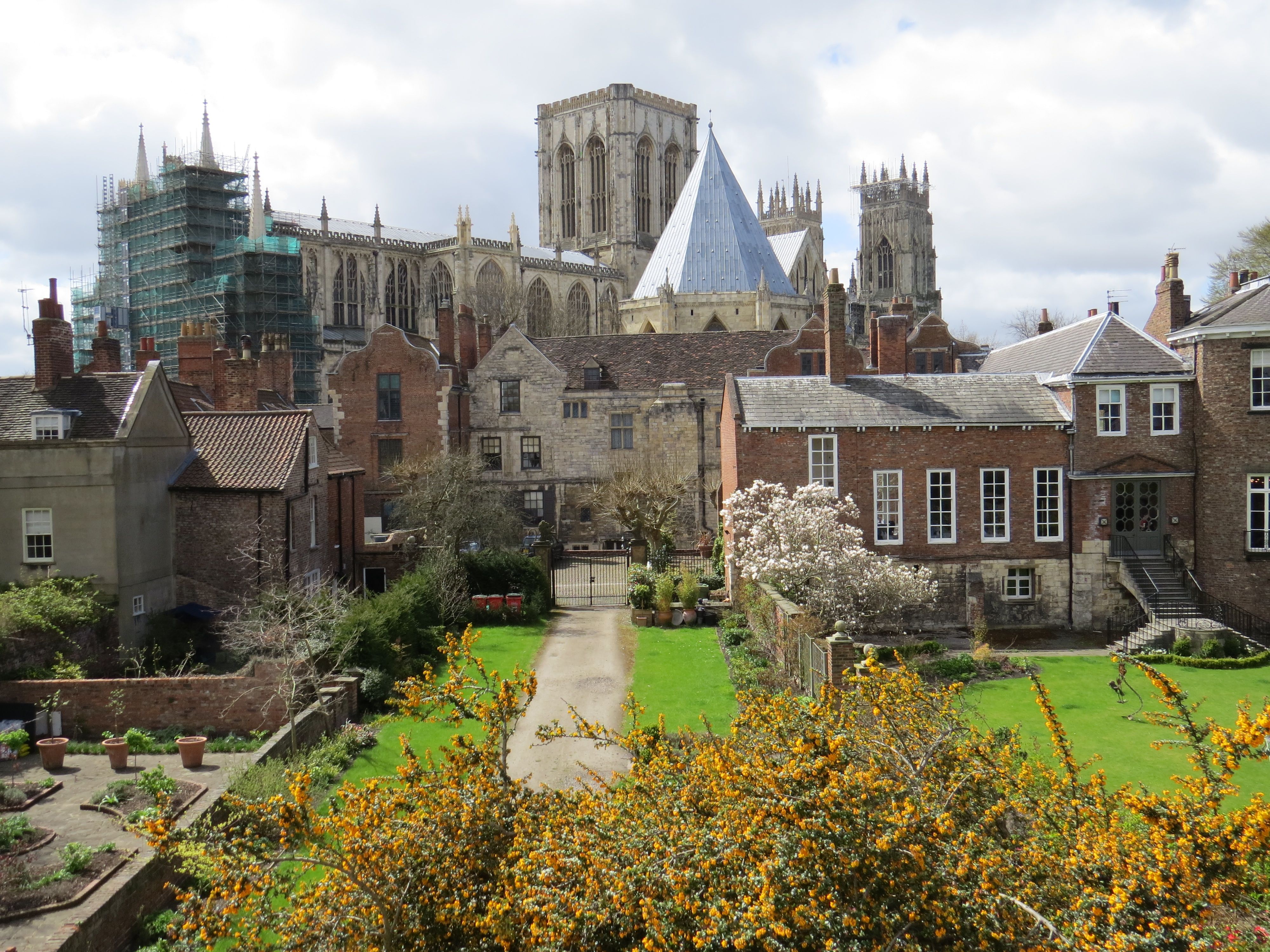

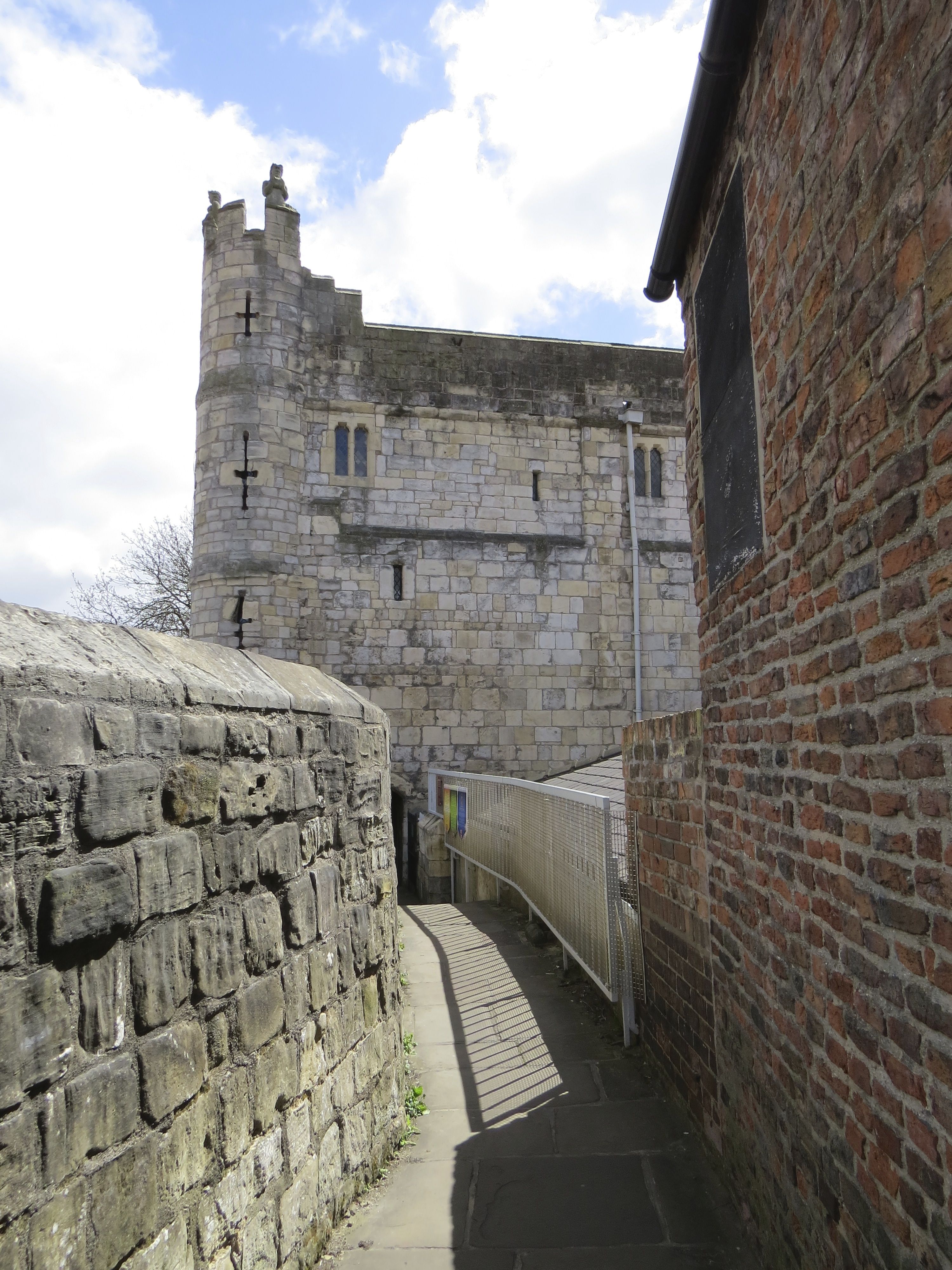
Having just finished physio for my knee injury, I am happy to report that the knee performed well under the rigour of lots of uneven stairs and cobblestones.
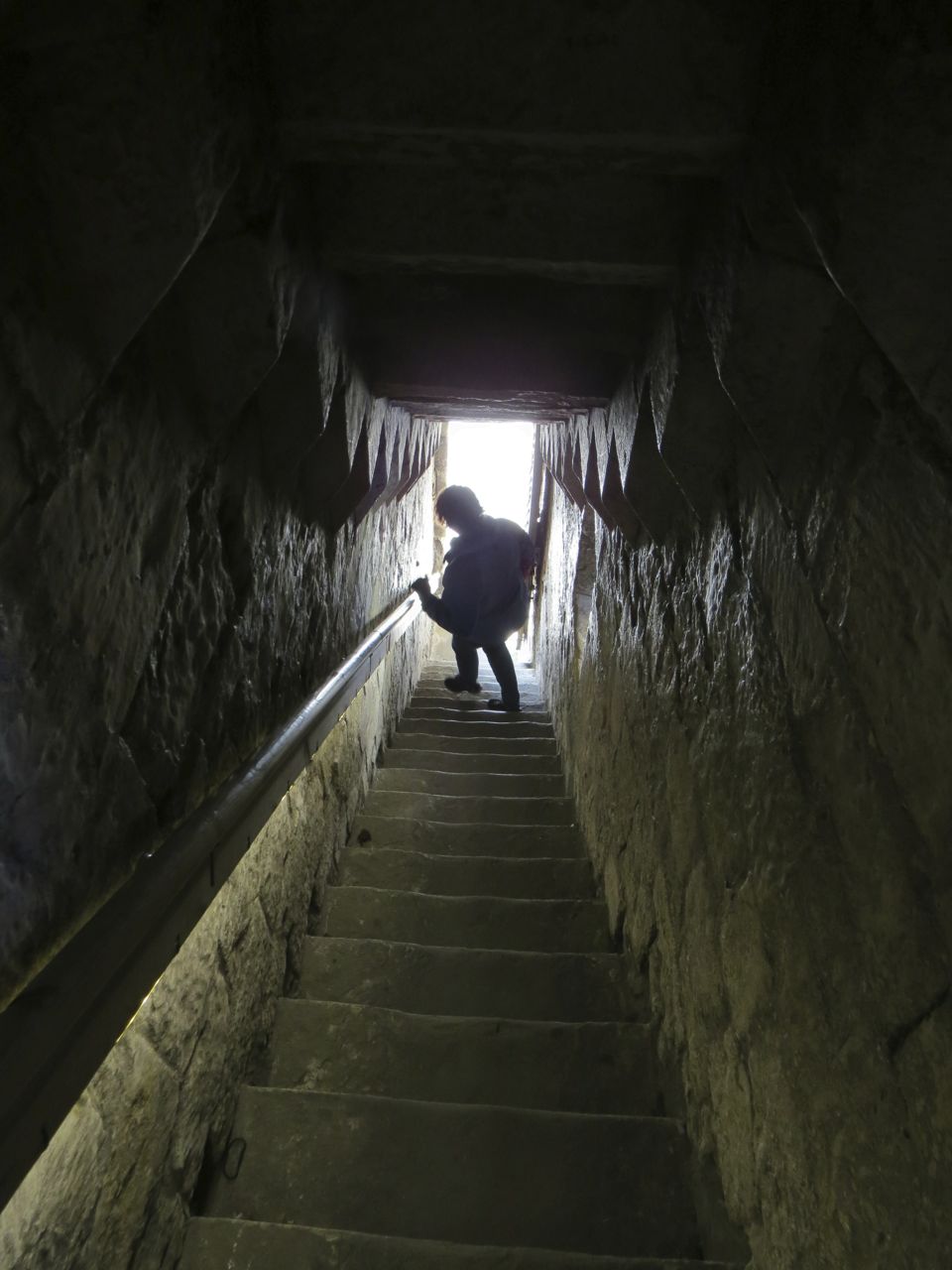
With a late spring in the UK, the grassy slopes leading up to the walls were covered in daffodils. It was absolutely beautiful.
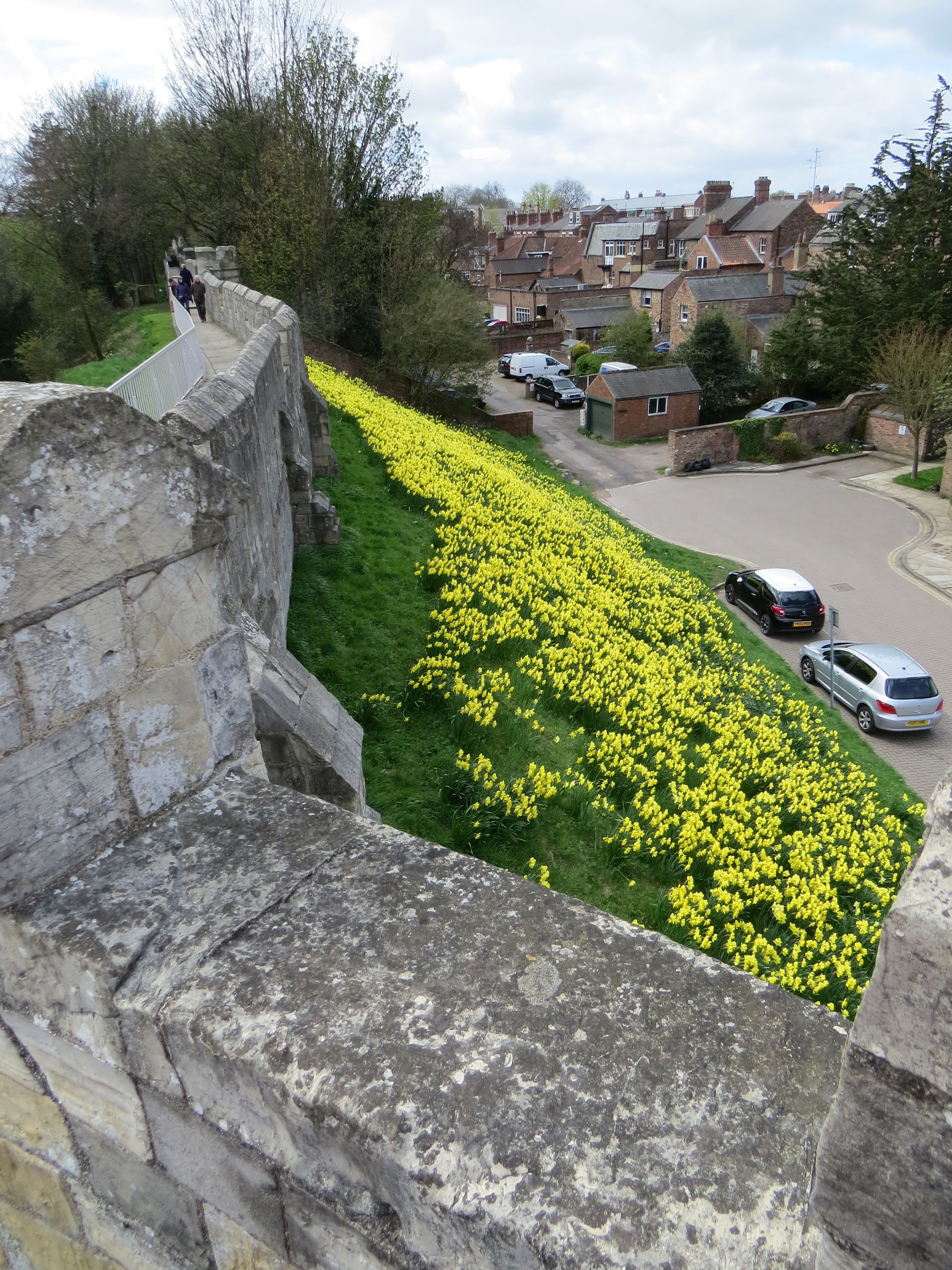
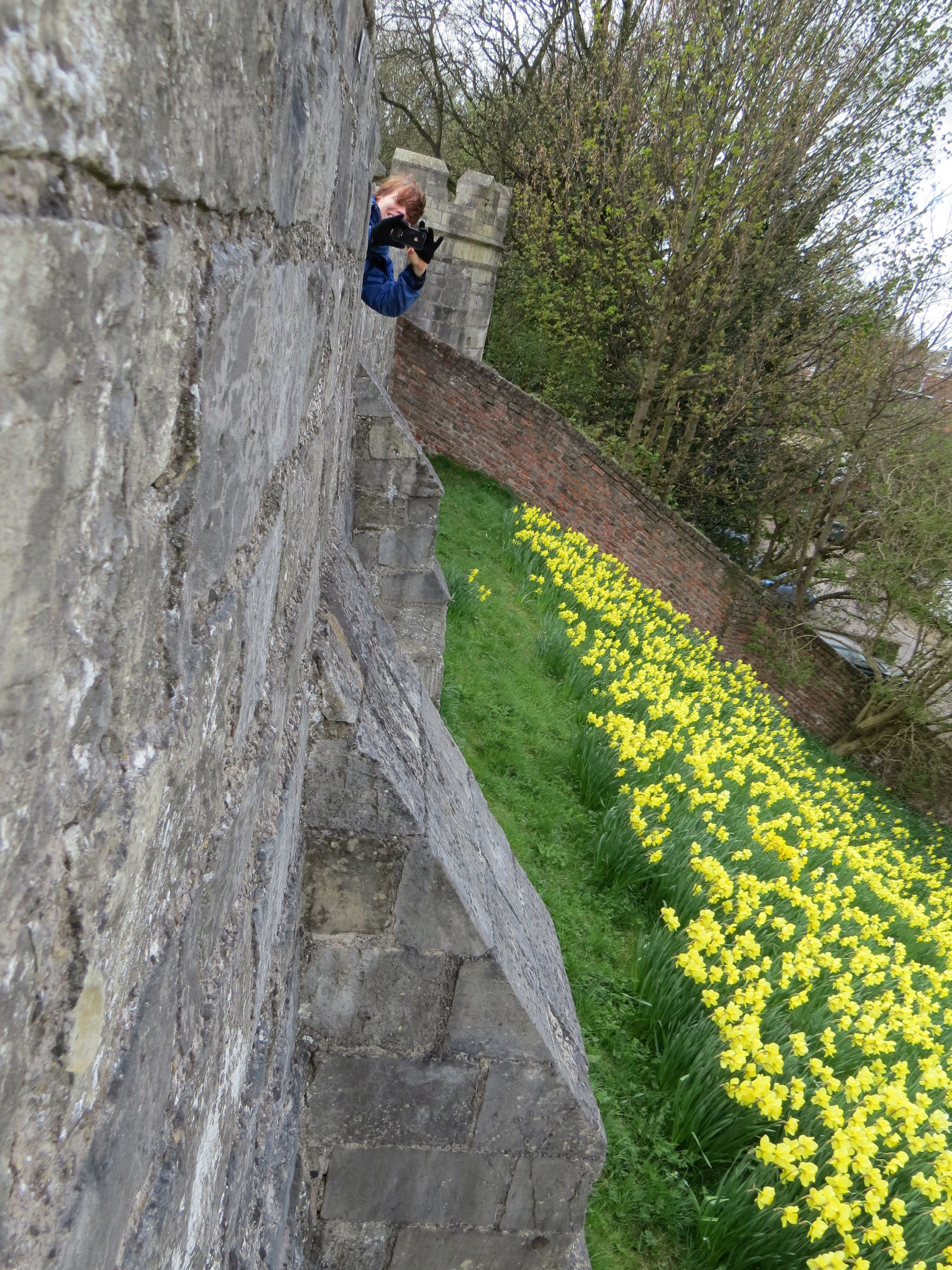
A sea of yellow.

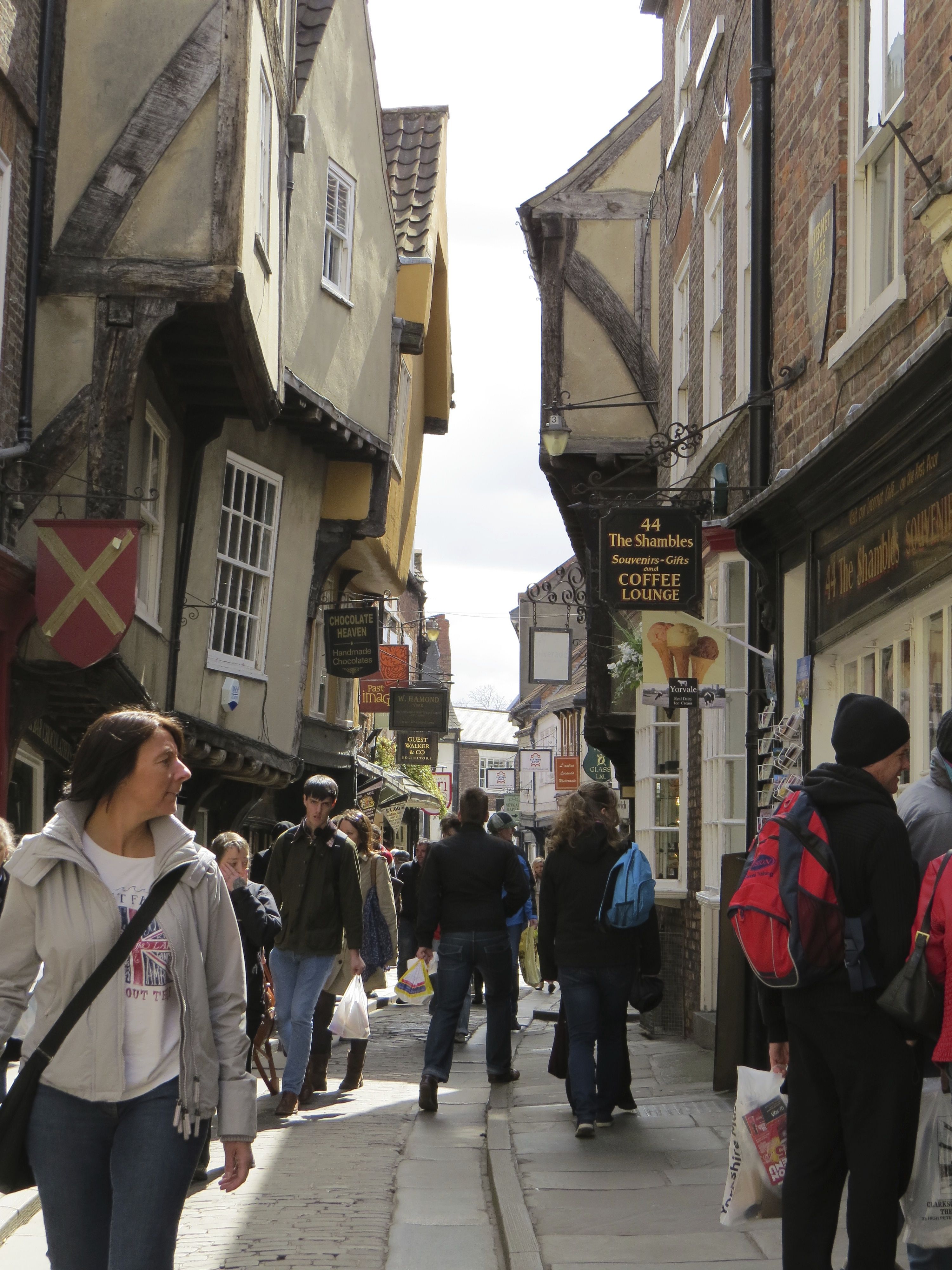
One of the features of York are the Snickelways, narrow pedestrian routes, many of which led towards the former market-places. In this one, the Shambles, you can see the medieval narrow street now lined with shops. We even found a glass shop here and I bought a glass bouquet of flowers which I successfully transported home intact.
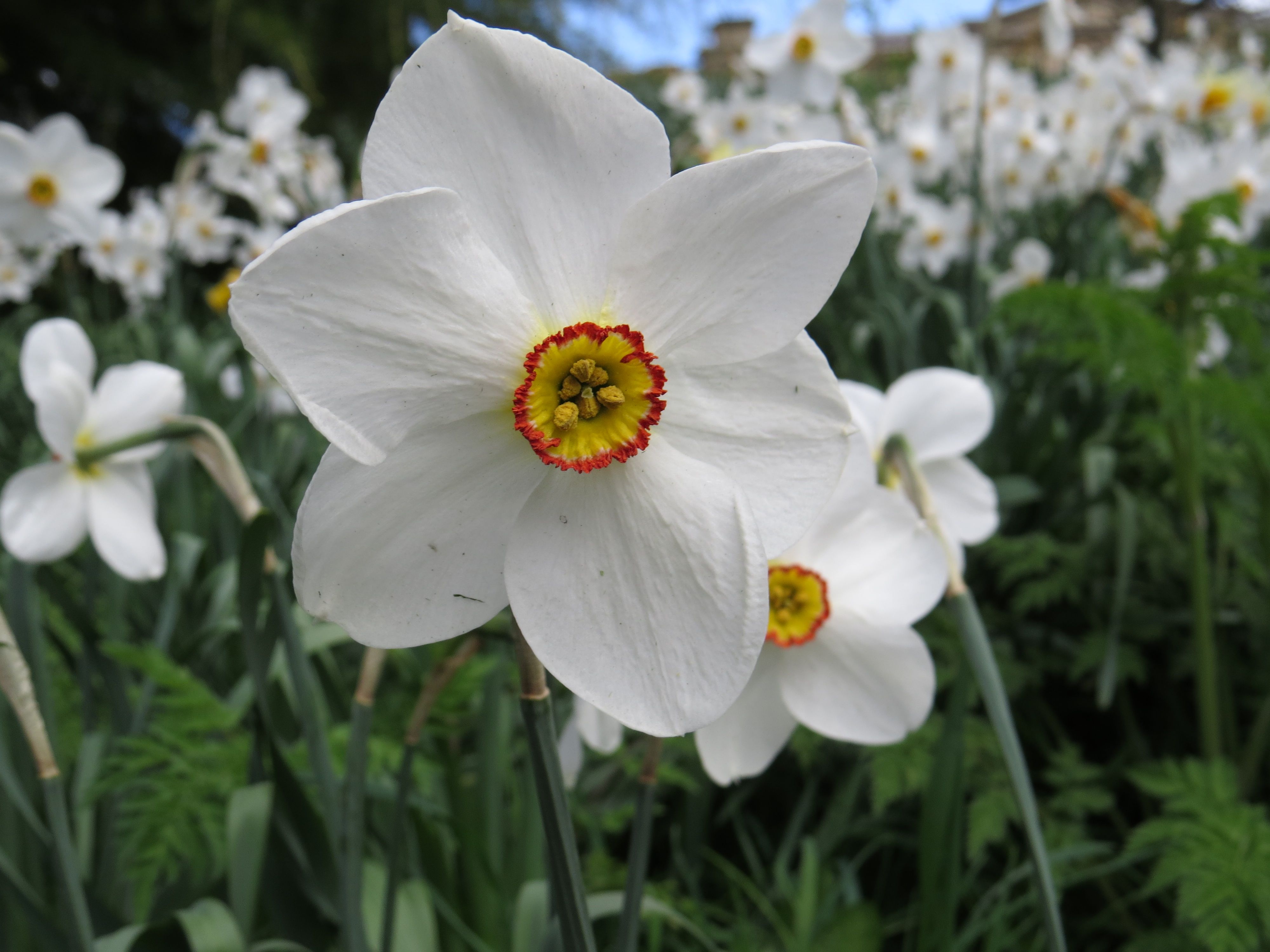
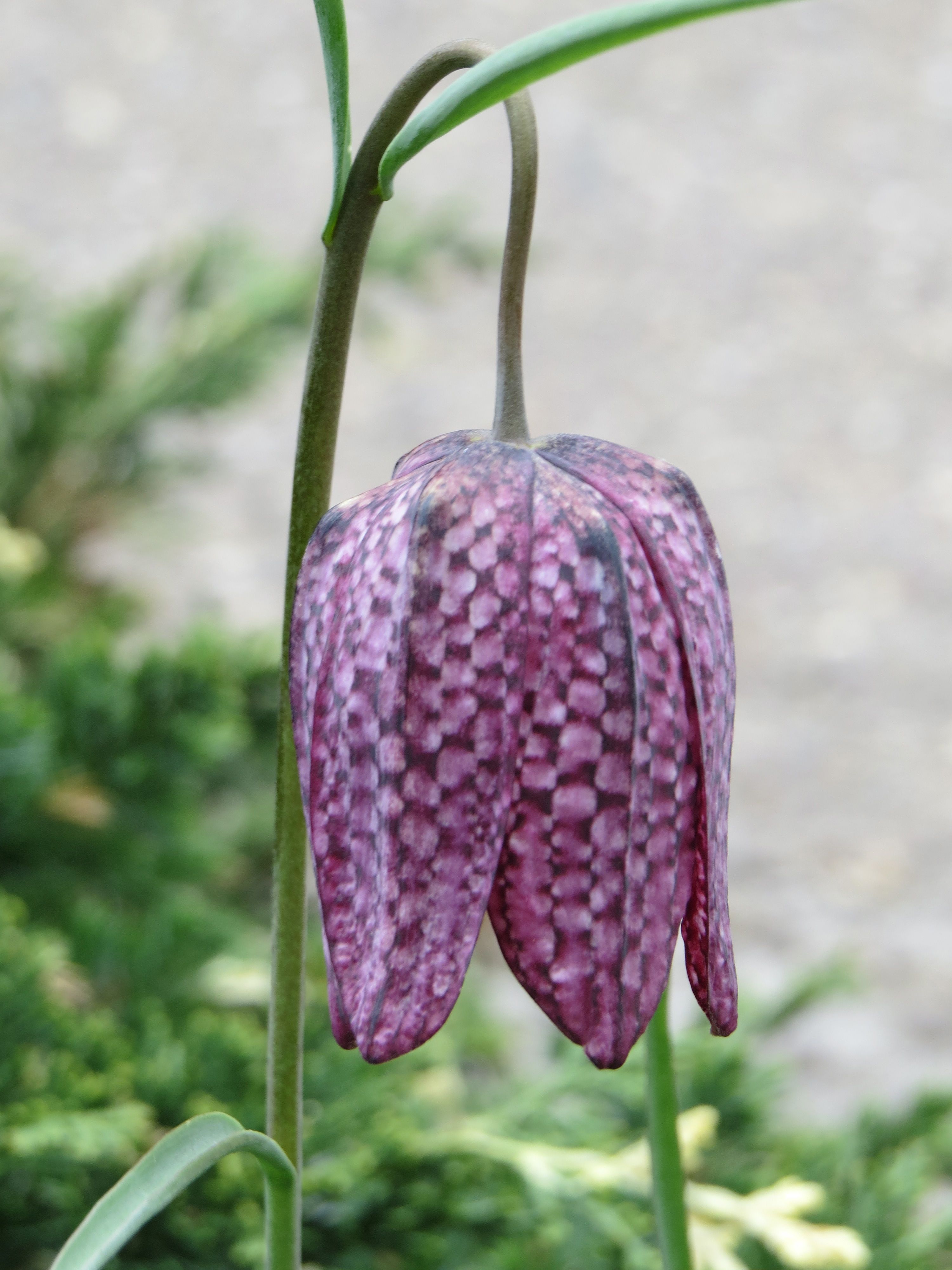
Some more of the beautiful flowers in York.
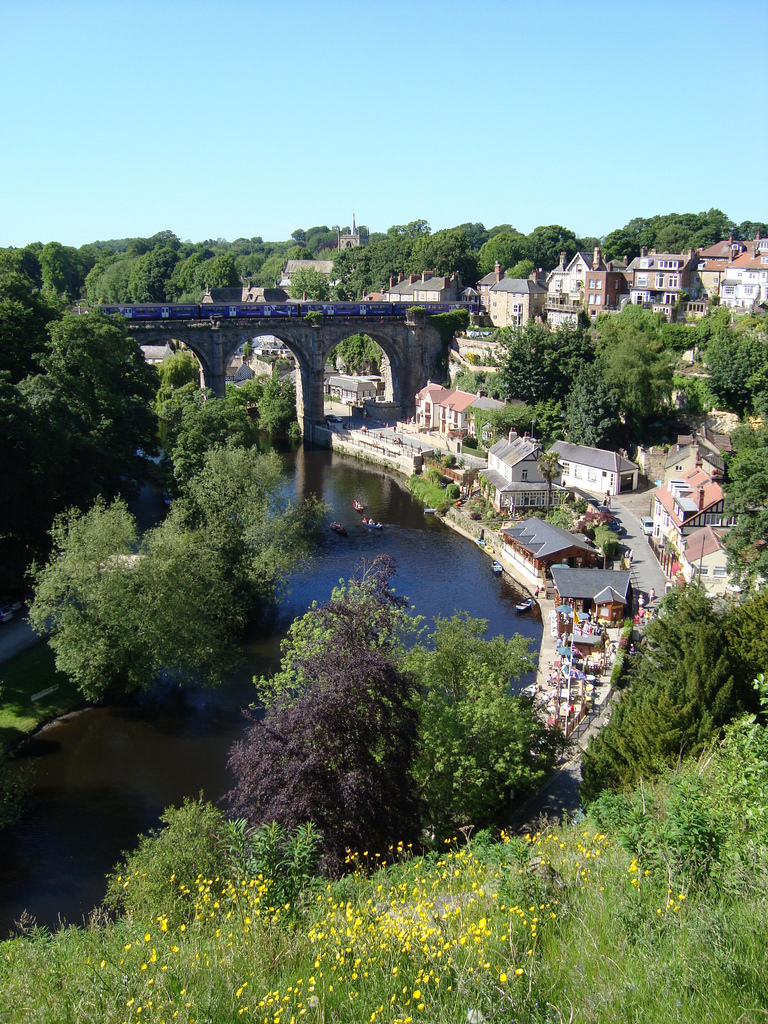
One place we didn’t get to visit was nearby Knaresborough. My Dad was born in London but during WW2, the family moved to Knaresborough (just outside York) for safety. After the war was over they emigrated to Canada. Lucky for me, my sister travelled to York a few years ago and she did get to Knaresborough and visited the very house where Dad and the family lived. She even got invited in for cake! So, to end this post, a picture of Knaresborough courtesy of my sister.
It was a sunny but windy day when we visited York Minster, one of the largest cathedrals in Northern Europe.
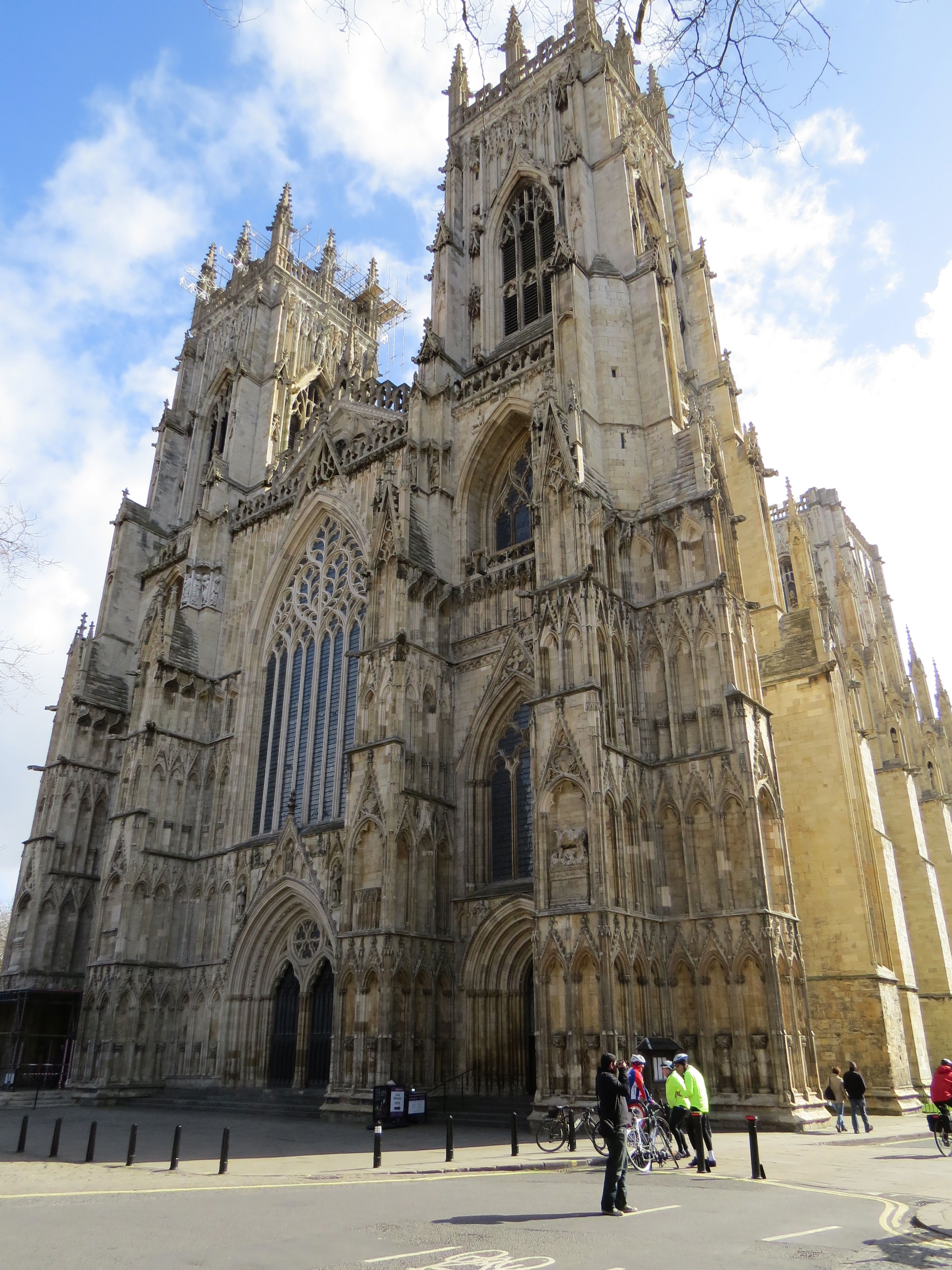
The current Gothic-style cathedral was built starting in 1230. But, you can still see the foundations of the older, Norman-style church underneath the building. Well, unless the lower part was closed for renovations like on the day we visited. Somewhere on that west portico are some tiny little carvings of a Klingon and a Ferengi, put there by modern stonemasons in a personal touch, just as their 13th century forecarvers would have done.
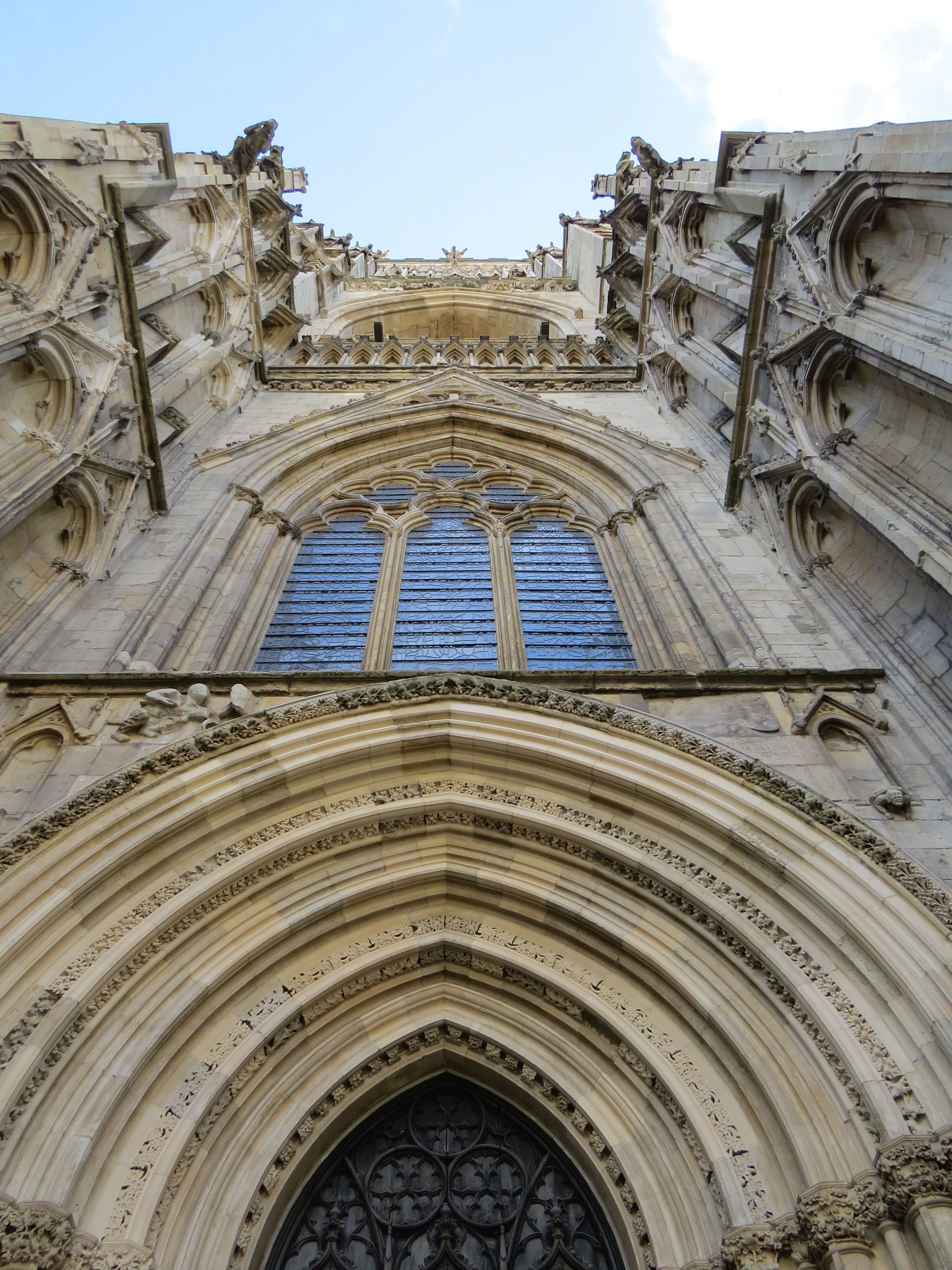
In the English Civil War the city was besieged and fell to the forces of Cromwell in 1644, but Thomas Fairfax (who was a York man) prevented much damage to the cathedral. The organ base and casing is from 1832 although the organ mechanics are only from 1903 (only!!).

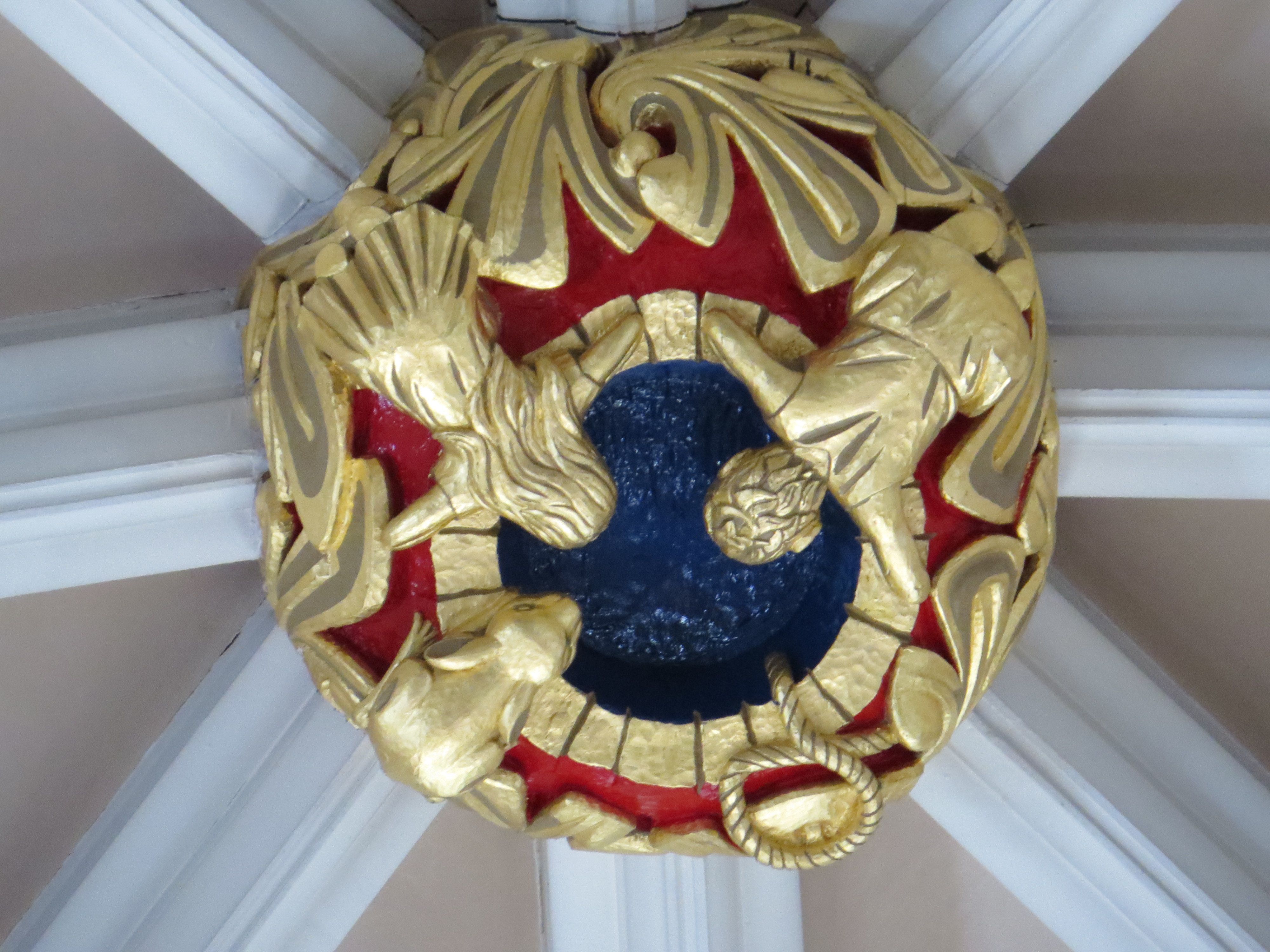
On 9 July 1984, a fire believed to have been caused by a lightning strike destroyed the roof in the south transept, and around £2.5 million was spent on repairs. Restoration work was completed in 1988, and included new roof bosses (the bits where the beams join) to designs from children via a competition organised by BBC Television’s Blue Peter programme (a kid’s show). This boss has some children looking into a well with a rabbit. I think it is taken from one of the beatitudes. At least I think that’s what our guide said. The rose window was also under restoration and the workers were making a lot of noise.
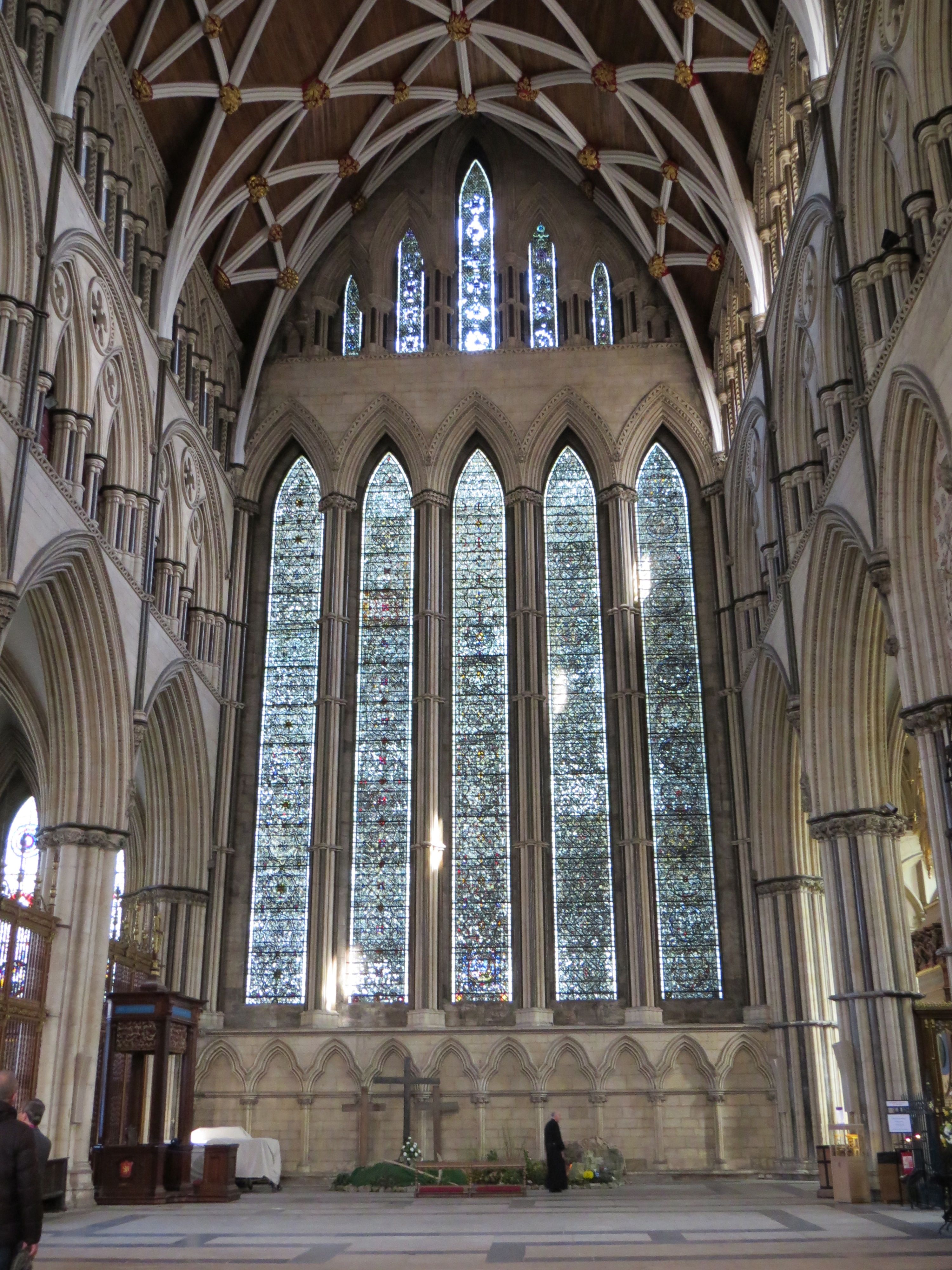
The Five Sisters window in the north transept made of five lancets, each 16 metres (52 ft) high and glazed with grey glass, rather than narrative scenes or symbolic motifs that are usually seen in medieval stained glass windows. Til I learned this, I thought it was just really dirty.
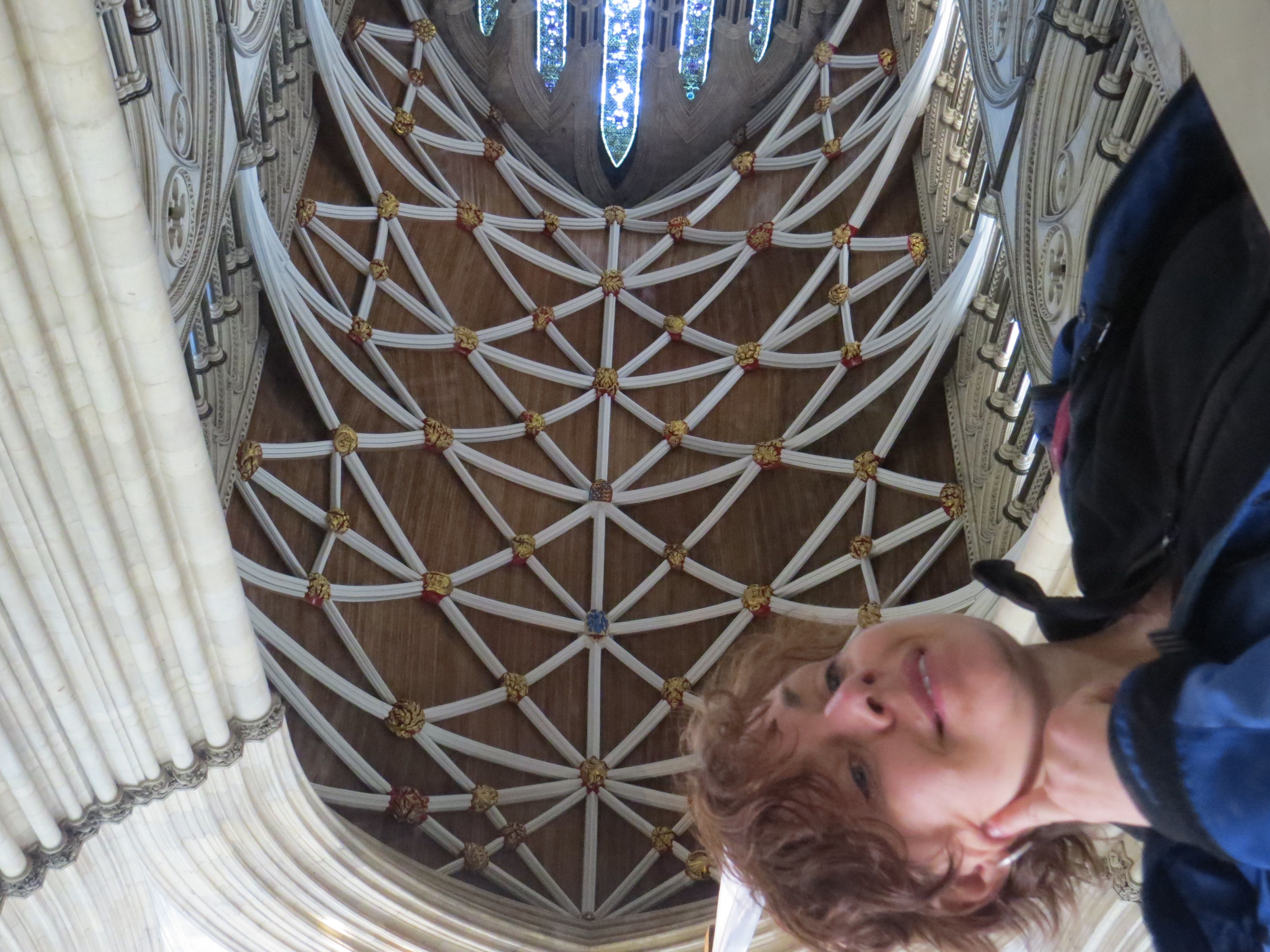
A view of the south transept ceiling and my good friend and traveling companion, Cat. To avoid having to give everyone complimentary neck massages on the way out, there was a mirror placed so you could look up while looking down. Beautiful church and beautiful friend in one shot.
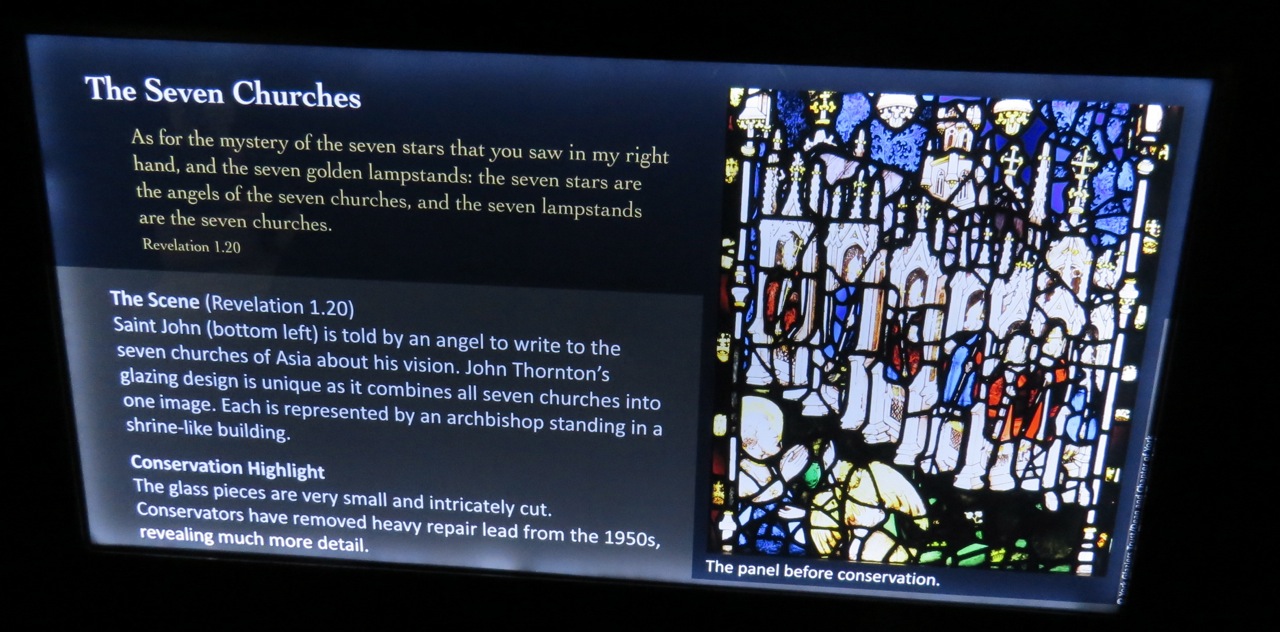
Behind the high altar is the Great East Window which tells the story of Genesis and is the largest expanse of medieval stained glass in the world. Which would have been amazing to see but it’s currently undergoing a massive conservation project. Instead, it was covered by the largest expanse of painted plastic in the world. Below the Great East Window currently sits The Orb, a stainless steel dome containing five of the conserved panels from the window, one of which is changed each month. We did get to see the Orb and thus to see some of the stained glass panels from the Great East Window up close.
A picture of before the restoration of the panel showing St. John being told by an angel to write to the seven churches of Asia.
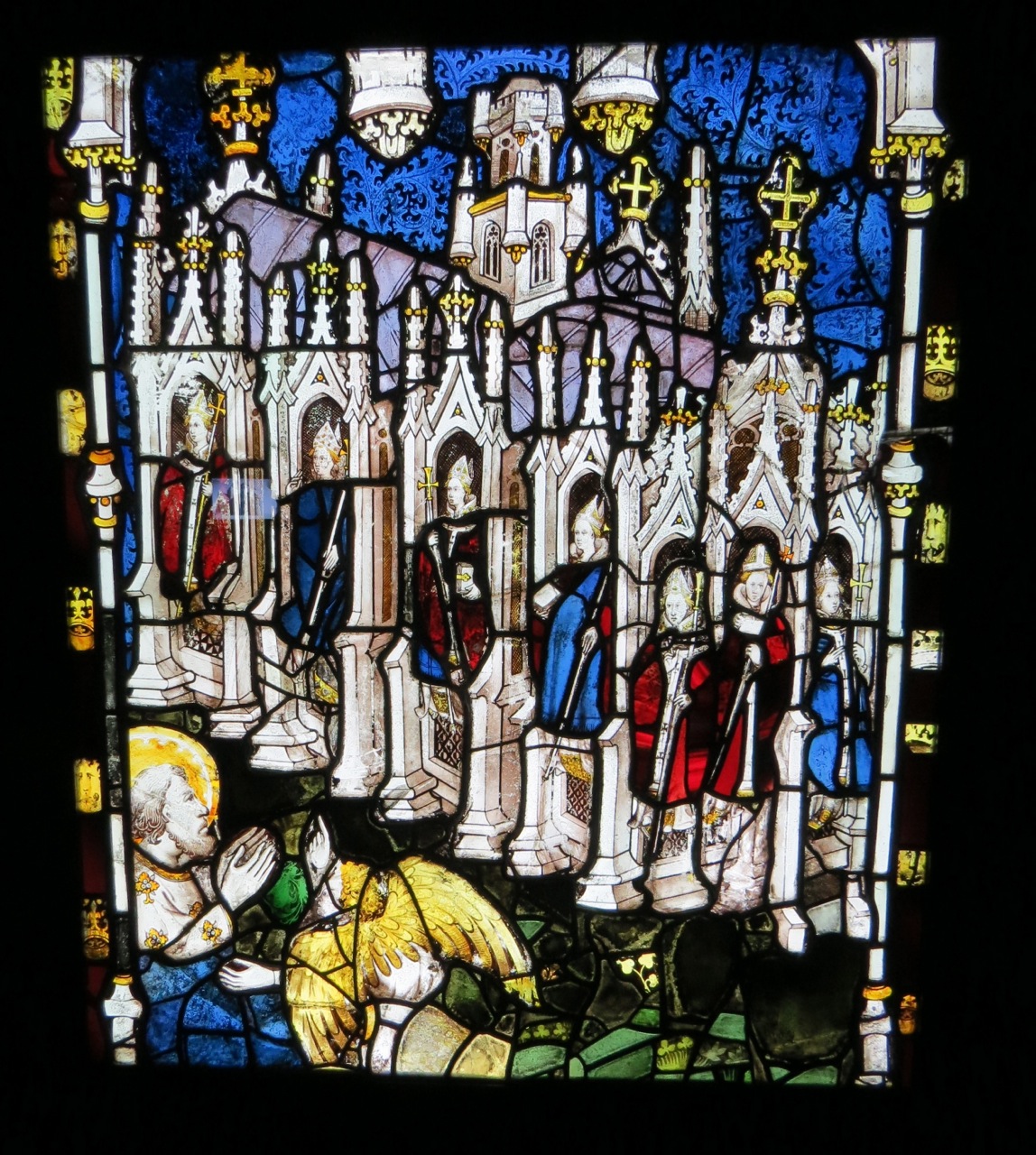
And the actual glass panel post-restoration. I never really realized how the glass was painted until I saw it up close. New epoxies have allowed the glaziers to remove many of the lead lines which were holding pieces of glass together. This makes for a clearer picture.
The Chapter House (this one built starting in 1260) is my favourite part of a Cathedral (if I’m allowed to play favourites). The Chapter House is where the priests met each morning to hear a chapter read. They are usually round, which makes for a great space and really funky acoustics. Each priest has his own chair round the outside and you can whisper and still hear all round the circle. No gossiping for the priests!! The ceilings are always amazing, as are the floor tiles. I think I’d rather hang out in the cozy Chapter House than the big drafty Cathedral!
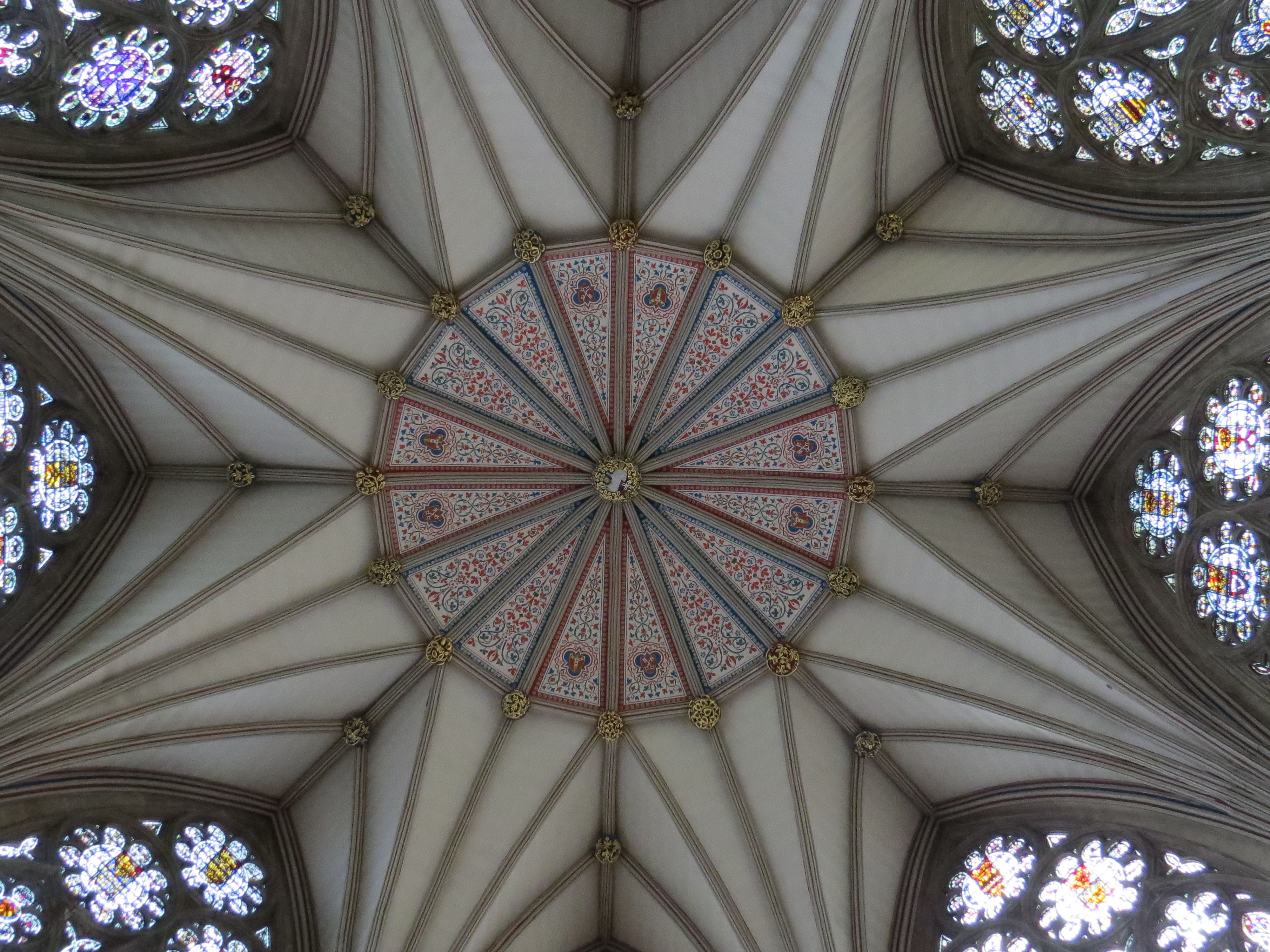
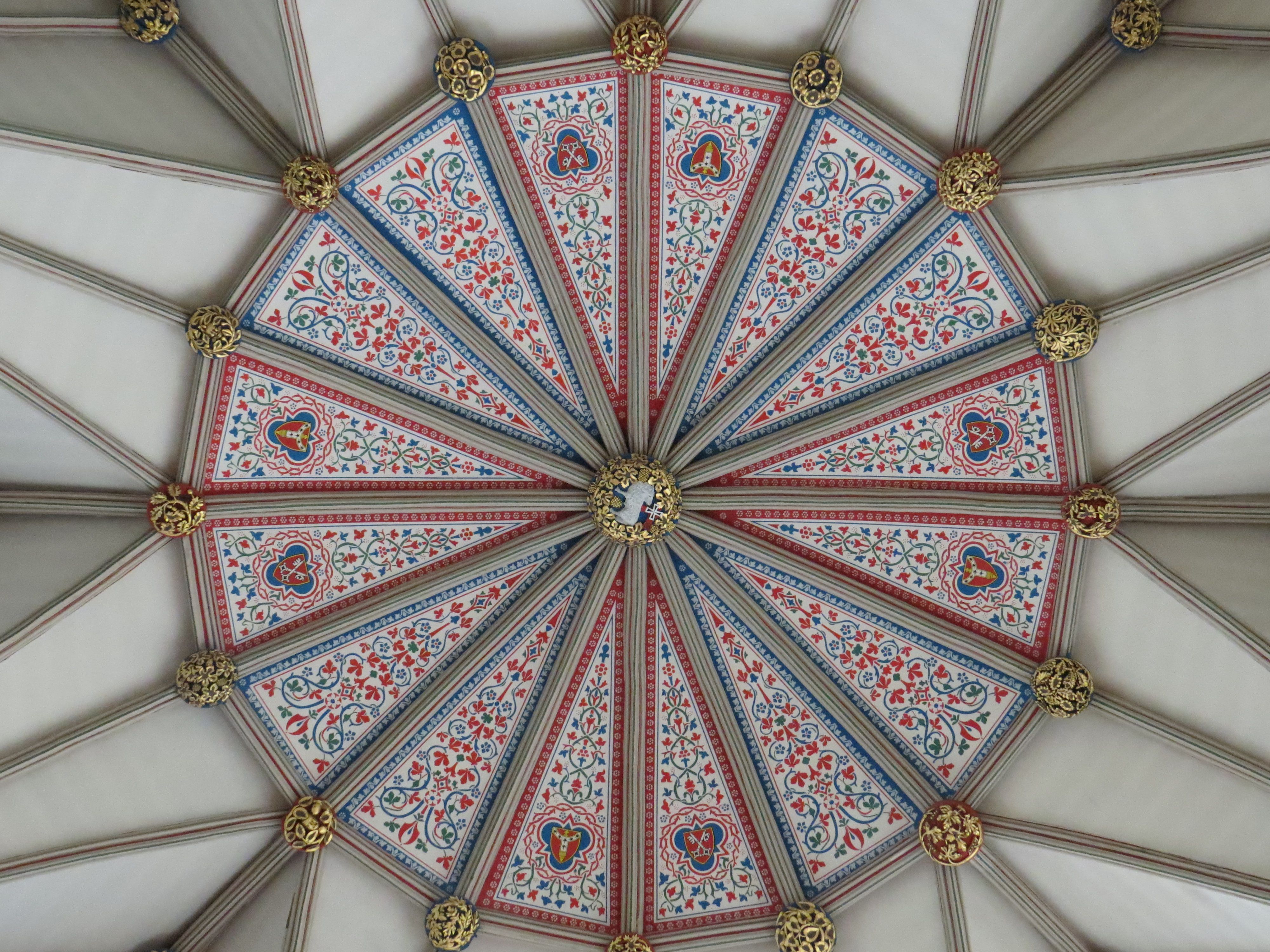
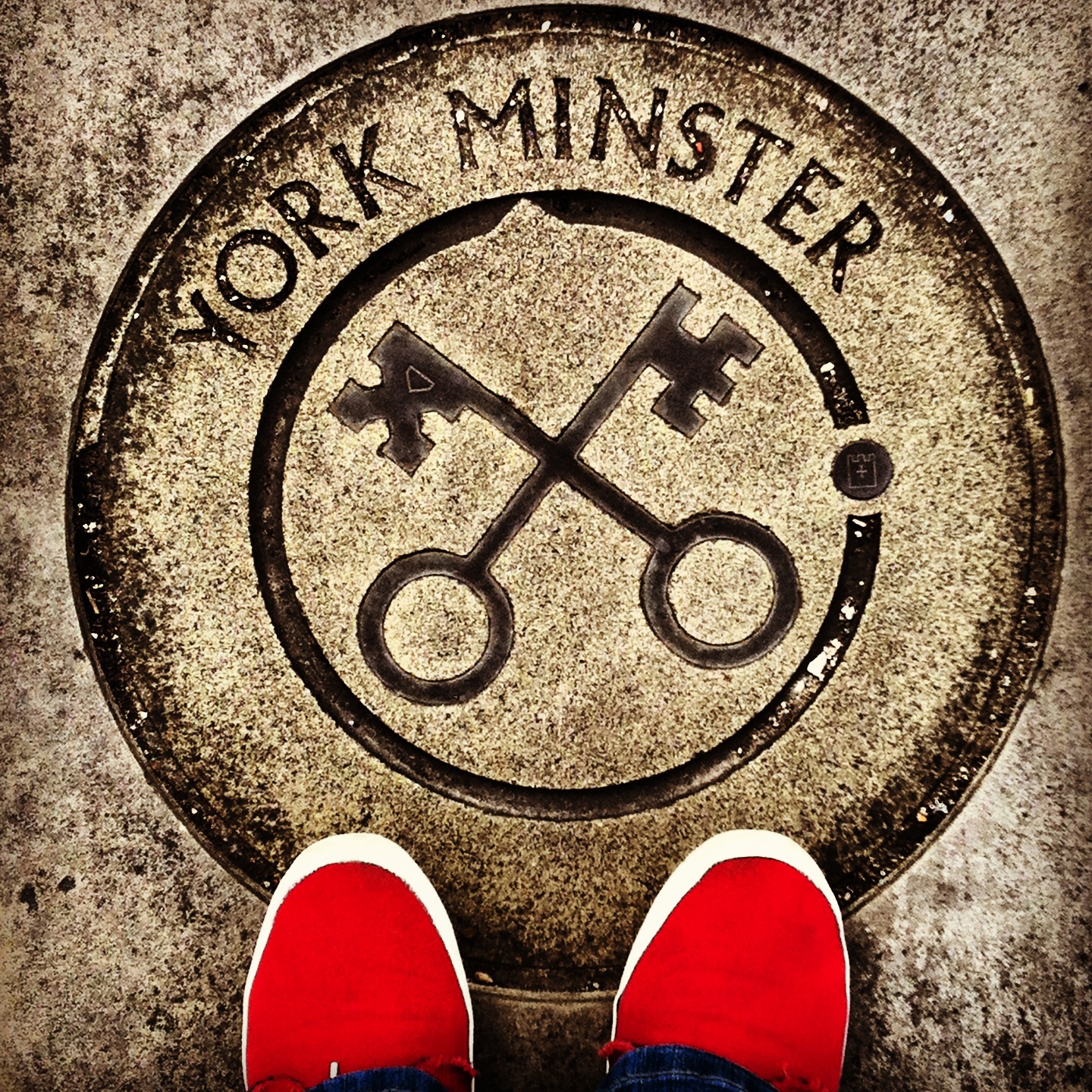
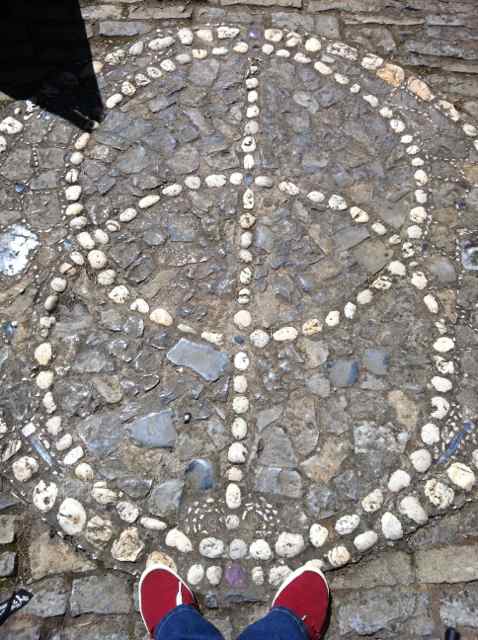
My trusty red walking shoes in the Chapter House. An eight-pointed sword star and blue X marks my spot.

Last weekend I visited the Chalice Well in Glastonbury. What a beautiful, peaceful and energetically soothing place. Now, it’s true that I had just come from the Tor, where I had a paralyzing attack of “OMG, I’m going to fall to my death” so any flat space close to the ground would probably have been soothing but none of the wells I have visited in Ireland or Scotland (or elsewhere) have been so lovely.
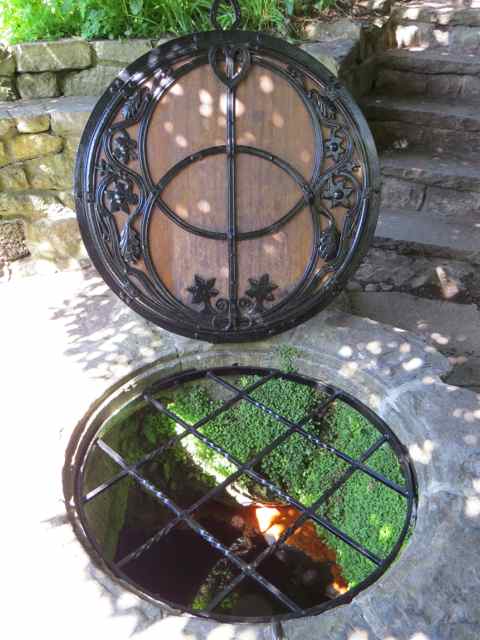
The cover of the well has a wrought iron vesica piscis with a lance passing through it. An ancient symbol of interlocking circles, representing heaven and earth, spirit and matter, inside and outside, above and below, masculine and feminine, two as one.
In the past, the well was known as the Red Spring or Blood Spring because the water that flows from it, rich with iron, leaves a red deposit on everything it touches. As you can imagine, many legends are associated with the well. That Joseph of Arimathea buried the cup that Christ used at the last supper. Or, that the red spring is a direct expression of the lifeblood of the land.
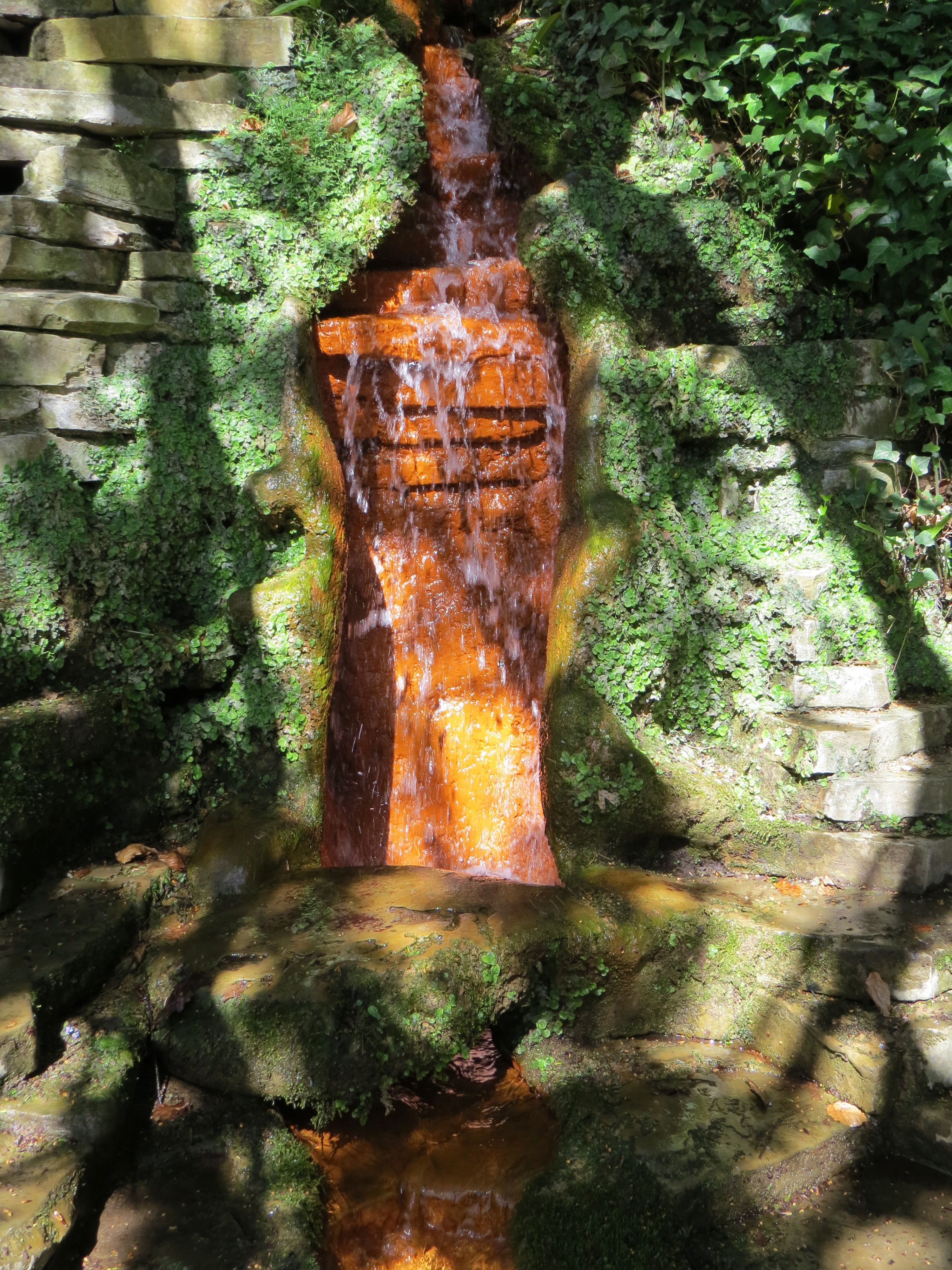
Water has long been considered a source of healing and a bringer of life. It stores and transmits energy and our bodies flow with water just as the earth does. The Lion’s Head drinking fountain is safe for consumption. As the water is rich in iron, only small quantities are recommended. A little goes a long way.

I collected a litre of water to bring back to share with friends.

The vesica pool consists of seven bowls which each inscribe a figure eight. While wells often have feminine associations, this pool seemed especially curvy and feminine to me. And, the flow of the water caught the sunshine and danced as it flowed.
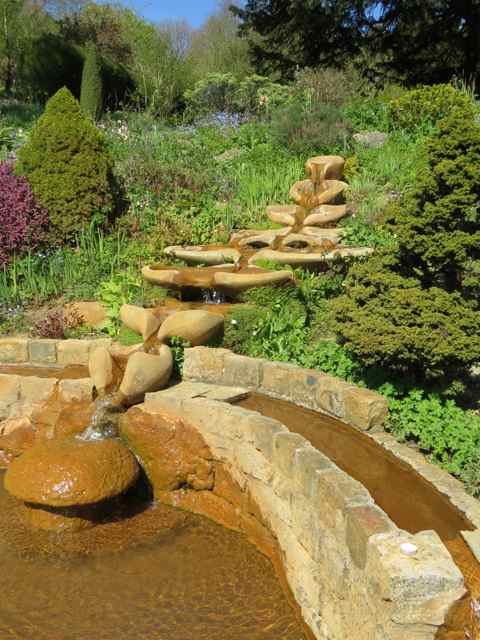
I left my votive candle by the vesica pool for blessings of the divine feminine.

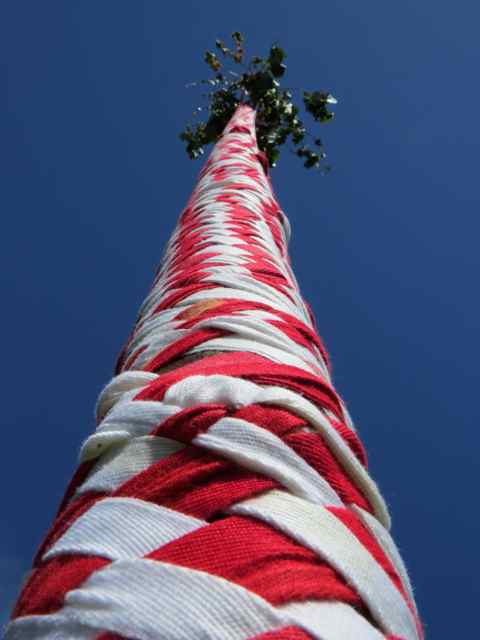
And, while the Well is obviously a place of Christian pilgrimage, it was nice to see the pagan element. Being close to Beltaine, there was a newly danced Maypole by the vesica pool, adding some divine masculine to the garden.
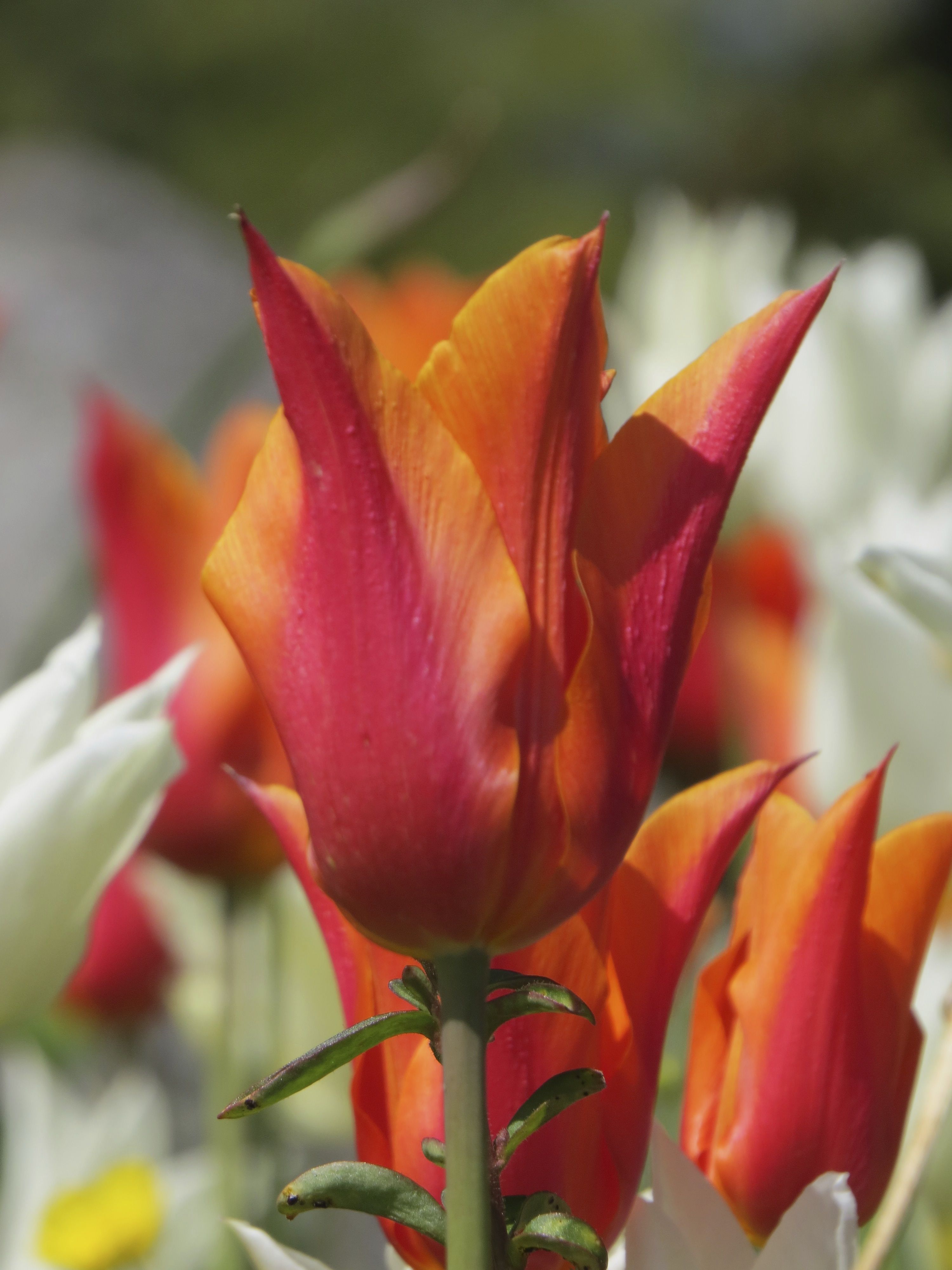
The spring flowers in the garden were in full bloom.

And so was my spirit.
 A Fish and a Bicycle